
It started like any normal day. I turned the key, the engine fired up, and everything felt fine. I drove a few kilometers, stopped for fuel, and when I tried restarting the car… Something felt off. The crank was slower than usual. Not dead, but definitely not strong either. I remember thinking, “Maybe it’s just the battery acting up.” But what I didn’t realise at that moment was that I was already experiencing early signs of alternator charging issues—long before a full breakdown would happen.
That experience changed how I look at car electrical systems. This is because alternator problems rarely show up suddenly. They whisper first, and if you ignore those whispers, they eventually leave you stranded.
Understanding the Role of the Alternator in Simple Terms
Before I learned how to detect problems early, I had to understand what the alternator actually does in real driving conditions.
The alternator is basically the car’s power generator. Once the engine is running, it takes over from the battery and
- Charges the battery
- Powers electrical systems (lights, AC, radio, sensors)
- Maintains stable voltage for the ECU
If the alternator starts failing, the battery becomes the only power source. And a battery is not designed to sustain a car for long periods.
That’s why alternator charging issues are dangerous—they don’t stop the car immediately. They slowly drain its ability to function until everything shuts down.
The Early Warning Signs I Noticed but Ignored at First
Looking back, the alternator had already been giving signals. I just didn’t connect them at the time.
Here’s what I experienced before the breakdown:
- Headlights slightly dimming at idle
- Dashboard lights flickering when AC turned on
- Radio resetting randomly
- Power windows moving slower than normal
- A faint battery warning light appearing occasionally
Each issue seemed small on its own. But together, they were telling a clear story: the charging system was struggling.
The mistake I made—and many drivers make—is assuming these symptoms are unrelated.
The First Check: Why I Always Start With Battery Voltage
When I suspect alternator charging issues, I never jump straight to replacement. I always begin with the battery, because it tells the first part of the story.
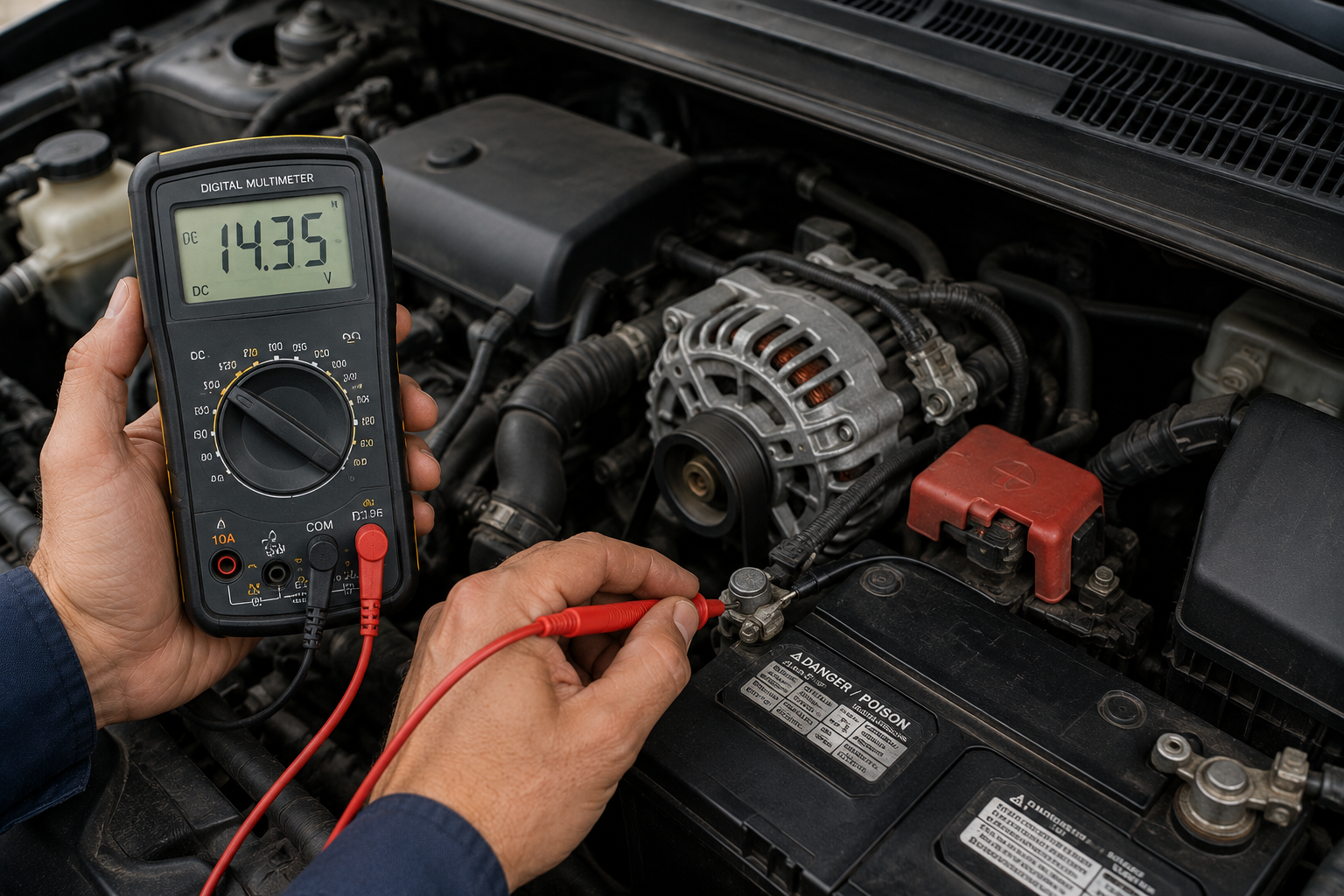
Using a simple multimeter, I checked the following:
- Engine-off voltage
- Engine idle voltage
- Voltage under load (lights + AC on)
The results were confusing at first. The battery showed decent voltage when the engine was off, but it dropped slightly under load and didn’t rise properly when the engine was running.
That was the first real clue.
A healthy alternator should increase voltage once the engine starts. If it doesn’t, the system charges incorrectly.
How I Learned to Read Alternator Behavior While Driving
One of the most useful skills I developed is learning to observe the car while driving instead of only checking it in the garage.
Here’s what I now pay attention to on the road:
1. Headlight Brightness Changes
If headlights brighten when revving the engine, the alternator may be weak at idle.
2. Electrical Load Reactions
Turning on the AC, fans, or music system should not affect engine smoothness. If it does, charging may be unstable.
3. Dashboard Behavior
Flickering warning lights or sudden resets are early electrical instability signs.
4. Engine Idle Stability
A weak alternator can indirectly affect idle because the ECU receives unstable voltage.
These driving observations helped me detect problems long before a complete failure happened.
The Hidden Culprit: Belt Tension and Physical Inspection
After electrical checks, I moved to something simple but often ignored—the alternator belt.
A loose or slipping belt can mimic alternator failure.
I inspected:
- Belt tightness
- Surface wear and cracks
- Squeaking noises during startup
- Pulley alignment
In my case, the belt was slightly worn but not the main issue. Still, I learnt an important lesson: even a healthy alternator cannot perform properly if mechanical drive is weak.
Voltage Regulator Issues: The Silent Trouble Maker
One of the hardest parts of diagnosing alternator charging issues is the voltage regulator.
This small component controls how much charge the alternator sends to the battery.
When it starts failing, you get symptoms like the following:
- Overcharging (battery stress, heat buildup)
- Undercharging (slow battery drain)
- Inconsistent voltage readings
What made it tricky in my situation was that the regulator worked fine sometimes and failed other times, especially when the engine was hot.
That inconsistency is what makes alternator problems so frustrating—they are not always constant.
My Step-by-Step Method to Detect Alternator Problems Early
After going through this experience, I developed a simple routine that helps me detect charging issues before they turn into breakdowns.
Step 1: Morning Start Check
- Observe crank strength
- Watch dashboard warning lights
- Listen for slow startup behavior
Step 2: Voltage Test (Engine Off & On)
- Battery resting voltage
- Charging voltage at idle
- Voltage with full electrical load
Step 3: Load Test While Driving
- Turn on headlights + AC + radio
- Check for dimming or instability
- Observe engine smoothness
Step 4: Belt and Pulley Inspection
- Look for slipping or cracks
- Listen for noise under load
Step 5: Warning Light Monitoring
- Battery icon behavior
- Flickering or delayed illumination
This routine helped me catch alternator problems early multiple times before they became serious.
The Moment I Confirmed the Alternator Was Failing
The final confirmation came during a simple load test.
I turned on everything electrical at once—headlights, AC, fans, and the music system—and watched the voltage.
Instead of staying stable, it slowly dropped.
That’s when it became clear: the alternator was no longer maintaining proper output under pressure.
It wasn’t completely dead yet, which is why the symptoms were confusing. But it was clearly on its way out.
How I Prevented a Full Breakdown on the Road
Once I confirmed the issue, I took a cautious approach.
Instead of continuing normal driving, I:
- Reduced electrical load (AC off, minimal accessories)
- Avoided long-distance travel
- Planned immediate replacement service
- Kept a portable jump starter as backup
This helped me avoid getting stranded in traffic or on highways.
That experience taught me something important: alternator failure doesn’t always give a second-chance warning.
Practical Tips to Detect Alternator Charging Issues Early
Based on my experience, here are practical tips anyone can use:
1. Watch for Small Electrical Changes
Even slight dimming or flickering matters.
2. Don’t Ignore Battery Warning Light
Even if it disappears, it’s still meaningful.
3. Test Voltage Regularly
A simple multimeter can reveal early problems.
4. Observe Behavior Under Load
Real issues show up when multiple systems are running.
5. Don’t Delay Inspection
Alternator problems worsen gradually but can fail suddenly.
Why Alternator Problems Are Often Misdiagnosed
One of the greatest challenges is that alternator issues look like other problems.
They can feel like:
- Battery failure
- Wiring issues
- ECU malfunction
- Sensor faults
That’s why many people replace the wrong parts first.
In my case, I almost replaced the battery again before realising the real issue was charging instability.
Understanding the system as a whole is essential.
Conclusion
Detecting alternator charging issues before breakdown is not about guesswork—it’s about observation and timing. From my experience, the alternator rarely fails instantly. It gradually loses efficiency, and the car begins to show subtle electrical changes long before complete failure.
If you pay attention to those early signs—dim lights, unstable voltage, and weak starts—you can prevent yourself from being stranded and avoid unnecessary repairs. The biggest takeaway is simple: trust the small symptoms. They always show up before the big failure.
FAQs
1. What are the first signs of alternator failure?
The earliest signs include dim headlights, dashboard flickering, slow electrical accessories, and weak engine startup.
2. Can a suboptimal alternator still charge the battery partially?
Yes. A failing alternator often works intermittently or weakly, which makes diagnosis confusing.
3. How do I test alternator output at home?
Use a multimeter to check battery voltage with the engine off and running. Healthy charging usually shows around 13.8V to 14.5V.
4. Can I drive with a weak alternator?
Only for a short distance. The battery will eventually drain, causing complete electrical failure.
5. Does a faulty alternator always trigger a warning light?
No. Often, the warning light appears late or flickers intermittently, which is why early detection is important.

Written by Michael Reyes, part of the FallasDeAutos editorial team. Michael focuses on helping car owners understand and fix common vehicle problems with simple, practical guidance. His content covers diagnostics, maintenance, and troubleshooting, making complex automotive issues easier to understand. He aims to provide clear, reliable information that helps readers make informed decisions while encouraging consultation with qualified mechanics when needed.