
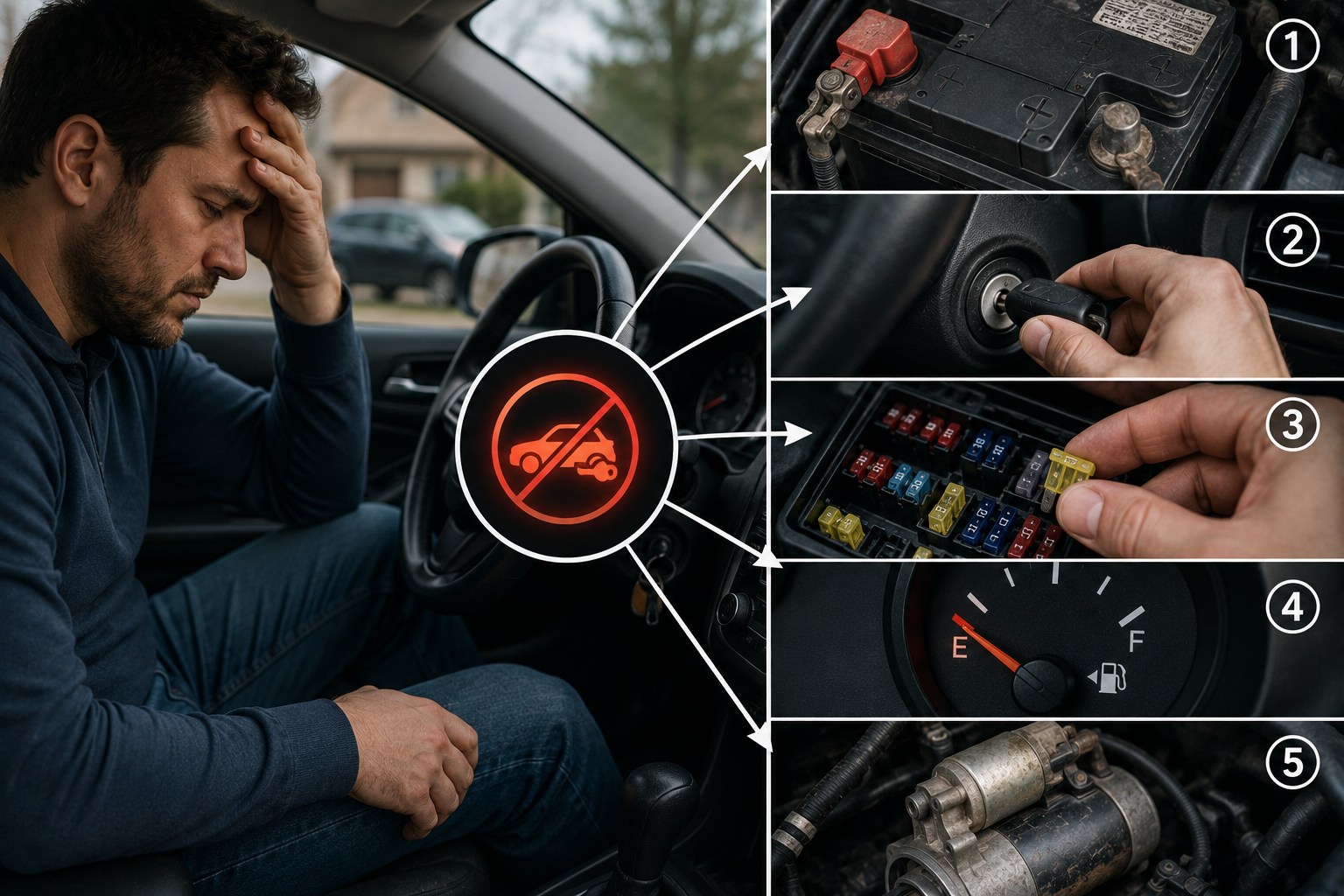
A car that refuses to start can instantly ruin your day. Whether you’re rushing to work, heading to a family event, or simply trying to run errands, a non-starting car feels stressful and confusing. The excellent news is that most starting problems are surprisingly simple to diagnose. You don’t always need advanced mechanical knowledge or expensive tools. With a calm approach and a step-by-step process, you can often identify the issue yourself and decide whether it’s something you can fix or something a professional should handle.
This beginner-friendly guide will walk you through the most common reasons cars fail to start and how to troubleshoot them safely and confidently.
Understanding What Happens When a Car Starts
Before troubleshooting, it helps to understand the basic starting process. A car needs three essential things to start properly: electrical power, fuel, and air. When you turn the key or press the start button, the battery powers the starter motor, which turns the engine. At the same time, fuel is injected and ignited, allowing the engine to run on its own.
If any part of this chain fails, the car won’t start. Your job is to figure out which part is missing.
Step 1: Observe What Happens When You Turn the Key
Your first clue comes from what the car does when you try to start it. Pay attention to sounds, lights, and dashboard behavior.
Common Starting Symptoms
- No sound at all
- Clicking sound
- Engine cranks but won’t start
- The engine starts then dies
- Slow cranking
Each symptom points to a different problem. Identifying this early saves time and prevents unnecessary repairs.
Step 2: Check the Car Battery First
The battery is the most common reason a car won’t start. Even a healthy battery can fail due to weather, age, or leaving lights on overnight.
Signs of a Weak or Dead Battery
- Dashboard lights are dim or off
- Clicking sound when turning the key
- Electrical features not working
- Slow engine cranking
Quick Battery Troubleshooting
1. Inspect the battery terminals
- Open the hood and look at the battery connections.
- If you see white or green corrosion, the connection may be weak.
2. Try turning on headlights
- Bright lights → Battery likely OK
- Dim lights → Battery likely weak
3. Jump-start the car
If the car starts after a jump, the battery is likely the problem.
Common Battery Causes
- Old battery (3–5 years lifespan)
- Leaving lights or accessories on
- Extreme weather conditions
Replacing a battery is often the simplest and cheapest fix.
Step 3: Examine the Starter Motor
If you hear a single click or repeated clicking when turning the key, the starter motor may be the issue.
What the Starter Motor Does
The starter motor spins the engine so it can begin running. Without it, the engine cannot turn over.
Starter Motor Warning Signs
- Clicking noise when starting
- Lights turn on but engine won’t crank
- The car starts sometimes but not always
Quick Checks
- Try starting the car in neutral (automatic cars).
- Gently tap the starter with a tool (only if safe and accessible).
- Recheck battery connections again.
If these steps work temporarily, the starter likely needs replacement.
Step 4: Check the Fuel System
If the engine cranks normally but doesn’t start, fuel may not be reaching the engine.
Signs of Fuel Problems
- The engine turns but never starts
- Strong fuel smell or no smell at all
- The car stalled before refusing to start
Simple Fuel Checks
1. Confirm fuel level
This sounds obvious, but fuel gauges sometimes fail.
2. Listen for fuel pump sound
Turn the key to the “ON” position and listen for a faint humming noise from the rear of the car.
No sound may indicate a failing fuel pump.
Possible Fuel System Issues
- Empty fuel tank
- Faulty fuel pump
- Clogged fuel filter
Fuel system repairs may require professional help, but identifying the issue saves time and money.
Step 5: Inspect the Ignition System
Your ignition system creates the spark that ignites fuel. Without spark, the engine cannot run.
Ignition Problems: Symptoms
- Engine cranks but won’t start
- Misfiring before failure
- Rough running previously
Common Ignition Issues
- Worn spark plugs
- Faulty ignition coils
- Ignition switch problems
Beginner Tip
If your car struggled to start in recent weeks, ignition components may have been wearing out gradually.
Step 6: Check the Alternator
Many people confuse alternator problems with battery failure. The alternator charges the battery while the car runs.
Signs of a Bad Alternator
- The battery keeps dying repeatedly
- Dashboard warning lights appear
- Electrical systems behave strangely
If your battery keeps dying after replacement, the alternator may be the real problem.
Step 7: Consider the Key or Immobilizer System
Modern cars use anti-theft systems that prevent starting without the correct key signal.
Signs of Immobilizer Issues
- The car starts then shuts off immediately
- The security warning light flashes
- The spare key works but main key doesn’t
Try using a spare key if available. Sometimes the key battery is the real issue.
Step 8: Evaluate the Engine Sensors
Modern vehicles rely on sensors to start and run properly. A faulty sensor can prevent ignition or fuel delivery.
Important Sensors That Affect Starting
- Crankshaft position sensor
- Camshaft position sensor
- Mass airflow sensor
If these fail, the car may crank endlessly but never start.
This step usually requires professional diagnostics.
Step 9: Check for Engine Flooding
Sometimes too much fuel enters the engine, especially in cold weather.
Signs of Flooding
- Strong fuel smell
- The engine tries to start but fails repeatedly
What You Can Do
Press the accelerator fully while starting (for older cars). This allows more air into the engine.
Wait a few minutes before trying again.
Step 10: Weather-Related Starting Problems
Weather plays a major role in starting issues.
Cold Weather Issues
- Thick engine oil slows cranking
- Weak battery performance
- Frozen fuel lines
Hot Weather Issues
- Fuel evaporation problems
- Overheated starter motor
Parking in the shade or garage can reduce weather-related issues.
Step 11: Check the Fuses and Relays
Sometimes the problem is as simple as a blown fuse.
Quick Fuse Inspection
- Locate the fuse box (owner’s manual helps).
- Look for burnt or broken fuses.
- Replace with same rating only.
A tiny fuse can stop an entire starting system.
Step 12: Dashboard Warning Lights Provide Clues
Never ignore warning lights. They often indicate the exact problem.
Common Helpful Lights
- Battery warning light
- Engine warning light
- Security light
These lights help mechanics diagnose issues quickly.
Step 13: When the Car Starts Then Immediately Stops
This is frustrating and often confusing.
Likely Causes
- Immobilizer system problem
- Fuel pump failure
- Sensor malfunction
This usually requires professional inspection.
Step 14: Preventing Future Starting Problems
Prevention is always easier than repair.
Simple Prevention Habits
- Replace battery every 3–5 years.
- Keep the fuel tank above a quarter level.
- Schedule regular maintenance.
- Listen to unusual sounds early.
- Avoid frequent short trips that drain the battery.
Small habits can prevent major headaches.
Step 15: When to Call a Professional
Some problems require expert tools and knowledge.
Seek Professional Help If
- Jump-start doesn’t work
- The car repeatedly fails to start
- Warning lights stay on
- You suspect fuel or sensor issues
Knowing when to stop troubleshooting saves money and prevents damage.
Conclusion
A car that won’t start doesn’t always mean a major repair bill. In many cases, the problem is simple and easy to identify. By following a step-by-step troubleshooting approach, you can narrow down the issue quickly and confidently. Start by observing symptoms, check the battery and starter, evaluate fuel and ignition systems, and consider modern electronics like sensors and immobilizers. With patience and basic awareness, you can turn a stressful situation into a manageable one. Most importantly, regular maintenance and attention to early warning signs can prevent many starting problems before they happen.
FAQs
1. Why does my car click but not start?
A clicking sound usually indicates a weak battery or failing starter motor. The battery may not have enough power to turn the engine.
2. How long should a car battery last?
Most car batteries last between 3 and 5 years, depending on climate, usage, and maintenance habits.
3. Can low fuel stop a car from starting?
Yes, if the fuel level is extremely low or the fuel pump cannot deliver fuel properly, the engine may crank but not start.
4. Is it safe to jump-start a car frequently?
Occasional jump-starts are safe, but frequent jump-starting means the battery or alternator likely needs replacement.
5. Why does my car start sometimes but not always?
Intermittent starting issues often point to a failing starter motor, weak battery, or loose electrical connections.

Written by Michael Reyes, part of the FallasDeAutos editorial team. Michael focuses on helping car owners understand and fix common vehicle problems with simple, practical guidance. His content covers diagnostics, maintenance, and troubleshooting, making complex automotive issues easier to understand. He aims to provide clear, reliable information that helps readers make informed decisions while encouraging consultation with qualified mechanics when needed.