
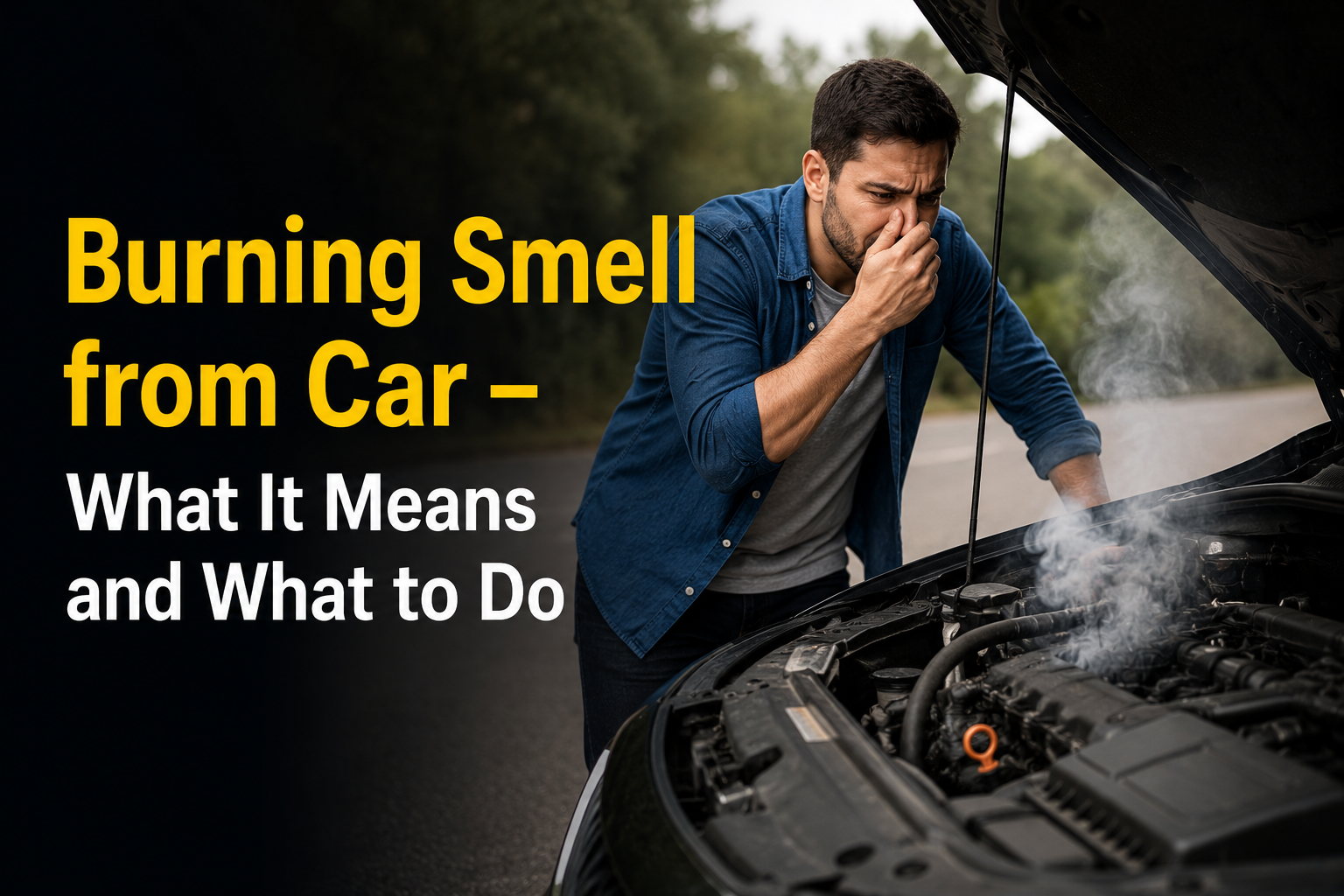
The Afternoon My Car Smelled Like a Toaster on Fire
I was three blocks from my daughter’s school, running late for pickup, when the smell hit me. Not the faint hot-engine smell that comes after highway driving. Something sharper. More electrical. Like the inside of a toaster when the crumbs ignite, mixed with hot rubber and a chemical sweetness I could not place. My first instinct was to check the dashboard for smoke. Nothing. Then the vents. Still nothing. The smell was everywhere and nowhere, and I had no idea what was burning.
I pulled into the school parking lot, popped the hood, and found nothing visibly wrong. No flames. No smoke. No melted wires hanging like black spaghetti. But the smell was stronger now, rising from somewhere in the engine bay, and I knew that driving home was not an option. I called my wife for a ride, left the car where it sat, and spent the next two hours walking back and forth between the school and the parking lot, trying to figure out what was happening while the engine cooled down.
What I discovered changed how I think about car smells forever. A burning smell is not one smell. It is a family of odors, each pointing to a different system, each with its own urgency and response. This guide is what I learned about decoding those smells, finding their sources without a mechanic’s nose, and knowing when to drive carefully home versus when to stop immediately and call for help. Your nose is a diagnostic tool. You just need to learn what it is telling you.
Why Your Nose Matters More Than Your Eyes
Modern cars hide their problems behind plastic covers and electronic systems. A visual inspection often reveals nothing. But smells bypass the covers. They travel through vents, around seals, and into the cabin before any warning light appears. Your nose detects overheating oil, melting insulation, and burning friction materials before the computer knows anything is wrong.
The challenge is that most drivers do not have a vocabulary for automotive smells. They know something is wrong, but they cannot describe it precisely enough to diagnose. Learning the distinct odors of different failures turns a vague sense of dread into a targeted search. It is the difference between panicking and problem-solving.
My toaster-fire smell was actually two smells combined. A hot electrical odor from an alternator working beyond its capacity and a rubbery-acrid note from a serpentine belt that was slipping and overheating against a seized tensioner pulley. The alternator was failing, drawing excessive current and generating heat. The belt was struggling to turn it, creating friction and rubber degradation. Neither problem was visible from above. Both were obvious to my nose once I knew what to look for.
The Smell Map: Burning smells are location-specific. Oil smells enter through the vents and cling to the cabin. Electrical smells rise from the dashboard or engine bay and often smell sharper, more metallic. Rubber smells come from the engine bay or wheel wells and carry a heavy, acrid weight. Coolant smells sweet and syrupy, almost pleasant until you realize it means a leak. Plastic smells are chemical and sharp, usually from interior components or wiring insulation. Each location and odor combination points to a different system.
Decoding the Six Most Common Burning Smells
Not all burning smells are emergencies. Some are maintenance reminders. Some are imminent catastrophes. The key is matching the odor to the source and assessing the risk accurately.
| Smell | Likely Source | Where to Look | Urgency | What to Do |
|---|---|---|---|---|
| Hot oil, acrid, greasy | Oil leaking onto exhaust manifold or catalytic converter | Engine bay, especially valve cover gaskets and oil filter | Medium | Check oil level, inspect for leaks, schedule repair within days |
| Electrical, metallic, sharp | Overheating alternator, shorted wiring, failing blower motor | Alternator, fuse box, dashboard vents, under-hood wiring | High | Stop driving, inspect immediately, risk of fire |
| Rubber, heavy, acrid | Slipping serpentine belt, seized pulley, dragging brake | Engine bay belt path, wheel wells, brake calipers | High | Stop driving, inspect belt and brakes, tow if necessary |
| Sweet, syrupy, maple-like | Coolant leaking onto hot engine components | Radiator, hoses, water pump, heater core | Medium to High | Check coolant level, inspect for leaks, avoid overheating |
| Plastic, chemical, sharp | Wiring insulation melting, plastic components contacting exhaust | Underhood wiring, interior vents, exhaust heat shields | Critical | Stop immediately, inspect for fire risk, do not drive |
| Clutchy, musty, friction-like | Slipping clutch or overheating transmission | Transmission tunnel, clutch pedal area, undercarriage | Medium | Adjust driving style and inspect clutch or transmission fluid |
How I Found My Actual Problem
Back in the school parking lot, I started with the engine bay while the smell was still fresh. I removed the plastic engine cover, which popped off with two clips, and looked at the belt path. The serpentine belt looked intact but had a dark, glazed stripe along its inner edge where it had been slipping. The tensioner pulley, which maintains belt pressure, was not moving freely. I pressed on the belt with my finger and felt almost no resistance. The tensioner was stuck in a partially retracted position, allowing the belt to slip and overheat.
The alternator itself was hot to the touch, far hotter than the surrounding components. I could not hold my hand on it for more than a second. A healthy alternator warms up during operation but should not be painfully hot. This one was struggling, generating excessive heat as its internal bearings and windings degraded. The belt was slipping because the tensioner failed, and the alternator was overheating because the belt was not turning it efficiently. Two problems feeding each other, both announced by smell before any warning light appeared.
I also checked the oil level, because hot oil on exhaust is the most common burning smell and I wanted to rule it out. The dipstick showed a normal level and clean oil. No leaks visible from above. The valve cover gaskets were dry. That eliminated the oil theory and kept my focus on the belt and alternator.
The Inspection Order: When you smell something burning, check the easiest things first. Oil level takes thirty seconds. Belt condition takes sixty seconds. Coolant level takes thirty seconds. These quick checks eliminate the most common causes before you dig deeper. I spent five minutes on these basics and narrowed my search dramatically. The alternator and tensioner were the only remaining suspects.
When to Stop Driving Immediately
Not every burning smell requires abandoning your car. Some allow careful driving to a nearby shop. Others demand immediate stopping because the risk of fire is real and immediate. Knowing the difference keeps you safe without overreacting to minor issues.
Stop immediately if you see smoke, flames, or sparks. This is obvious but worth stating because denial is powerful. People convince themselves the smoke is steam, the flames are reflections, and the sparks are road debris. They are not. Pull over, turn off the engine, evacuate the vehicle, and call emergency services if flames are visible. A car fire doubles in size every thirty seconds. Your hesitation costs more than the car.
Stop immediately if the smell is strongly electrical and accompanied by dashboard warning lights or loss of electrical functions. A shorted wire can ignite surrounding insulation and plastics within minutes. The electrical system is the most common source of vehicle fires. Do not gamble with it.
Stop immediately if the smell is plastic and chemical, especially from the interior vents. This means wiring insulation is melting somewhere in the dashboard or engine bay. The melting point of automotive plastics is lower than you think, and once ignition starts, the fire spreads rapidly through the wiring harness. This is the most dangerous smell because it is often the first sign of an electrical fire that has already begun.
Drive carefully to a shop if the smell is oil, coolant, or clutch-related and no smoke is visible. These are serious but not immediately life-threatening. Reduce speed, avoid heavy loads, monitor gauges, and get professional inspection as soon as possible. Do not continue normal driving for days with these smells. The problems worsen, and the repair costs multiply.
The Hidden Sources Nobody Checks
Some burning smells come from places drivers never think to look. These hidden sources create confusion because the obvious checks come back clean and the smell persists.
Debris in the engine bay is a common culprit. Leaves, pine needles, and small animals nest in the crevices around the exhaust manifold and catalytic converter. The first hard drive after a cold start heats this debris to ignition temperature. The smell is often acrid and organic, like burning leaves, because that is exactly what is happening. Cleaning the engine bay with compressed air prevents this. I now check for debris monthly, especially after autumn and before the first cold snap.
Brake drag creates a hot, metallic smell from the wheel wells. A sticking caliper or collapsed brake hose keeps the pads in contact with the rotor, generating constant friction and heat. The smell is strongest after driving and strongest near the affected wheel. Jack up the car, spin the wheel by hand, and compare resistance between sides. A dragging brake wheel will be harder to turn and the rotor will be hot. This is dangerous because it can cause brake fade or failure, and the heat can boil brake fluid or ignite nearby components.
The heater core can leak coolant into the ventilation system, creating a sweet smell that seems to come from nowhere because it is inside the dashboard. The carpet on the passenger side may be wet. The windshield may fog with a greasy film. The smell intensifies when the heater or defroster runs. This repair is labor-intensive because the heater core is buried behind the dashboard, but driving with a leaking core risks overheating and interior coolant contamination.
The Animal Problem: Two months before my alternator failure, I had noticed a faint burning smell that disappeared after a day. I ignored it. Later, during the repair, my mechanic found a mouse nest in the alternator housing. The nest had partially blocked cooling airflow, causing the alternator to run hotter than normal. That elevated heat accelerated bearing wear, which led to the tensioner struggle, which led to the belt slip, which led to my parking lot breakdown. One mouse nest, six months of gradual damage, all announced by a smell I dismissed.
Preventing Smells Before They Start
After my experience, I established a simple sensory maintenance routine. Once a month, I open the hood and sniff around the engine bay with the engine running. I know what my car smells like when healthy. Any change triggers investigation. This takes two minutes and has caught two minor issues before they became serious.
I also keep the engine bay clean. Not showroom clean, but free of leaves, debris, and oil residue. A clean engine bay makes leaks visible and smells distinct. Oil on a dirty engine blends into the grime. Oil on a clean engine is obvious. The same principle applies to smells. A clean bay has a baseline odor. Deviations are easy to detect.
Regular inspection of belts, hoses, and fluid levels prevents the conditions that create burning smells. The serpentine belt should be checked for cracks, glazing, and proper tension every oil change. Coolant and oil levels should be verified weekly. Brake fluid should be checked monthly. These habits are not obsessive. They are the minimum awareness that prevents surprise breakdowns.
What to Tell a Mechanic (and What Not To)
If you arrive at a shop with a burning smell, your description matters. Vague complaints like something smells weird waste diagnostic time and money. Precise descriptions guide the mechanic directly to the likely source.
Tell them exactly when the smell started. During acceleration, at idle, after braking, when the heater runs. The timing reveals the system. Tell them where the smell seems strongest. Engine bay, cabin, wheel wells, exhaust. The location narrows the search. Tell them what the smell resembles. Electrical, rubber, oil, sweet, plastic. The odor points to the material that is overheating.
Do not tell them what you think is wrong unless you are confident. Saying my alternator is burning biases the mechanic toward that system and may cause them to miss a different cause. Describe symptoms, not conclusions. Let the professional connect the dots. That is what you are paying for.
I described my smell as hot electrical and burning rubber from the engine bay, worse under load, starting gradually over a week. The mechanic had the alternator and tensioner diagnosed in ten minutes. My precise description saved an hour of exploratory labor.
Building Your Nose for the Future
Smell diagnosis is a skill that develops with attention. Start by noticing what your car smells like when everything is normal. The engine bay has a faint oily-metallic note. The exhaust has a clean combustion smell, slightly sharp but not acrid. The interior smells like whatever you keep in it. Establish these baselines.
Then pay attention to changes. A new smell is information. It may be temporary, like oil burning off after a spill during a service. Or it may be progressive, like my alternator failure that worsened over days. The difference is repetition. A smell that returns or intensifies is a problem. A smell that fades and never returns was probably incidental.
Your nose is always with you. It does not require tools, training, or an appointment. It works in traffic, in parking lots, and in your own driveway. Learning to trust it and interpret it makes you a more aware driver and a safer one. The burning smell that made me late for school pickup was inconvenient. It was also a gift. It warned me before a catastrophic failure on the highway at seventy miles per hour.
Sources and References
- National Highway Traffic Safety Administration. (2024). Vehicle Fire Safety and Prevention Guidelines. Retrieved from https://www.nhtsa.gov/
- Automotive Service Excellence (ASE). (2023). Engine Performance and Electrical System Diagnosis. Retrieved from https://www.ase.com/
- Car and Driver. (2024). How to Diagnose Burning Smells From Your Car. Retrieved from https://www.caranddriver.com/features/
- Popular Mechanics. (2023). Automotive Odor Diagnosis: What Your Car’s Smells Mean. Retrieved from https://www.popularmechanics.com/cars/
- Edmunds. (2024). When to Stop Driving: Warning Signs You Should Not Ignore. Retrieved from https://www.edmunds.com/how-to/
- Haynes Manuals. (2024). Automotive Electrical and Cooling System Maintenance. Haynes Publishing.

Written by Michael Reyes, part of the FallasDeAutos editorial team. Michael focuses on helping car owners understand and fix common vehicle problems with simple, practical guidance. His content covers diagnostics, maintenance, and troubleshooting, making complex automotive issues easier to understand. He aims to provide clear, reliable information that helps readers make informed decisions while encouraging consultation with qualified mechanics when needed.