
When people think about car maintenance, they usually focus on the engine, tyres, or paint. For years, I did the same thing. Then one rainy day, I noticed water dripping inside my car after a storm. That was my wake-up call. The problem wasn’t the windows—it was worn door seals.
Car door seals (also called weatherstripping) are small, flexible rubber strips around doors that protect the interior from rain, dust, wind noise, and extreme temperatures. They quietly do their job every day, which is why they’re easy to ignore. But once they fail, the problems quickly become noticeable and expensive. Over time, I developed a simple, reliable routine that keeps my car door seals in great shape year-round. In this detailed guide, I’ll walk you through my step-by-step method so you can prevent leaks, reduce noise, and extend the life of your car’s interior.
Why Car Door Seals Matter More Than You Think
Door seals may look like simple rubber strips, but they play a big role in protecting your car.
They help:
- Keep rainwater out
- Block dust and dirt
- Reduce road noise
- Maintain cabin temperature
- Prevent interior mold and odors
When seals begin to crack or flatten, small problems appear first—wind noise, slight leaks, or dusty interiors. If ignored, those small issues can turn into major interior damage.
That’s why I now treat door seal care as part of my regular maintenance routine.
How I Learned the Hard Way About Ignoring Seals
Before I created my routine, I made a common mistake: I assumed rubber seals lasted forever. But sun exposure, heat, cold weather, and daily use slowly dry them out.
Here’s what I experienced before I started maintaining them:
- Rainwater entering the cabin
- Foggy windows during winter
- Increased road noise
- Musty smell inside the car
Fixing these issues cost more time and money than simple prevention ever would.
Understanding What Damages Door Seals Over Time
Knowing what harms rubber seals helped me prevent damage early.
The biggest enemies of door seals are the following:
1. Sun and Heat
UV rays dry out rubber and cause cracks.
2. Dirt and Dust
Grime acts like sandpaper when doors open and close.
3. Cold Weather
Rubber stiffens and can freeze to the door frame.
4. Moisture
Standing water encourages mould and deterioration.
Once I understood these threats, building a maintenance routine becamestraightforwardy.
My Monthly Door Seal Inspection Routine
I check my door seals once a month. It takes less than 10 minutes.
Here’s exactly what I look for:
- Cracks or splits in the rubber
- Flattened or stiff areas
- Dirt buildup in grooves
- Signs of water leakage
I gently run my fingers along the seal to feel for rough or brittle spots. Catching damage early makes repairs simple.
Cleaning Door Seals Properly (My Step-by-Step Method)
Cleaning seals is the most important habit I follow.
What I Use
- Mild car soap
- Warm water
- Microfiber cloth
- Soft brush
How I Clean Them
- Open all car doors.
- Dip cloth in soapy water.
- Wipe the entire rubber seal gently.
- Use a soft brush for grooves.
- Dry with a clean microfibre towel.
Cleaning removes dirt that slowly wears down rubber every time the door closes.
Conditioning Rubber Seals to Prevent Cracking
Cleaning alone isn’t enough. Rubber needs moisture to stay flexible.
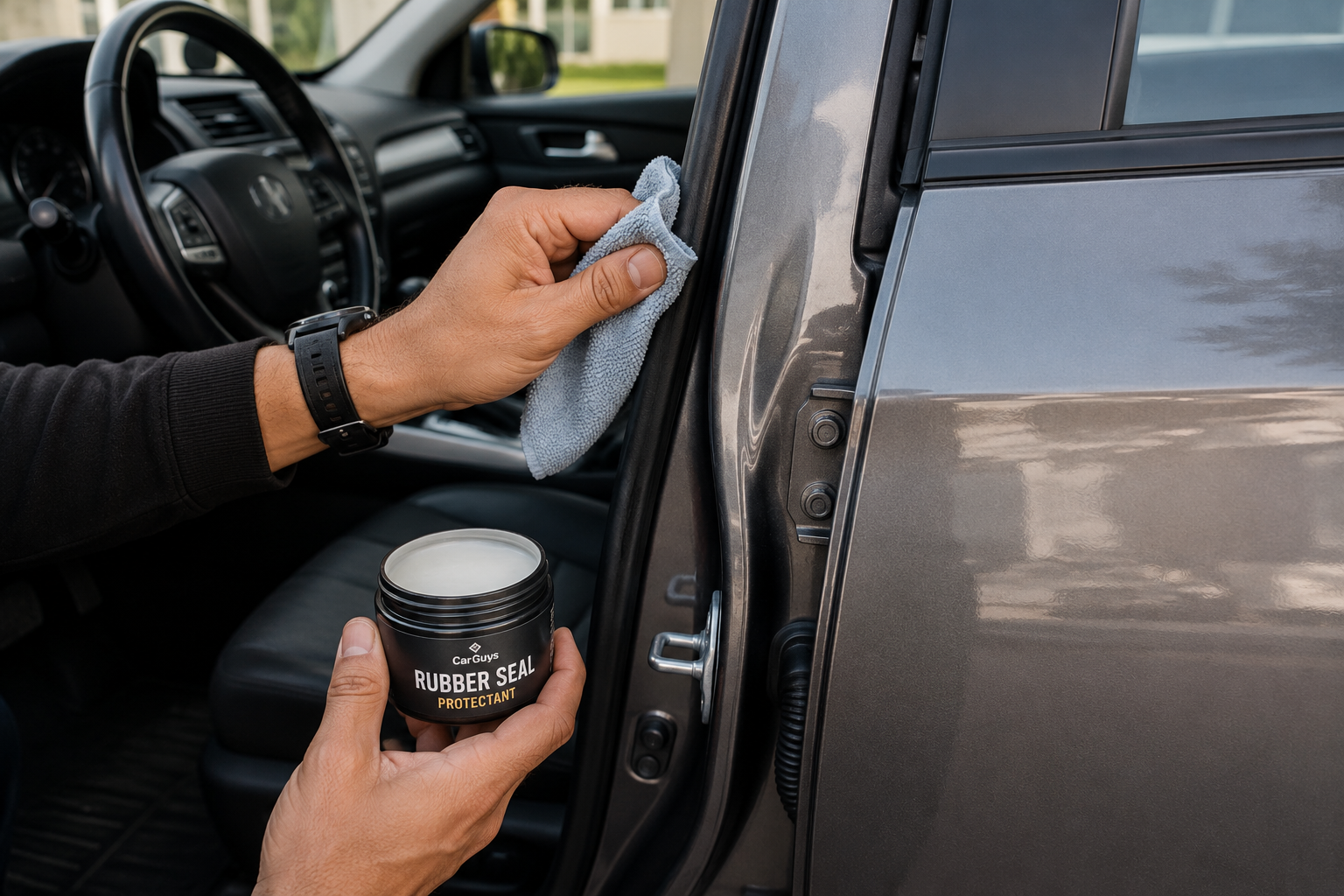
After cleaning, I apply a rubber conditioner every 2–3 months.
Benefits of Conditioning
- Prevents drying and cracking
- Restores flexibility
- Improves water resistance
- Extends seal lifespan
This step makes seals feel soft and smooth again.
Winter Protection: Preventing Frozen Door Seals
Winter used to be the worst season for my car doors. They sometimes froze shut overnight.
Now I prevent these issues by:
- Applying rubber conditioner before winter
- Wiping seals dry after rain or washing
- Avoiding parking with wet seals overnight
These simple habits stopped freezing completely.
How I Prevent Wind Noise and Air Leaks
One of the first signs of worn seals is wind noise at high speeds.
To prevent this, I:
- Keep seals clean and conditioned
- Check door alignment
- Ensure seals sit properly in grooves
Maintaining tight seals keeps the cabin quiet and comfortable.
Why Lubrication Helps Door Seals Last Longer
A small trick that made a big difference was light lubrication.
I apply a thin layer of silicone-based lubricant occasionally. This:
- Reduces friction when closing doors
- Prevents seals from sticking
- Keeps rubber flexible longer
It takes less than five minutes but protects seals from wear.
Signs Your Door Seals Need Replacement
Even with maintenance, seals don’t last forever. I watch for warning signs:
- Visible cracks or tears
- Water leaks during rain
- Whistling wind noise
- Persistent musty smell
Replacing seals early prevents bigger interior problems.
How Clean Seals Improve Interior Comfort
Well-maintained seals help maintain cabin temperature. This process improves:
- Air conditioning efficiency
- Heating performance
- Fuel efficiency
- Driving comfort
I noticed that my car stays cooler in summer and warmer in winter.
Preventing Mold and Odors Inside the Car
Moisture entering the cabin can lead to mould and bad smells.
By keeping seals healthy, I prevent the following:
- Damp carpets
- Interior mildew
- Foggy windows
- Musty odors
It’s one of the easiest ways to protect the interior.
How Long Door Seals Typically Last
With proper care, seals can last many years. Without maintenance, they may fail much sooner.
Regular cleaning and conditioning dramatically extend their lifespan.
My 10-Minute Door Seal Maintenance Routine
Here’s my simple routine:
Monthly
- Inspect seals
- Clean with mild soap
Every 3 Months
- Apply rubber conditioner
Before Winter
- Deep clean and protect
This routine keeps seals flexible and leak-free year-round.
Common Mistakes I Avoid Now
I used to make these mistakes:
- Ignoring rubber seals completely
- Using harsh cleaners
- Letting seals stay wet overnight
- Slamming doors repeatedly
Avoiding these habits helped preserve my seals.
Beginner-Friendly Door Seal Care Checklist
Monthly
- Inspect for cracks or dirt
- Clean seals gently
Every Few Months
- Apply conditioner
- Check for leaks
Seasonally
- Prepare seals for winter
Consistency is the key to long-lasting seals.
Conclusion
Keeping car door seals in good shape is one of the most overlooked parts of vehicle maintenance. Yet it plays a huge role in protecting your car from water damage, noise, and temperature changes.
With a simple routine of cleaning, conditioning, and regular inspection, you can extend the life of your seals and keep your car interior comfortable and dry. Small preventive steps today can save you from costly repairs tomorrow. Start this routine now, and your future self will appreciate the comfort and peace of mind every time you drive.
FAQs
1. How often should I clean car door seals?
Cleaning once a month is enough to prevent dirt buildup and wear.
2. Can I use household cleaners on rubber seals?
Mild soap and water are safest. Harsh chemicals can dry and damage rubber.
3. Why do car doors freeze shut in winter?
Moisture trapped in seals freezes overnight. Conditioning and drying seals prevent this.
4. How long do door seals last?
With proper care, they can last many years before needing replacement.
5. Is conditioning really necessary?
Yes. Rubber conditioner keeps seals flexible and prevents cracking.

Written by Michael Reyes, part of the FallasDeAutos editorial team. Michael focuses on helping car owners understand and fix common vehicle problems with simple, practical guidance. His content covers diagnostics, maintenance, and troubleshooting, making complex automotive issues easier to understand. He aims to provide clear, reliable information that helps readers make informed decisions while encouraging consultation with qualified mechanics when needed.