
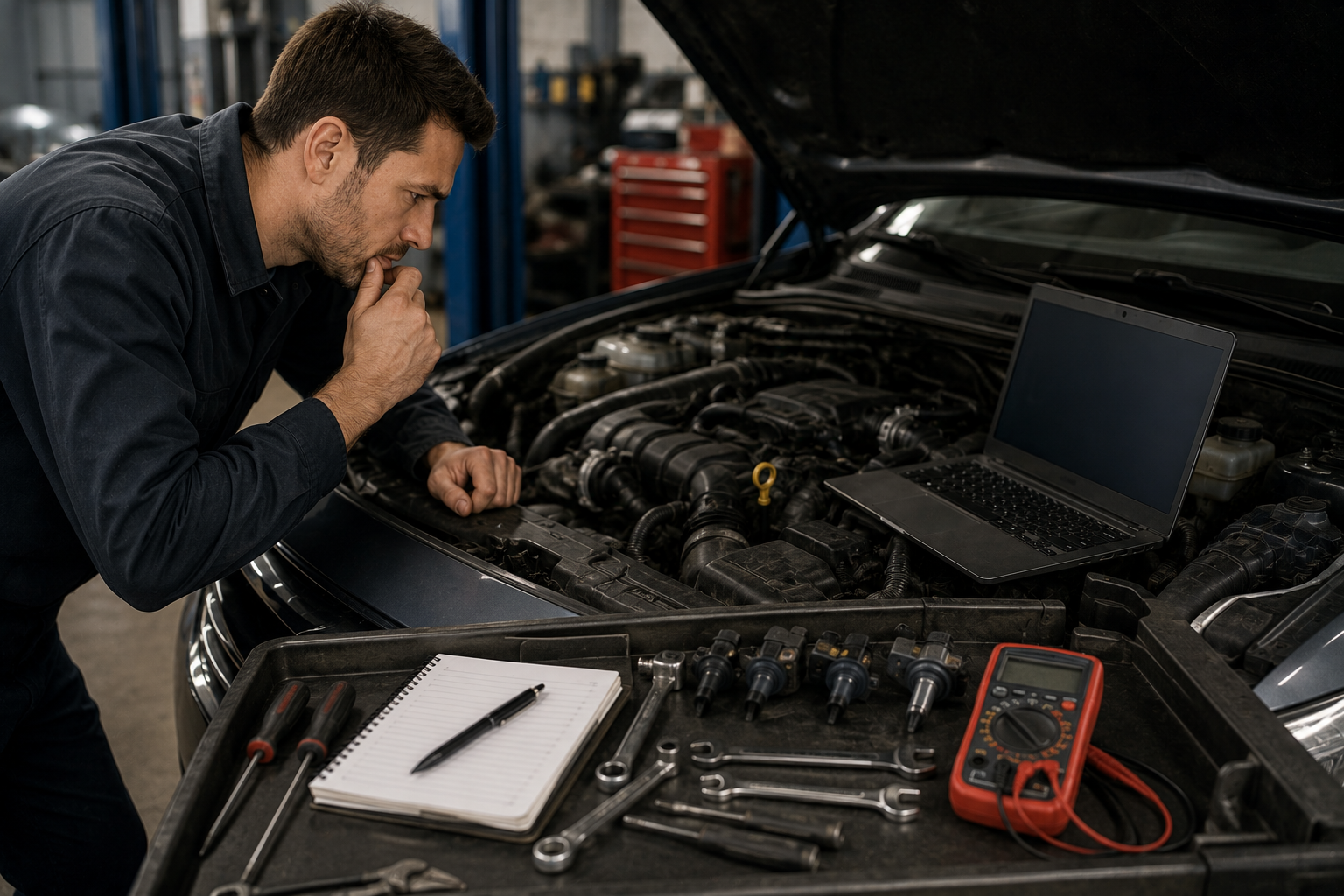
When a car starts showing more than one issue at the same time, it can quickly feel overwhelming. One moment it is a warning light, the next it is a strange noise, and then a feature stops working altogether. In situations like this, most people assume everything is failing at once—but in reality, multiple symptoms often come from a smaller number of root causes.
In this article, I’ll explain how I narrow down problems when multiple car issues appear at the same time. The focus is not on technical complexity but on a simple, real-world approach that helps make sense of confusing vehicle behaviour.
Understanding Why Multiple Car Problems Appear Together
When several issues show up at once, it usually doesn’t mean the car is breaking down in multiple places simultaneously. Instead, it often points to a shared system or a common underlying cause.
Modern cars are interconnected systems where
- Electrical components share power sources
- Sensors communicate through central modules
- One fault can trigger multiple warning signals
- Software and hardware depend on each other
In simple terms, one problem can create a chain reaction that looks like several separate issues.
For example:
- A weak battery can cause dashboard warnings, slow ignition, and infotainment issues
- A faulty sensor can trigger engine light and reduced performance
- A loose ground connection can affect lights, electronics, and starting behavior
In everyday life, this means that what looks like “many problems” is often just one issue spreading its effect across different systems.
My First Step: Staying Calm and Avoiding Assumptions
When multiple issues arise, the first thing I avoid is making assumptions. It’s easy to think the worst—like major engine failure or expensive repairs—but that usually creates confusion instead of clarity.
Instead, I focus on:
- What exactly is happening
- When it started
- Whether it happened suddenly or gradually
In practical terms, this step is about separating emotion from observation. Cars often communicate problems in indirect ways, so reacting calmly helps you see patterns more clearly.
Step 1: Grouping Symptoms Instead of Treating Them Separately
One of the most useful techniques I use is grouping symptoms.
Instead of looking at each issue independently, I ask:
- Are these problems related?
- Do they affect the same system?
- Did they start at the same time?
For example, if I notice the following:
- Headlights flickering
- Infotainment restarting
- Engine starting slowly
I don’t treat them as three separate problems. I group them under “possible electrical or battery-related issue”.
In real-world terms, this step helps reduce confusion and narrows the focus quickly.
Step 2: Checking the Battery and Power System First
In many real cases, multiple issues point back to the battery or charging system. That’s why I always start here.
I look for:
- Weak or old battery
- Loose terminals
- Corrosion on connections
- Alternator performance issues
A weak power system can create symptoms like the following:
- Random warning lights
- Slow engine crank
- Electronic features failing intermittently
This information is important because in daily driving, the battery is not just for starting the car—it powers almost everything electronic in modern vehicles.
Step 3: Observing Timing and Conditions
Timing plays a big role in narrowing down issues.
I pay attention to:
- Does the problem appear in cold or hot weather?
- Does it happen after long driving?
- Does it occur when the car is idle?
- Does it appear after rain or washing?
For example, if issues only appear during wet weather, moisture-related wiring problems become more likely.
In practical terms, this approach helps connect symptoms to environmental triggers, which often leads to faster diagnosis.
Step 4: Checking for Shared Electrical Circuits
When multiple features fail together, it often means they share a circuit or fuse.
I usually check:
- Fuse box layout
- Relays controlling multiple systems
- Ground points connected to multiple components
A single blown fuse can affect several features at once. Similarly, a poor relay can interrupt multiple functions even if they seem unrelated.
This step is important because it helps separate “system-wide issues” from “individual component failures”.
Step 5: Looking for Software or Electronic Module Issues
Modern cars rely heavily on electronic control modules. These modules manage everything from engine behaviour to comfort features.
Occasionally, a module can:
- Freeze temporarily
- Lose communication with sensors
- Reset unexpectedly
In real-world driving, this may feel like random problems appearing and disappearing.
A simple restart of the vehicle sometimes temporarily restores normal behaviour, which is a clue that the issue may be electronic rather than mechanical.
Step 6: Inspecting Physical Connections and Wiring
After checking power and electronic systems, I move to physical inspection.
I look for:
- Loose connectors
- Damaged wires
- Signs of wear or vibration damage
- Corrosion or moisture inside connectors
In practical terms, cars are constantly exposed to movement, heat, and vibration. Over time, these conditions can weaken wiring connections.
A slightly loose wire may not fail but can create intermittent or multiple symptoms.
Real-World Example: Multiple Issues in a Single Family Car
Let’s look at a common situation.
A driver reports:
- Dashboard warning lights
- Power windows are slowing down
- Car struggling to start occasionally
At first glance, it looks like multiple unrelated failures. But after checking, the root cause turns out to be a weak battery combined with a slightly loose ground connection.
Once the battery and connection are addressed, all symptoms disappear together.
This shows how multiple issues often come from a single shared problem rather than separate failures.
Why This Approach Matters in Daily Life
When multiple car issues appear, the impact goes beyond just mechanical inconvenience.
For Individuals
- Confusion about what is actually wrong
- Risk of unnecessary repairs
- Stress during travel or emergencies
For Families
Shared vehicles often create mixed reports. One person may experience issues while another does not, making diagnosis harder without a structured approach.
For Small Businesses
Vehicles used for daily operations can face downtime, delays, or inconsistent performance, affecting productivity.
In practical terms, understanding how to narrow down problems helps reduce uncertainty and improves decision-making.
Common Mistakes People Make in These Situations
When multiple issues appear, certain mistakes are very common:
Replacing Parts Without Diagnosis
Such actions often lead to unnecessary expenses because the root cause may be elsewhere.
Ignoring Small Clues
Minor symptoms like dim lights or slow response often point to larger underlying issues.
Focusing on One Problem Only
Fixing one symptom without considering others may not solve the actual issue.
Overlooking Basic Checks
Simple things like battery terminals or fuses are often ignored in favour of complex assumptions.
These mistakes usually increase confusion instead of solving it.
Challenges in Narrowing Down Multiple Issues
Even with a structured approach, there are challenges:
Overlapping Symptoms
Different systems can produce similar signs, making diagnosis tricky.
Intermittent Behavior
Some issues appear only under specific conditions, which makes them harder to replicate.
Complex Electronics
Modern vehicles have integrated systems where one fault can trigger multiple alerts.
Hidden Root Causes
Occasionally, the actual issue is not immediately visible during inspection.
These challenges highlight why patience and observation are important.
How Modern Cars Are Changing Diagnosis
Vehicle systems are becoming more advanced, and their complexity is changing how problems are identified.
Some modern improvements include the following:
- Onboard diagnostic alerts
- Real-time system monitoring
- Smartphone-connected vehicle health reports
- Better fault detection algorithms
In practical terms, cars are now more capable of telling drivers that something is wrong—but interpreting those signals still requires human understanding.
Practical Tips for Handling Multiple Car Issues
If you ever face multiple issues at once, these habits help:
- Avoid panic-based decisions
- Group symptoms instead of isolating them
- Start with power and battery checks
- Pay attention to timing and conditions
- Look for shared systems instead of separate faults
In everyday life, this approach helps bring structure to a confusing situation.
Conclusion
When multiple car issues appear at the same time, it can feel like everything is failing at once. However, in most real-world situations, these problems are connected to a smaller number of root causes. By observing symptoms carefully, grouping related issues, checking basic systems like power and wiring, and paying attention to timing and conditions, it becomes much easier to narrow down the real source of the problem.
In daily driving, this method helps reduce confusion, avoid unnecessary repairs, and bring clarity to situations that initially seem complicated. A structured approach often reveals that what looks like multiple failures is actually one underlying issue affecting several systems.

Written by Michael Reyes, part of the FallasDeAutos editorial team. Michael focuses on helping car owners understand and fix common vehicle problems with simple, practical guidance. His content covers diagnostics, maintenance, and troubleshooting, making complex automotive issues easier to understand. He aims to provide clear, reliable information that helps readers make informed decisions while encouraging consultation with qualified mechanics when needed.