
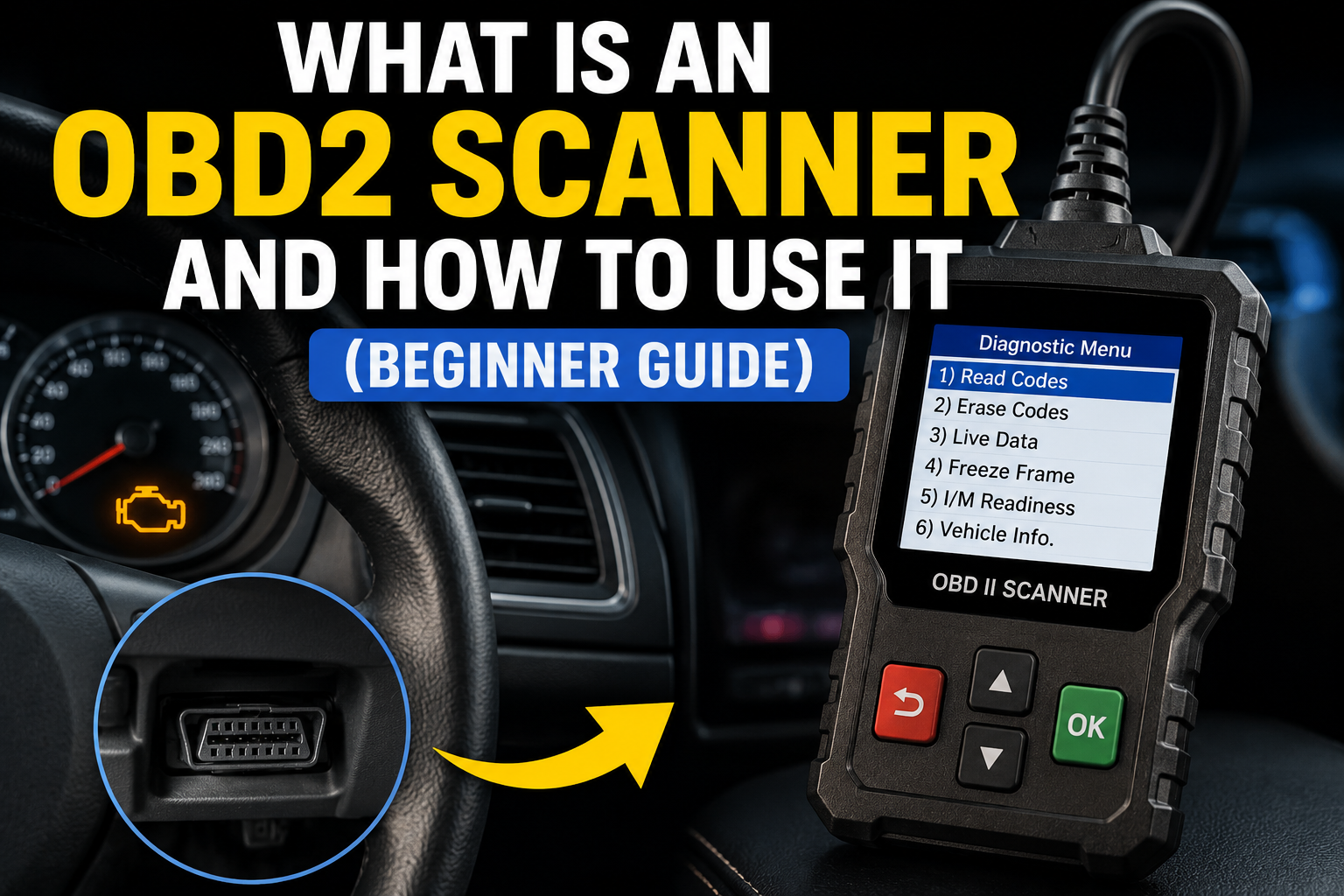
Modern cars are more complicated than ever because they include many electronic systems that work together to make sure they run well, are safe, and are efficient. This new technology makes driving easier, but it also makes it harder to figure out what’s wrong without the necessary tools. An OBD2 scanner is useful here. Knowing what an OBD2 scanner is and how to use it can save time, money, and unnecessary trips to the mechanic for people who are new to cars or own one every day.
Getting to Know the Basics of OBD2
The second version of On-Board Diagnostics is called OBD2. Most cars manufactured after 1996 are equipped with a standard system that monitors and reports on the car’s performance and health. The OBD2 system gets information from different sensors in the car, like the brakes, engine, transmission, and exhaust. When something goes wrong, the system makes a trouble code that an OBD2 scanner can read. These codes inform certain problems, which helps drivers or mechanics find and fix them quickly.
The best thing about OBD2 is that it gives you real-time data and diagnostic codes that are the same for all automobile brands. This uniformity makes it easy for both experts and beginners to figure out what’s wrong with a car. Without an OBD2 scanner, diagnosing engine issues may take longer and cost more.
Why Every Car Owner Needs an OBD2 Scanner
Many people who own cars ignore the check engine light, expecting the problem will go away on its own. But such behavior can cause a lot of harm and cost a lot of money to fix. With an OBD2 scanner, drivers can quickly check engine codes, figure out what the problem is, and decide whether they can fix it themselves or if they need to call a professional. This preventive strategy helps keep small problems from turning into big repairs.
An OBD2 scanner gives car owners more than just the ability to save money. It helps you learn how your car works and motivates you to take better care of it. A scanner, for instance, can update you on problems like a broken oxygen sensor, a cylinder that isn’t firing properly, or low fuel system pressure. These problems may not affect driving right away, but they could make the car less fuel efficient or cause major difficulties later.
Different Kinds of OBD2 Scanners
There are many different kinds of OBD2 scanners, and their prices vary based on the features and functions you need. Code readers are the simplest type of scanner. They just show you the fault codes that your car has. These are particularly well-suited for beginners because they are cheap, simple to use, and good enough for most basic diagnostic jobs.
Advanced OBD2 scanners can read ABS and airbag codes, watch live data, and even control things in both directions. This lets users test things like throttle responsiveness and fuel injectors. Some new scanners can link to your smartphone or tablet via Bluetooth. This makes it easy to read data and find useful information through apps. A basic scanner is generally enough for novices, but if you are keen to learn more about your car’s diagnostics, it can be worth it to acquire a more advanced device.
How to Pick the Best OBD2 Scanner
Choosing the right OBD2 scanner depends on your budget, needs, and tech comfort level. First, please determine whether you require a basic code reader or a more advanced diagnostic tool. Consider how well it works with your car, how easy it is to use, and whether you want a gadget that connects to your phone. You may also learn more about how well a certain scanner works by reading user reviews and viewing demonstration videos.
You should also make sure that the scanner works with the OBD2 protocols that your car uses. Most cars follow conventional rules; however, some models may need a scanner that works with more than one protocol to work right. For beginners, we highly recommend a scanner that is easy to use, has a clear display, and works right out of the box.
Finding the OBD2 Port in Your Car
You need to discover the OBD2 port before you can use an OBD2 scanner. This port is normally under the dashboard, close to the steering column. In most cars, the driver can easily reach it. The port is standard, usually in the shape of a trapezoid, and you should be able to find it easily in your car’s manual.
Occasionally, a cover or panel may hide the port. If you can’t find your automobile model, looking online or in forums for it can save you time. It’s simple to use the scanner once you find the port; just plug it in and start playing.
How to Connect the OBD2 Scanner
It’s simple to connect the scanner. switch off the engine, plug the device into the OBD2 port, and then switch on the ignition. Some scanners turn on by themselves when you plug them in, but others need you to touch a power button. You will need to connect your Bluetooth scanner to your smartphone or tablet through the app that comes with the device.
Once the scanner is turned on, it will talk to the computer in your car and start getting information. It’s common to feel overwhelmed by the codes and readings if you’ve never used a scanner before. Don’t worry, though; most scanners come with straightforward descriptions that clarify what the codes indicate in plain language.
How to Read and Understand OBD2 Codes
Diagnostic Trouble Codes (DTCs) are alphanumeric codes that show a specific fault on OBD2 scanners. Each code has a set format: a letter and four numbers. A code like P0301 means that cylinder 1 is not firing correctly.
Codes tell you which system is affected, but they don’t always say what the problem is. This situation is when basic knowledge and research are helpful. Many scanners include code libraries or mobile app integrations that come with them that explain the codes and suggest ways to repair them. Beginners should initially learn about common codes, such as misfires, problems with the oxygen sensor, and problems with the fuel system.
Reading Live Data
Many OBD2 scanners let you see live data, which comes from sensors in your car and updates in real time. This tool can help you monitor how well your engine runs, how much gas it uses, and how much pollution it produces. You can examine things like the engine’s RPM, the temperature of the coolant, the position of the throttle, and the readings from the oxygen sensor, for instance.
Live data is especially helpful for finding problems that happen only sometimes and don’t set out a trouble code. You can find patterns and problems before they get worse by watching how the measurements change when you drive in different settings.
Resetting Error Codes
Some OBD2 scanners let you reset trouble codes once they find a problem. This will turn off the check engine light and delete any codes that are saved in the car’s computer. But you should only reset codes after fixing the problem that caused them in the first place. If you only clear the codes without repairing the problem, the check engine light will come back on and your car might not pass emissions testing.
The most important thing for newcomers to remember is that the scanner is not simply a technique to turn off warning lights; it is also a diagnostic tool. Taking care of problems and keeping your car in good shape will make it run better, use less gas, and last longer.
OBD2 Scanners Find Common Problems
There are a lot of problems that OBD2 scanners can find in your car. Some common difficulties are engine misfires, broken oxygen sensors, problems with the catalytic converter, problems with the transmission, and problems with emissions. Finding these problems early lets you fix them before they get worse and cost more to fix.
For instance, a cylinder that doesn’t fire properly can make the engine idle roughly and use more gas. You can find out which cylinder is causing the problem and fix it with an OBD2 scanner. A bad oxygen sensor can also affect how much gasoline you use and how much pollution you make. Finding it early saves more damage and makes sure your car runs well.
Useful Advice for Newbies
At first, utilizing an OBD2 scanner could seem scary to people who are new to it. Here are some useful recommendations that will help you get through the procedure. Always read the scanner’s handbook carefully and do what it says for your model. Begin with basic diagnostics and work your way up to more advanced capabilities as you become more comfortable. Write down the codes and readings so you can look them up later. If you don’t know what a code means, look it up online or on a mechanic’s forum.
It’s also a good idea to check things out often, even if there are no warning lights on. Regular scanning helps you find problems before they happen, so you can take steps to avoid them. Keep in mind that an OBD2 scanner’s job is not just to find faults, but also to help you keep your car in good shape and running well.
Other Benefits Besides Diagnostics
An OBD2 scanner can do more than just find faults. It helps automobile owners keep an eye on their fuel economy, engine performance, and emissions, which can save them money and benefit the environment. Some scanners can even tell you about your driving patterns, such as how hard you accelerate or brake, which might be bad for your car’s long-term health.
Also, having an OBD2 scanner can make it easier to talk to your mechanic. You can explain the situation better and avoid paying for unneeded diagnostics if you give the right codes and live data. This openness makes repairs more accurate, which saves time and money.
How to Care for Your OBD2 Scanner
An OBD2 scanner, like any other tool, needs to be taken care of in order to work well. When you’re not using the gadget, keep it in a cool, dry area. Don’t let it get too hot or too wet. To make sure your connection to the car’s OBD2 port is strong, keep the connector pins clean and clear of dirt. Updating the scanner’s software or app on a regular basis can also make it work better with newer cars and give you access to the newest capabilities.
If you take care of your scanner, it will last for years and always give you precise diagnostics when you need them. An OBD2 scanner that is carefully taken care of is worth the money because it saves you time, money, and stress.
Conclusion
If you know what an OBD2 scanner is and how to use it, you can change the way you take care of your car. This simple instrument gives automobile owners knowledge and control by letting them understand diagnostic codes, keep an eye on current data, and avoid expensive repairs. Don’t be scared of the technology if you’re new to it. With enough time, utilizing an OBD2 scanner will become a normal aspect of taking care of your car.
A good scanner, learning how to read codes, and taking steps to fix problems before they happen can all save you money, make your car run better, and make it last longer. An OBD2 scanner is a useful and necessary piece of equipment that makes driving easier and gives you more control over how you take care of your car, whether you’re a first-time car owner or someone who wants to take more control of how you take care of your automobile.
FAQs
1. Is it possible to use an OBD2 scanner on any car?
Most cars made after 1996 can use OBD2 scanners. Before you buy, make sure your scanner works with the OBD2 protocols that your car model uses.
2. Can an OBD2 scanner help my car?
No, an OBD2 scanner can only find problems and provide you codes or data. Based on the information given, you or a professional will need to fix the problem.
3. Is it possible to turn off the check engine light with a scanner?
Yes, you can reset fault codes and turn off the check engine light with most OBD2 scanners. But this should only be done after fixing the root cause of the problem to stop it from happening again.
4. Do I need to know how to use an OBD2 scanner?
Not at all. Beginners can use simple code readers that give easy instructions to get started. You can try out more advanced features and live data monitoring as you get more comfortable.
5. How often should I scan my OBD2?
Even if there are no warning lights, it’s a good idea to scan your car often. Routine scans help find problems early and keep your car running at its best.

Written by Michael Reyes, part of the FallasDeAutos editorial team. Michael focuses on helping car owners understand and fix common vehicle problems with simple, practical guidance. His content covers diagnostics, maintenance, and troubleshooting, making complex automotive issues easier to understand. He aims to provide clear, reliable information that helps readers make informed decisions while encouraging consultation with qualified mechanics when needed.