
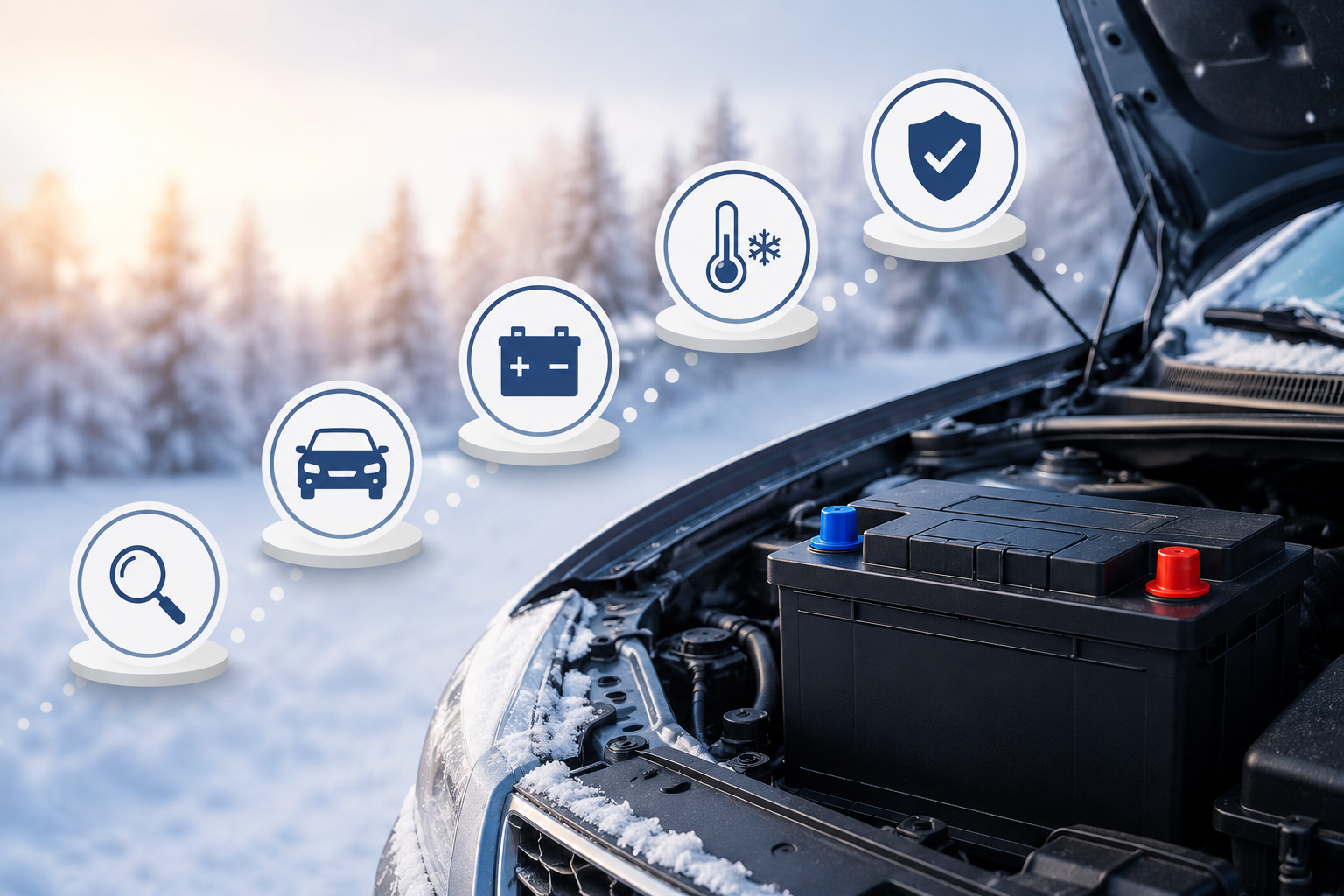
Cold weather can damage your car battery. In the cold outside, the battery struggles to hold its charge. On a cold morning, one of the last things you want to experience is turning the key and hearing nothing. Car batteries are more prone to failure in the winter because internal chemical reactions slow down, leaving less usable charge. A dead battery is not only annoying; it can leave you stranded, cause stress, and even damage other parts of your car. There are a number of simple and effective steps you can take to keep your car battery in excellent condition and ensure it starts reliably in the winter.
Understand How Winter Affects Your Car Battery
The first step to keeping your car battery in good condition in the winter is to understand why problems can arise. In cold weather, the chemical reactions in a car battery that generate energy slow down. In cold weather, the battery cannot provide enough charge to start the engine quickly. Furthermore, the battery has to work harder because devices such as heating, defrosting, seat heating, and lighting consume more power in the winter. Older batteries are particularly prone to problems at this time of year, so it is crucial to know the age and condition of your battery before winter sets in.
Check Your Battery Before Winter
It is wise to thoroughly check your battery before the first frost sets in. First, check the wires and battery terminals for corrosion or loose connections. A corroded battery may not charge fully, causing efficiency to decrease. To remove white or green deposits from the battery terminals, you can mix baking soda with water. After cleaning the battery terminals, check that the clamps are securely fastened. It is also advisable to check the battery voltage with a multimeter. A fully charged battery should have a voltage of approximately 12.6 volts. If the voltage is significantly lower, you may need to replace the battery before winter begins.
Keep Your Battery Fully Charged
The cold has less impact on a fully charged battery. It is crucial to keep your battery fully charged before winter, as cold weather can reduce a battery’s effective capacity by as much as 50%. Avoid parking your car for extended periods, as the battery consumes power even when the engine is off. If you do not drive daily, consider using a trickle charger or battery charger. These devices keep the battery fully charged by continuously charging at a low power level, preventing overcharging. This step is especially important for cars parked in garages or in cold areas during the winter.
Reduce Short Trips
In winter, short trips put more strain on the car battery. Starting the engine requires a lot of power, and driving for a few minutes may not give the alternator enough time to fully charge the battery. If possible, combine trips or choose longer routes to give the battery sufficient time to charge. This small adjustment can significantly reduce the risk of a dead battery and extend its lifespan. Regular battery maintenance is especially important for cars that frequently travel short distances in the city.
Do not Leave Electrical Devices on Continuously
Car owners frequently utilize the heater, defroster, lights, and entertainment systems while parked in winter. These functions are vital for safety and comfort, but if you leave them on after turning off the engine, the battery will drain. Therefore, always switch off all electrical devices before turning off the engine. Avoid using too many high-power electrical devices when the engine is running but the vehicle is stationary. By controlling the electrical load, the battery remains charged longer, and unnecessary discharge is prevented.
Protect Your Battery
Battery performance decreases in cold weather, but insulation can help keep the battery warm and ensure proper operation. Installing a battery insulation kit is simple and affordable. Thermal insulation kits can prevent the battery from getting too cold and slow down power loss. Some heat shields are specifically designed for winter use. Combined with a trickle charger, this setup provides even better insulation. Even simple DIY insulation measures, such as using foam or thermal blankets, can significantly improve battery performance in cold weather.
Check and Maintain Fluid Levels
Many car batteries contain liquid electrolyte, a mixture of acid and water. A shortage of electrolyte can make the battery more susceptible to freezing and damage. Check your battery’s electrolyte level before winter and top up with distilled water if it is low. Never use tap water, as the minerals it contains can damage the battery. The correct electrolyte level ensures that the internal chemical reactions proceed properly, even in cold weather. Some new batteries are sealed and require no maintenance, but if you are using an older battery, checking the electrolyte level is especially important in the winter.
Regular Battery Check
By checking your battery regularly, you can detect problems before your car breaks down. Many garages offer free battery checks in the winter. These checks cover the charge status, voltage, and cold cranking amperage (CCA). The cold cranking amperage (CCA) indicates how well the battery can start the engine in cold weather. Knowing the battery’s CCA value allows you to determine if it is sufficient for winter driving conditions. You can check the voltage at home with a multimeter or by purchasing a small battery tester. A simple monthly check in the winter can help detect performance issues early and enable timely repairs.
Keep the Battery Terminals Clean
Corrosion of the battery terminals is a common cause of defective batteries in cold weather. Corrosion hinders proper battery charging and can make starting the car difficult. Clean the battery terminals at the start of winter and check regularly for new corrosion. You can safely and effectively remove corrosion by brushing a mixture of baking soda and water onto the battery terminals. Apply a thin layer of petroleum jelly or a special battery terminal lubricant to the cleaned surface to prevent rust from forming again. Proper maintenance of the battery terminals ensures that the battery delivers maximum power to the starter motor and other electrical components.
Consider Using a Battery Heater
In frigid areas, a battery heater can be a lifesaver. A battery heater is similar to an electric blanket or heating pad that keeps the battery warm when the car is stationary. They plug into a standard wall outlet and keep the battery at the temperature needed to start. If you use a battery heater, take proper insulation measures, and ensure the battery is fully charged, the likelihood of starting problems in cold weather is significantly reduced. Although it costs some money, it is certainly worth it for drivers living in areas where temperatures are almost always below freezing.
Drive Regularly and Avoid Prolonged Idling
Driving in the winter helps keep the battery fully charged and ensures the engine runs smoothly. Extended periods of parking or idling will continue to deplete the battery charge, leading to faster battery drain. Regular short drives help maintain battery voltage and ensure the alternator continuously charges the battery. Furthermore, driving warms up engine components, preventing problems such as thickened engine oil or frozen fuel lines, which can indirectly affect battery performance.
Replace the Old Battery
Even with proper maintenance, car batteries have a limited lifespan. Most car batteries last between three and five years, depending on usage and weather conditions. If your battery is nearing the end of its lifespan or shows signs of reduced performance, it is advisable to replace it before winter. A new battery gives you peace of mind, ensures your car always runs well, and reduces the risk of breakdowns in cold weather. Make sure to choose a battery with a cold cranking rating (CCA) that matches your car model and the local climate. This ensures your car starts easily, even in cold weather.
Contain Emergency Supplies
Even with careful battery maintenance, problems can arise. If your car battery is dead, it can be useful to have jumper cables, a portable starter motor, or a battery booster on hand. You also need to know how to use these tools correctly. A portable starter motor is very handy because it can provide enough power within minutes to start your car without needing another vehicle. Be prepared to make winter safer.
Monitor Electrical Load
Many electrical systems in modern cars draw power from the battery, even when the engine is off. This «standby consumption» causes the battery to gradually drain over time. Additional features such as anti-theft alarms, infotainment systems, and phone chargers increase this load even further. Before winter, consider reducing unnecessary electronic devices or using lower-power devices. By closely monitoring and controlling your car’s electrical load, the battery remains in good condition, and there is sufficient charge to start the car in cold weather.
Learn How to Start Your Car Safely
Even with all safety measures, batteries can still fail under certain circumstances. Knowing how to start your car safely in winter is crucial. Always connect jumper cables in the correct order and keep them away from sparks near the battery. Always read and follow the instructions when using a portable jump starter. Starting safely protects your battery and the car’s electronics. By practicing this method during the warmer months, you increase your self-confidence and remain calm in winter emergency situations.
Recognize the Signs of a Dead Battery
If you recognize the signs of a nearly dead battery early, you can take steps to prevent complete battery damage. Some common warning signs include a slow engine start, dim headlights, frequent jumper cable attempts, and illuminated warning lights on the dashboard. If you notice any of these signs, check the battery and consider replacing it. By taking action early, you can prevent problems and save on repair costs caused by a dead battery. Recognizing these signs is especially important in winter, as cold weather can exacerbate battery problems.
Comprehensive Car Maintenance
Maintaining your car also includes keeping the battery in excellent condition. By ensuring the alternator, starter motor, and electrical systems function properly, you prevent battery problems. Winter puts a lot of strain on various parts of your car, so regular checks and preventative maintenance are essential. A safe and reliable driving experience involves checking belts, hoses, and fluids, as well as cleaning the battery. Do not focus solely on the battery; think of your car as a whole. This makes winter maintenance simpler and more effective.
Conclusion
To ensure your car battery remains in good condition during the winter, you must be prepared, perform regular maintenance, and drive safely. Even the best batteries can fail in cold weather, but simple measures such as checking the voltage, cleaning the battery terminals, checking fluid levels, insulating the battery, and avoiding short trips can make a big difference. By closely monitoring the battery’s condition, replacing old batteries in a timely manner, and having emergency tools on hand, you remain safe during the harsh winter months. By combining these strategies, you ensure a smooth start, reducing stress and preventing the inconveniences of car breakdowns. This makes your winter driving experience smoother and more carefree.
FAQs
1. How often should I check my car battery in the winter?
Check your car battery at least once a month in the winter. Check for residual heat, ensure the voltage is high enough, and check the connections. Regular checks help you detect and resolve problems before they occur.
2. Can I still use my car battery, which is older than five years, in the winter?
Some batteries last more than five years, but older batteries are more prone to failure in cold weather. It is wise to check your battery before winter begins, and if it is older than five years, you might consider replacing it.
3. Do I need a battery charger if I drive daily?
If you drive long distances daily, you probably do not need a battery charger, as the alternator can keep the battery fully charged. However, for short trips or when you do not use your car often, a battery charger can help keep the battery charged.
4. Does using seat heating and defrosting in the winter shorten battery life?
Yes, seat heating, defogging, and headlights all consume power and require battery power. Be careful when using electrical devices, as using them when the engine is off or for extended periods can damage the battery.
5. How do I safely start a dead battery?
When using jumper cables or a portable starter motor, always connect the positive terminal to the positive terminal and the negative terminal to a grounded metal surface, not directly to the battery. Always stay away from sparks and follow the manufacturer’s instructions to ensure your safety.

Written by Michael Reyes, part of the FallasDeAutos editorial team. Michael focuses on helping car owners understand and fix common vehicle problems with simple, practical guidance. His content covers diagnostics, maintenance, and troubleshooting, making complex automotive issues easier to understand. He aims to provide clear, reliable information that helps readers make informed decisions while encouraging consultation with qualified mechanics when needed.