
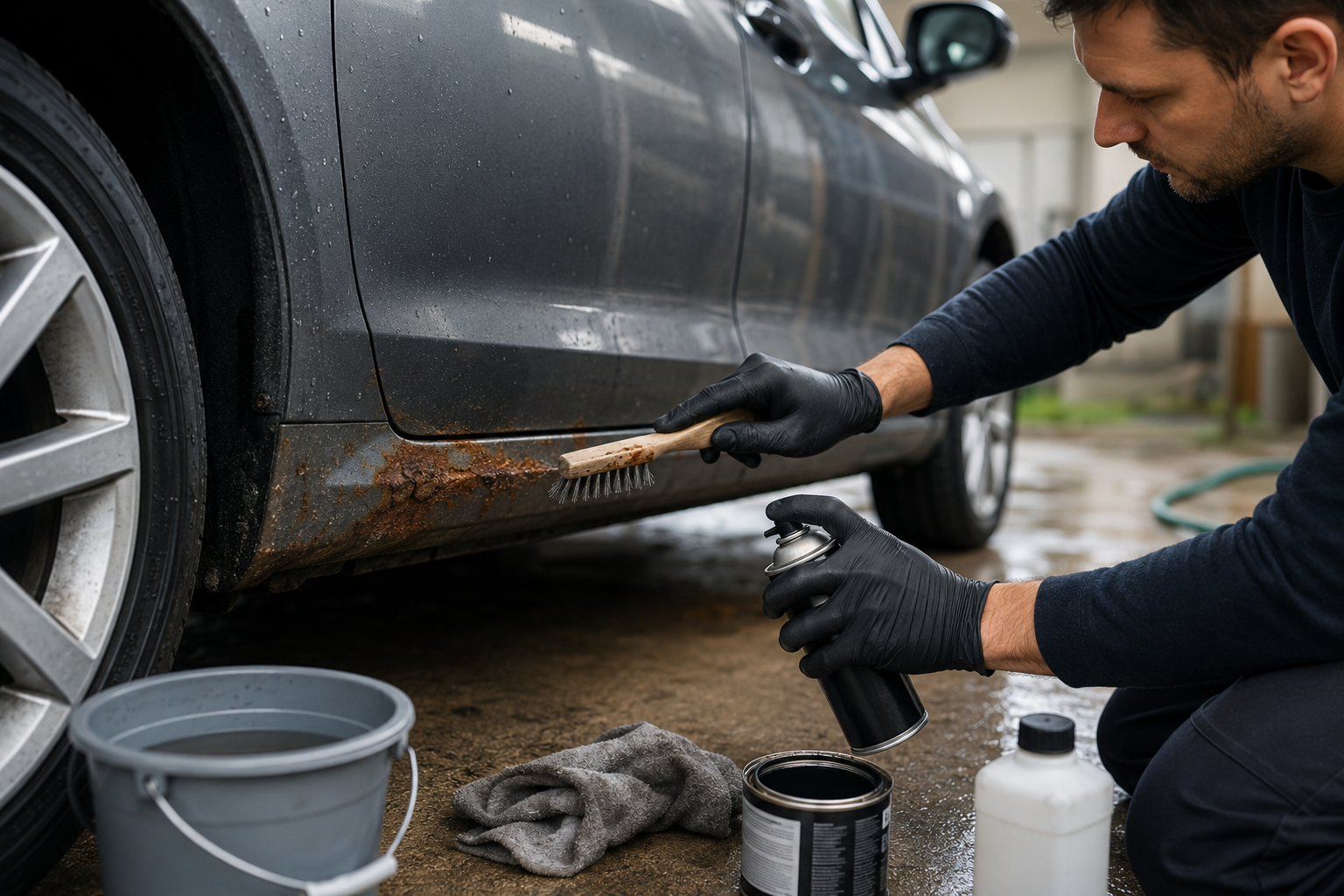
Rust does not develop overnight; it begins as soon as a car’s metal is exposed to moisture and oxygen. Most car owners do not realise that rust is determined not only by the age of the car but primarily by environmental factors. Even newer cars can rust if they are regularly exposed to water, damp environments, dust, or minor scratches (which can damage the protective paint layer).
Throughout the year, various environmental factors exacerbate corrosion in different ways. Rain leaves moisture behind in hidden spots such as door edges and wheel arches. Dust and dirt trap moisture on metal surfaces. In cold regions, road salt accelerates corrosion, while in warmer climates, persistent humidity slowly but surely worsens corrosion. Understanding these factors is the first step toward developing effective rust prevention habits for your car, and these habits ensure long-lasting protection.
Building Everyday Driving Habits That Protect Your Car
Rust prevention is not just about maintenance in your garage; it starts as soon as you hit the road. Simple daily habits can significantly reduce the risk of rust. One of the most effective habits is to pay close attention to where and how you drive after rain or on slippery surfaces. A mixture of water and mud often adheres to the underside of a car, and rust often starts there.
Parking is also more important than most people realise. Parking in the shade or under a canopy keeps your car out of the rain and dew. If there is no shade, it is also better to choose a dry, elevated spot rather than a wet one. The goal is to minimise the car’s prolonged contact with water, as rust forms quickly when water remains on metal surfaces for extended periods.
The Right Washing Routine for Year-Round Rust Prevention
Washing your car regularly is one of the most important steps in preventing rust, but you must do it correctly. Many people wash their car solely for aesthetics, but to prevent rust, the focus should be on removing hidden dirt and moisture. This also applies to areas where mud and dirt often accumulate, such as wheel arches, under the doors, and on the underside of the car. You don’t have to make washing your car complicated. The most important thing is consistency. After driving in the rain or on muddy roads, rinsing the underside of the car helps remove corrosive particles and prevent them from settling. Using a mild car wash solution instead of an aggressive cleaner also helps protect the paintwork, the car’s first line of defence against rust. Drying the car afterward is just as important, as residual water droplets can slowly cause corrosion in enclosed spaces.
Why the Chassis Needs Special Attention
A car’s chassis is one of the most vulnerable parts of a vehicle, yet it is often overlooked simply because it is invisible. The chassis is constantly exposed to splashing water, dust, pebbles, and sometimes even oil or chemical spills. Over time, all these substances accumulate, creating an environment that promotes corrosion.
A good rust prevention routine always includes regularly cleaning and inspecting the chassis. You don’t necessarily need professional equipment every time, but ensuring that dirt and debris don’t accumulate under the car is crucial. Even a thin layer of dirt can retain moisture for a long time and slowly damage the metal underneath.
The Role of Waxing and Protective Coatings
Waxing your car isn’t just about making it shine; it also creates a protective layer between the paint and the outside environment. A good wax layer ensures that water droplets roll off instead of sitting on the surface. This reduces the chance of moisture penetrating to the metal under the paint. For even longer-lasting protection, some car owners use protective coatings that last longer than regular wax. These coatings are more effective at repelling water, dust, and environmental contaminants. Although waxing requires touch-ups more frequently, even regular waxing can significantly reduce the risk of rust. You can consider it to be a silent, extra layer of protection for your car. Repair small scratches before they turn into rust
One of the fastest ways rust forms is through untreated small scratches and peeling paint. Even a small piece of exposed metal can start to corrode if it repeatedly faces moisture. Therefore, paying attention to the condition of your car’s surface is an important part of any rust prevention measure.
Fixing Small Scratches Before They Turn Into Rust Problems
One of the fastest ways rust can form is when small scratches and peeling paint are not addressed immediately. Even a small piece of exposed metal can start to corrode if moisture repeatedly exposes it. Therefore, checking the condition of your vehicle’s surface is an essential part of any rust prevention measure.
If you discover scratches, it is best to address them as soon as possible. Many people ignore minor damage because it seems harmless, but over time, these small spots can expand and become deeper. By having a touch-up pen on hand or performing minor repairs immediately, you can prevent rust formation. The key is to protect the metal before it is exposed to moisture for too long.
Seasonal Changes and Their Impact on Rust Formation
Rust prevention is not a one-off solution; it must be adapted to the seasons. During the rainy season, moisture is the most significant challenge. Water sits on the bodywork longer, especially in hidden spots, increasing the risk of corrosion. During these periods, more frequent cleaning and drying can significantly reduce rust formation. During the warm months, humidity and dust pose major problems. Dust particles can absorb moisture and settle on the car’s surface without you noticing. In some regions, harsh winters or gritted roads can accelerate rust formation. Therefore, adjusting your maintenance routine to the season helps protect your car well all year round.
Creating a Simple Long-Term Rust Prevention Mindset
The most effective rust prevention programme is not complicated, but it does require consistency. Prevention is better than a cure. This means paying attention to small details, such as cleaning the car after rain, regularly inspecting hidden spots, and maintaining the protective layer on the car’s surface.
Many car owners think that rust is inevitable, but in reality, most rust can be prevented with regular maintenance. The key is to develop a habit of regular maintenance, rather than waiting until obvious problems appear. Over time, this habit saves you money and effort and keeps your car in excellent condition for years.
Conclusion
Preventing rust on your car is not about one big action but about consistently maintaining a series of small, ongoing habits throughout the year. From regularly washing your car and protecting the underside to repairing scratches in a timely manner and adapting to seasonal changes, every step contributes to protecting your car in the long run. When these habits become part of your daily routine, rust is no longer a constant concern but a manageable risk.
A clean, well-maintained car not only looks better but also lasts longer and performs more reliably. With a simple year-round rust prevention programme, you can protect your car’s value and avoid unnecessary repair costs in the future.
FAQs
1. How often should I wash my car to prevent rust?
Generally, washing your car once every one to two weeks is sufficient. However, if you often drive in rainy, muddy, or dusty conditions, it is advisable to wash your car more frequently, particularly the underside and the chassis.
2. Does rain or wet weather increase the risk of rust?
Yes, rain and wet conditions increase the risk of rust because moisture remains on the car’s surface longer, especially in hidden spots that do not dry quickly.
3. Does waxing really prevent rust?
Waxing helps reduce the risk of rust because it forms a protective layer that prevents water and dirt from adhering directly to the paint, thereby slowing down corrosion.
4. Which car maintenance parts are most often overlooked?
The chassis is the part that is most often overlooked because it is invisible but is constantly exposed to water, dirt, and splashing road surfaces.
5. Can small scratches really cause rust?
Yes, even small scratches expose the metal underneath the paint, allowing moisture to penetrate and, if not addressed immediately, slowly start to rust.

Written by Michael Reyes, part of the FallasDeAutos editorial team. Michael focuses on helping car owners understand and fix common vehicle problems with simple, practical guidance. His content covers diagnostics, maintenance, and troubleshooting, making complex automotive issues easier to understand. He aims to provide clear, reliable information that helps readers make informed decisions while encouraging consultation with qualified mechanics when needed.