
The Morning My Battery Died (Again)
It was the third Tuesday in a row. I grabbed my keys, walked out to the driveway, and turned the ignition. Click. Nothing. The battery was dead. Again. The car had sat perfectly still for thirty-six hours, and somehow the battery had drained itself into a brick. I had already replaced the battery twice that year. The alternator tested fine. Something was stealing power while I slept, and I had no idea how to catch it.
Most people in this situation do what I did first. They jump in the car, drive to a shop, and pay someone to guess. The mechanic might test the battery, shrug, and sell you another one. Or they might start pulling fuses one by one and checking current draw with a multimeter, charging you hourly labor while they hunt. There is a faster, cheaper way to find the culprit yourself. It requires about twenty dollars in tools, thirty minutes of patience, and the willingness to get your hands slightly dirty. This is exactly how I found the parasitic drain hiding in my trunk light switch and how you can do the same without a mechanic’s paycheck.
Why Batteries Die in Parked Cars
A healthy car battery should hold charge for weeks without the engine running. Modern vehicles do draw small amounts of power for clocks, alarms, and computer memory, but this is typically under fifty milliamps. At that rate, a good battery lasts a month or more. When something pulls more than that, the math changes quickly. A drain of just two hundred milliamps can kill a battery overnight.
These excessive drains are called parasitic draws. They happen when a component fails to shut off properly, a wire shorts against metal, or a switch sticks in the closed position. The trunk light in my car was supposed to turn off when the lid closed. The switch had worn down just enough to stay partially pressed, keeping the light on for hours after I shut the trunk. It drew about one amp, which is roughly twenty times the normal resting draw. No wonder my battery was dead every other morning.
Other common culprits include glove box lights, aftermarket stereos with poor wiring, alarm systems with faulty sensors, and phone chargers left plugged into always-on power outlets. Sometimes the drain is intermittent, making it even harder to diagnose. The method below works regardless of whether the draw is constant or occasional.
Before You Start: Make sure your battery is actually healthy. A weak or old battery will show symptoms that look like parasitic drain but are actually just capacity failure. Most auto parts stores test batteries for free. Do this first. If the battery is more than four years old, replace it before chasing ghosts. A bad battery will mislead every test you run.
What You Actually Need
The tool list is short. A digital multimeter capable of reading DC current up to ten amps. A set of basic wrenches to loosen battery terminals. A helper is useful but not required. That is it. The multimeter is the only purchase, and a decent one costs between fifteen and thirty dollars. It is an investment that pays for itself the first time you avoid a diagnostic fee at a shop.
You do not need a fancy clamp-style ammeter. Those are convenient but expensive. The series method with a standard multimeter is slower but equally accurate and far more affordable. The key is understanding how to set it up safely so you do not damage the meter or the car’s electronics.
| Tool | Purpose | Approximate Cost | Where to Buy |
|---|---|---|---|
| Digital multimeter | Measure parasitic current draw in milliamps | $15 – $30 | Hardware store, auto parts store, online |
| Wrench set | Loosen and tighten battery terminals | $10 – $20 (or use what you have) | Any hardware or auto parts store |
| Jumper wires or clips | Temporarily bridge battery connection during setup | $5 – $10 | Electronics store, online |
The Setup That Almost Tripped Me Up
Here is where most guides get confusing. They tell you to disconnect the negative battery terminal and connect the multimeter in series between the terminal and the cable. Technically correct, but they skip the critical detail about how modern cars behave when you break that circuit.
When you disconnect the battery, the car’s computers lose power. When you reconnect through the multimeter, they wake up and draw a large surge of current as they initialize. This surge can blow the multimeter’s internal fuse or give you a false high reading that masks the actual drain. You need to keep the circuit alive during the transition.
The trick is using a jumper wire or a battery clamp to bypass the multimeter during setup. Connect the negative terminal to the cable with your temporary bridge. Then set your multimeter to the highest DC amp setting, usually ten amps. Connect the multimeter probes in parallel with the jumper wire. Now remove the jumper wire. The current now flows through the multimeter, but the computers never lost power because the bridge kept them alive until the meter took over.
If this sounds complicated, it is not. It takes about sixty seconds once you see it done. The first time I tried it, I blew a fuse because I skipped the bridge step. The second time, I got a clean reading of two hundred milliamps. That was my baseline. Anything above fifty meant I had a problem to find.
The Bridge Method Explained: Think of it like changing a tire without letting the car fall. The jumper wire is the jack. It holds the electrical connection while you position the multimeter. Once the meter is in place, you remove the jack. The car stays powered, the meter measures accurately, and you do not fry anything.
Waiting for the Car to Fall Asleep
Modern cars do not immediately settle into their resting state. When you close the doors and lock the car, modules stay awake for several minutes. The alarm arms, the interior lights fade, the radio remembers your station, and the climate control finishes its cycle. During this time, current draw is high and normal. You cannot diagnose a drain until everything has gone to sleep.
The waiting period varies by manufacturer. Some cars settle in five minutes. Others take forty-five. My sedan needed about twenty minutes before the draw dropped to its true resting level. During this time, do not open doors, press buttons, or trigger motion sensors. Any activity wakes the modules and resets your timer.
I set a timer on my phone and sat in the driver’s seat with the door closed but not fully latched. This let me watch the multimeter without disturbing the car’s sleep cycle. The reading started at about eight hundred milliamps, dropped to four hundred after ten minutes, then settled at two hundred. That final number was my real parasitic draw. Four times higher than it should be.
The Fuse Pulling Hunt
Once you know the total draw, you need to find which circuit is responsible. The fastest way is pulling fuses one at a time while watching the multimeter. Each fuse protects a specific circuit. When you pull the fuse feeding the draining component, the current drops. That tells you exactly where to look.
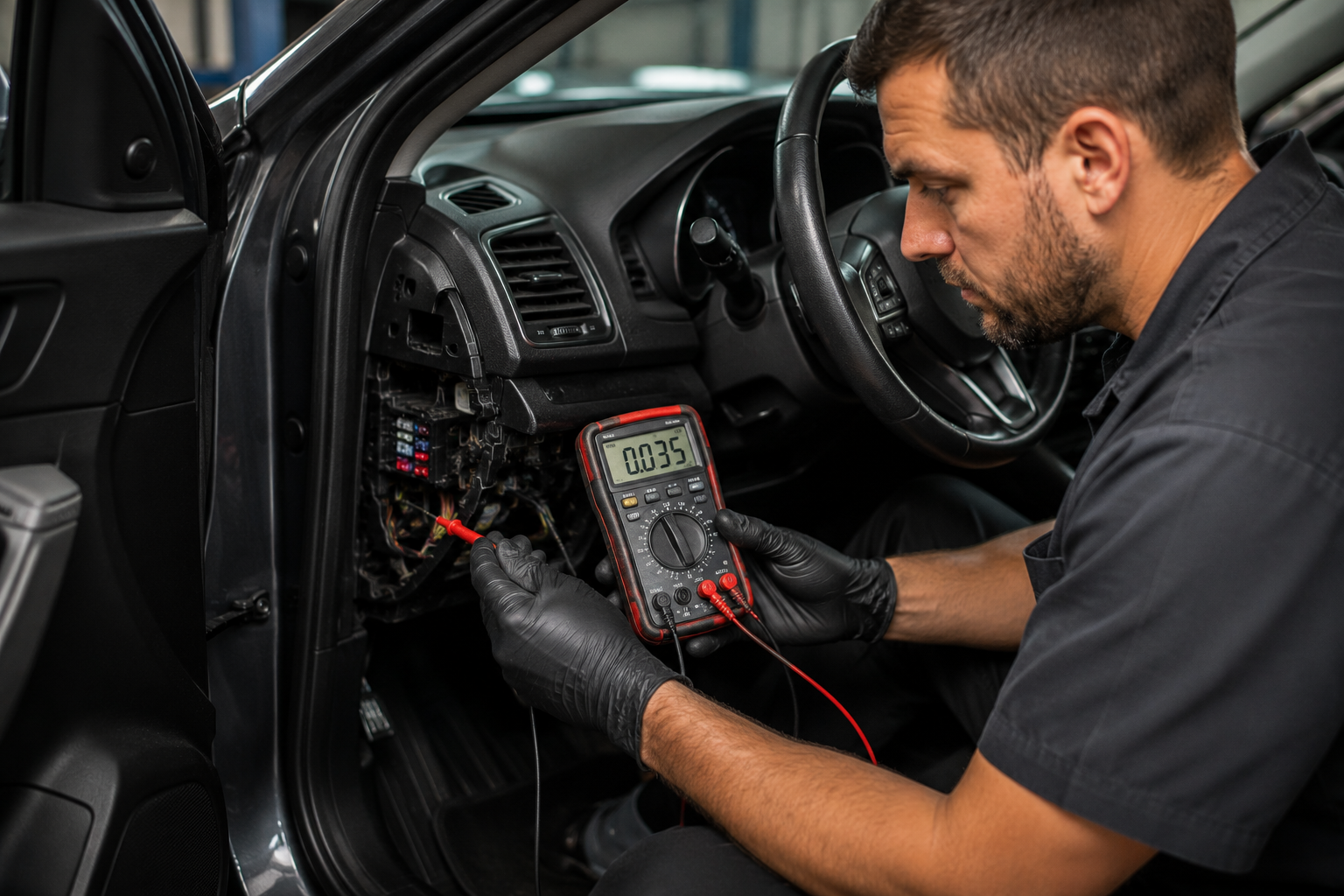
Start with the fuse box under the hood, then move to the interior fuse panel behind the dashboard or in the trunk. Pull one fuse, wait ten seconds for the reading to stabilize, note the number, then replace it. Move to the next. It is tedious but systematic. My draw dropped to forty milliamps when I pulled fuse number seventeen. The diagram on the fuse box lid showed that the fuse protected the interior lighting circuit.
That was the breakthrough. Interior lighting meant dome lights, vanity mirrors, and trunk lights. I checked each one. The dome light worked normally. The vanity mirrors turned off properly. The trunk light was the problem. The switch was worn, the light stayed on, and the heat from the bulb had actually started discoloring the trunk liner. I had never noticed because I rarely opened the trunk in the dark.
What I Almost Missed: The trunk light was dim enough that I could not see it in daylight. I only found it by sitting in the closed trunk with a flashlight, deliberately looking for the glow. If your drain is intermittent, you may need to wiggle wires, open and close doors, or even drive over bumps to trigger the fault. Persistence matters more than speed.
Fixing the Problem Without a Mechanic
Once you identify the circuit, the fix depends on the cause. In my case, the trunk light switch was a simple rubber button that pressed against the trunk lid. It had compressed over time and no longer fully released. A five-dollar replacement switch from the auto parts store solved the problem in ten minutes. Two screws: unplug the old, plug in the new.
Other common fixes are similarly simple. A glove box light switch can be adjusted with a screwdriver. A phone charger left in an always-on outlet just needs to be unplugged. An aftermarket stereo with poor wiring might need a professional, but at least you know exactly what to tell them instead of paying for exploratory labor.
Sometimes the fix is not a broken part but a design quirk. Some cars have modules that stay awake longer than expected. Others have alarms that trigger phantom draws after the battery is disconnected and reconnected. Research your specific model online. Forums are full of people who have solved the exact problem you are facing.
Preventing the Next Surprise
After fixing my trunk light, I established a simple maintenance habit. Once a month, I check the battery voltage with my multimeter. A fully charged battery reads about twelve point six volts with the engine off. If it drops below twelve point two, something is wrong. Catching a drain early prevents the stranded-in-the-driveway scenario.
I also became more careful about what I leave plugged in. Phone chargers, dash cams, and portable vacuums can all draw power even when the car is off. If an accessory connects to an always-on power outlet, unplug it when not in use. The convenience is not worth the dead battery.
Finally, I keep a portable jump starter in the glove box. Not because I expect more problems, but because peace of mind has value. The thirty-dollar investment means I am never stranded again, even if something unexpected happens.
When to Call a Professional
There are limits to DIY diagnosis. If your drain is intermittent and you cannot reproduce it, a shop with advanced scanning tools may be necessary. If the drain is on a circuit that protects critical engine or transmission modules, you might not want to risk pulling fuses blindly. If you find a shorted wire but cannot trace where it touches metal, professional help is warranted.
The key is arriving at the shop with information. Tell them the exact current draw, the fuse that stops it, and what you have already checked. This saves diagnostic time and money. A mechanic who knows you have done the homework will respect your input and work with you instead of starting from zero.
What This Method Cost Me
My total out-of-pocket cost was twenty-two dollars for the multimeter and five dollars for the switch. Twenty-seven dollars total. The shop had quoted me one hundred fifty dollars just for diagnostic labor, plus whatever they found wrong. I saved over a hundred dollars and gained a skill I have since used to help two friends with similar problems.
The time investment was about ninety minutes. Twenty minutes reading about the method. Thirty minutes setting up and waiting for the car to sleep. Twenty minutes pulling fuses. Ten minutes installing the switch. Ninety minutes once, and the problem was gone permanently.
That is the real value. Not just the money saved, but the confidence gained. Car problems feel mysterious and intimidating until you understand the logic behind them. Electrical drains are not magic. They are just unwanted current paths, and current can be measured, traced, and stopped.
Sources and References
- Haynes Manuals. (2024). Automotive Electrical and Electronic Systems Manual. Haynes Publishing.
- Automotive Service Excellence (ASE). (2023). Parasitic Draw Testing Procedures. Retrieved from https://www.ase.com/
- Car and Driver. (2024). How to Test for a Parasitic Battery Drain. Retrieved from https://www.caranddriver.com/features/
- Popular Mechanics. (2023). DIY Auto Repair: Finding Electrical Gremlins. Retrieved from https://www.popularmechanics.com/cars/
- Chilton Library. (2024). Automotive Wiring Diagrams and Fuse Panel Guides. Retrieved from https://www.cengage.com/chilton/
- Edmunds. (2023). Car Battery Maintenance and Troubleshooting Guide. Retrieved from https://www.edmunds.com/how-to/

Written by Michael Reyes, part of the FallasDeAutos editorial team. Michael focuses on helping car owners understand and fix common vehicle problems with simple, practical guidance. His content covers diagnostics, maintenance, and troubleshooting, making complex automotive issues easier to understand. He aims to provide clear, reliable information that helps readers make informed decisions while encouraging consultation with qualified mechanics when needed.