
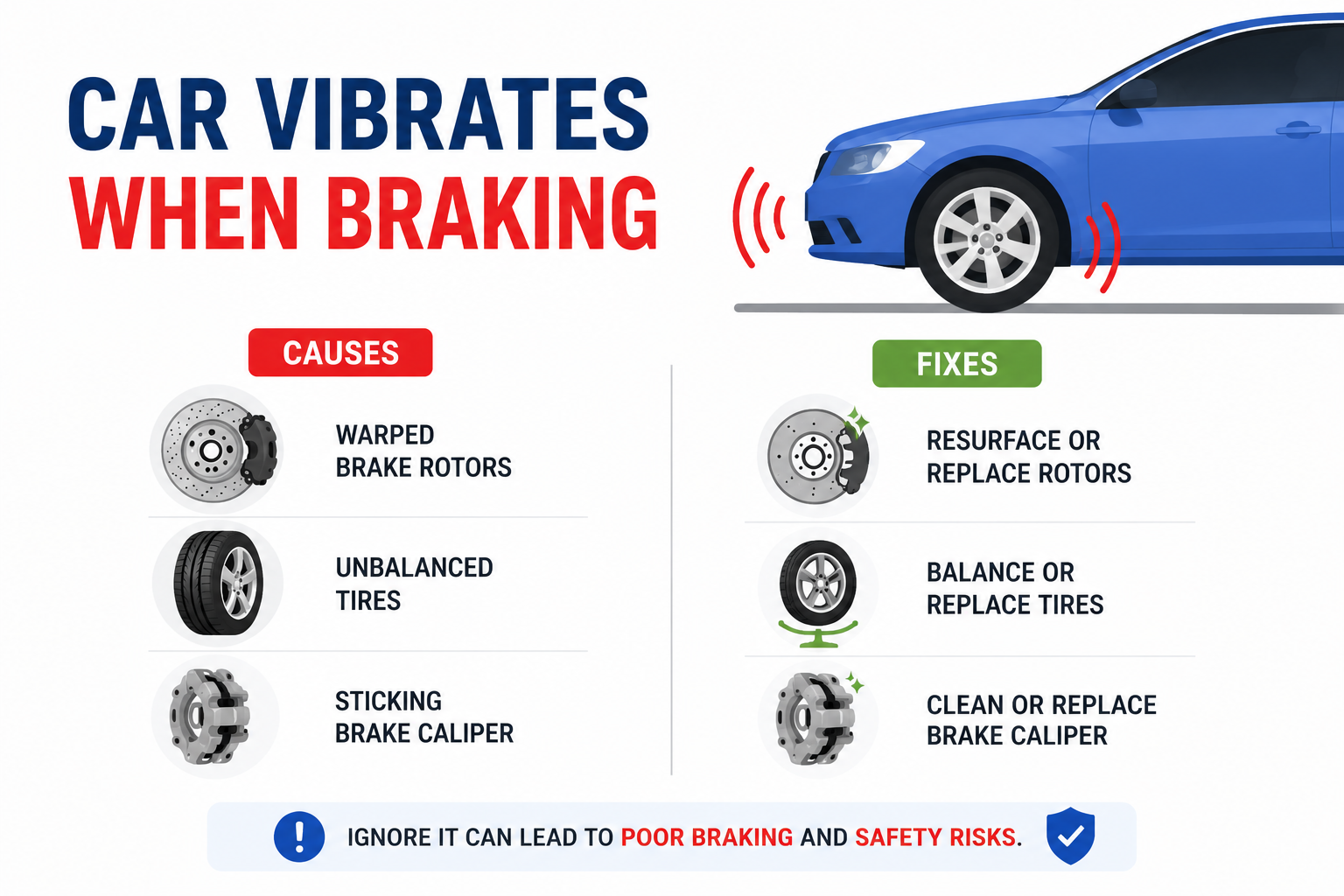
Few driving experiences are as unsettling as pressing the brake pedal and feeling your car shake or vibrate. It can feel like the steering wheel is wobbling, the brake pedal is pulsing, or the whole vehicle is shuddering as you slow down. Many drivers wonder if it’s safe to keep driving or if the car is about to break down.
The reassuring news is that brake vibrations are very common and usually fixable. The important part is understanding what causes the vibration and fixing the issue before it becomes a safety risk. This complete guide explains why your car vibrates when braking, how to diagnose the problem step by step, and what solutions will get your vehicle back to smooth, safe braking.
Why Brake Vibrations Should Never Be Ignored
Braking is your car’s most important safety system. When you feel vibration while braking, it means the braking system is not applying pressure evenly. This uneven contact creates shaking, noise, and longer stopping distances.
Ignoring brake vibration can lead to the following:
- Reduced braking performance
- Increased stopping distance
- Uneven tire wear
- Suspension damage
- Safety risks during emergency stops
Fixing the issue early keeps repair costs low and protects your safety.
Understanding What Happens When You Brake
To understand vibration, it helps to know how braking works.
When you press the brake pedal:
- Brake pads clamp onto brake rotors (metal discs).
- Friction slows the wheels.
- Heat is generated during the process.
For smooth braking, rotors must be perfectly flat and brake components must apply pressure evenly. If anything becomes uneven, vibration begins.
Step 1: Identify Where You Feel the Vibration
The location of the vibration gives a big clue about the cause.
Steering Wheel Vibrates
Problem likely in the front brakes.
Brake Pedal Pulsates
Likely warped brake rotors.
Whole Car Shakes
Possible rear brake or suspension issue.
Understanding the symptom helps narrow the diagnosis quickly.
Most Common Cause: Warped Brake Rotors
Warped brake rotors are the number one reason cars vibrate when braking.
What Are Brake Rotors?
Brake rotors are flat metal discs attached to each wheel. Brake pads squeeze them to slow the car.
Why Rotors Warp
Rotors become uneven due to excessive heat and wear.
Common causes include:
- Hard braking frequently
- Driving downhill often
- Cheap or worn brake pads
- Overheated brakes
Even slight unevenness causes vibration.
Signs of Warped Rotors
You may notice:
- Steering wheel shaking during braking
- Pulsating brake pedal
- Vibration increasing at higher speeds
- Noise when braking
The faster you drive, the more noticeable the vibration becomes.
How Warped Rotors Are Fixed
Mechanics typically:
- Resurface rotors (if slightly warped)
- Replace rotors (if heavily damaged)
Replacing rotors often restores perfectly smooth braking.
Worn Brake Pads and Uneven Wear
Brake pads press against the rotors. If they wear unevenly, braking becomes inconsistent.
Why Brake Pads Wear Unevenly
- Cheap pad materials
- Stuck brake caliper
- Driving habits
- Ignoring routine maintenance
Uneven pads create vibration and noise.
Signs of Worn Brake Pads
Look for:
- Squealing or grinding noise
- Reduced braking power
- Vibration during braking
- Brake warning light
Replacing brake pads is one of the most common brake repairs.
Stuck Brake Calipers
Brake calipers hold the brake pads and press them against the rotors.
What Happens When Calipers Stick
If a caliper sticks:
- One brake pad presses harder than the other
- Rotors overheat and warp
- The car pulls to one side while braking
This creates noticeable vibration and uneven braking.
Signs of a Stuck Caliper
- Burning smell after driving
- Car pulling left or right
- Excessive brake dust on one wheel
This issue requires immediate attention.
Suspension Problems That Cause Brake Vibration
Sometimes the brakes are fine, but suspension parts are worn.
Common Suspension Causes
- Worn control arms
- Bad ball joints
- Damaged bushings
- Worn struts or shocks
When braking shifts the car’s weight forward, worn suspension parts allow excessive movement, creating vibration.
Tire Problems That Mimic Brake Vibration
Tires can also cause shaking during braking.
Tire-Related Causes
- Uneven tire wear
- Wheel imbalance
- Damaged tire sidewall
- Improper wheel alignment
Tire issues often create vibration at high speeds even without braking.
Wheel Alignment Issues
Poor alignment causes tires to meet the road unevenly.
Symptoms of Misalignment
- Steering wheel not centered
- Uneven tire wear
- Vehicle pulling to one side
- Vibrations when braking
Alignment correction improves braking smoothness.
Rear Brake Problems
Many drivers focus only on front brakes, but rear brakes also matter.
Rear Brake Issues Include
- Warped rear rotors
- Worn rear brake shoes (drum brakes)
- Sticking rear calipers
Rear brake issues often cause whole-car shaking.
ABS System Pulsation vs Vibration
Sometimes drivers confuse ABS activation with brake vibration.
What ABS Feels Like
- Rapid pedal pulsation
- Happens during emergency braking
- Prevents wheel lock
ABS pulsation is normal during hard braking on slippery roads.
Driving Habits That Cause Brake Vibration
Your driving style affects brake lifespan.
Habits That Overheat Brakes
- Hard braking frequently
- Riding brakes downhill
- Aggressive driving
- Carrying heavy loads often
Gentle braking extends brake life significantly.
Step-by-Step Troubleshooting Checklist
Use this simple guide to diagnose the issue.
Step 1 – Notice When Vibration Occurs
High speed? Low speed? Only during braking?
Step 2 – Check Steering Wheel Movement
Steering vibration usually means front brake issues.
Step 3 – Listen for Noises
Grinding or squealing suggests worn pads.
Step 4 – Inspect Tires
Look for uneven wear or damage.
Step 5 – Schedule Inspection
Brake issues worsen over time.
Preventing Brake Vibrations
Routine maintenance prevents most brake problems.
Simple Prevention Tips
- Replace brake pads regularly
- Avoid aggressive braking
- Rotate tires every 8,000–10,000 km
- Maintain proper wheel alignment
- Inspect suspension annually
Preventive care saves money and improves safety.
When to Stop Driving Immediately
Seek immediate repair if:
- Vibration becomes severe
- A grinding noise appears
- Braking distance increases
- Steering feels unstable
Brake failure can be dangerous.
Why Early Repairs Save Money
Small brake issues quickly become expensive if ignored.
Early repair prevents the following:
- Rotor replacement
- Suspension damage
- Tire wear
- Safety risks
Fixing the problem early is always cheaper.
Conclusion
If your car vibrates when braking, it’s a clear sign that something in your braking or suspension system needs attention. In most cases, the cause is warped brake rotors, worn brake pads, or suspension wear. While the problem may start small, ignoring it can reduce braking performance and increase repair costs. By understanding the causes and acting early, you can restore smooth braking, protect your vehicle, and drive with confidence.
FAQs
1. Is it safe to drive with vibrating brakes?
Short distances may be safe, but repairs should be scheduled soon.
2. How long do brake rotors last?
Typically 50,000–70,000 km depending on driving habits.
3. Can new brake pads fix vibration?
Sometimes, but warped rotors often need resurfacing or replacement.
4. Why does vibration increase at high speed?
Higher speed increases brake pressure and highlights rotor unevenness.
5. How much does brake vibration repair cost?
Costs vary but are usually moderate when fixed early.

Written by Michael Reyes, part of the FallasDeAutos editorial team. Michael focuses on helping car owners understand and fix common vehicle problems with simple, practical guidance. His content covers diagnostics, maintenance, and troubleshooting, making complex automotive issues easier to understand. He aims to provide clear, reliable information that helps readers make informed decisions while encouraging consultation with qualified mechanics when needed.