
The Morning It Refused to Turn Over
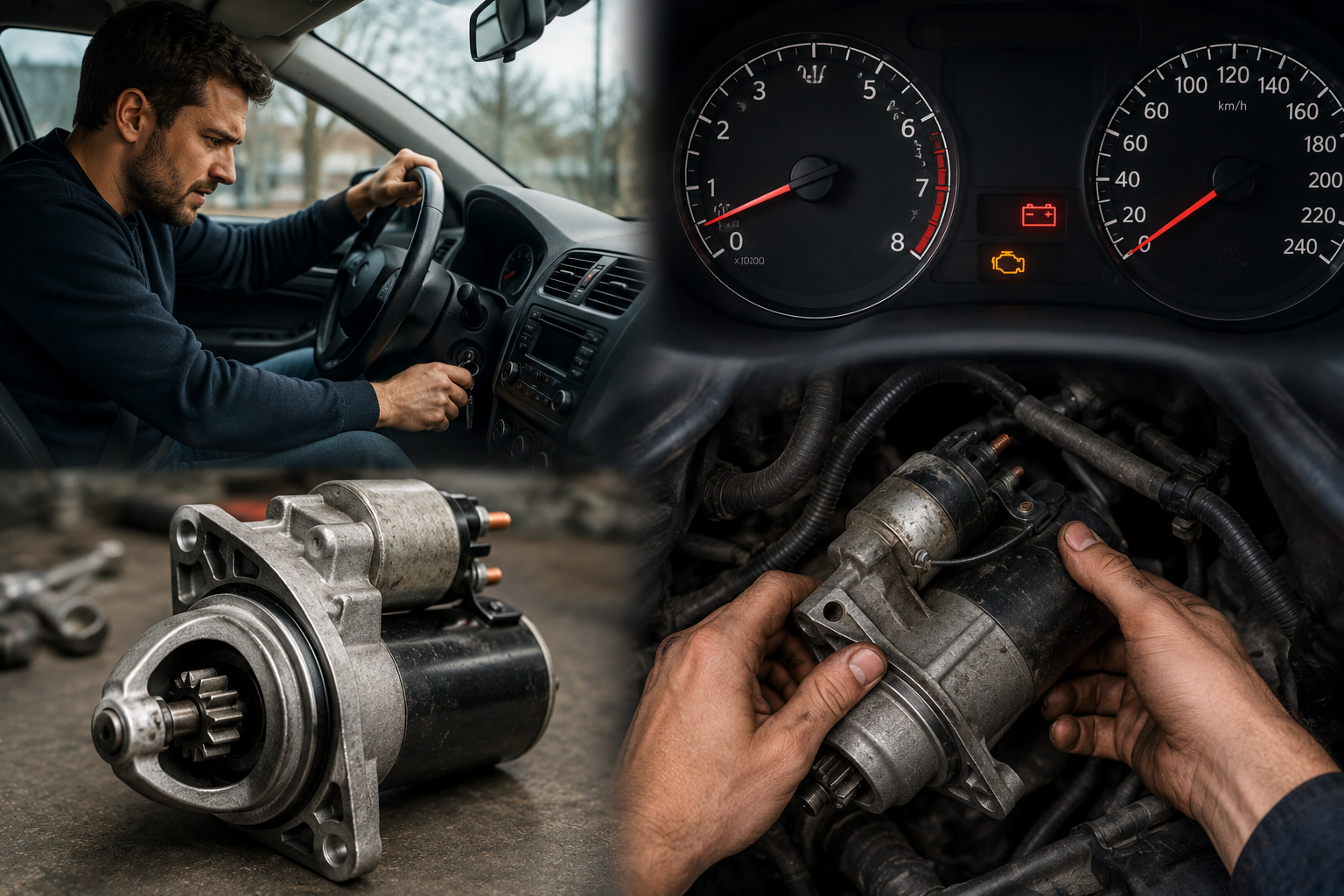
It was a Tuesday in February, the kind of cold that makes batteries groan and mechanics reach for their multimeters before their coffee. A regular customer rolled in with a 2014 Toyota Camry that had started fine the night before, but that morning produced nothing except a single, sharp click when she turned the key. The kind of click that sounds definitive. Final. Like the car had made up its mind.
Her husband had already tried a jump start. Nothing. He had cleaned the battery terminals. Nothing. He was ready to buy a starter motor online and swap it in the driveway. I told him to wait. We put the car on a lift, and within ten minutes I had the answer. The battery was reading 12.4 volts, which looks healthy on paper. But under load, it dropped to 9.1 volts. The battery was internally sulfated, and the starter was doing exactly what it should do — refusing to engage because the voltage collapse was too severe. A new battery, not a starter, fixed the car. Total cost: $180 instead of $450.
This is the thing about starter problems. Everyone assumes the starter is guilty because it is the last thing you hear before the engine fails to fire. But starters are actually remarkably honest components. They either work, or they tell you exactly why they cannot work. The trick is learning to listen to what they are saying instead of replacing them on autopilot.
What That Click Actually Means
The single click is the most misdiagnosed sound in automotive repair. Customers describe it as «the starter is clicking,» and shops sell them starters because it is an easy sale. But a single click is almost never the starter motor itself. It is the solenoid.
The solenoid is an electromagnetic switch. When you turn the key, it receives battery voltage and physically pushes the starter drive gear into the flywheel. At the same moment, it closes heavy internal contacts that send full battery current to the starter motor. The click you hear is the solenoid engaging. If the motor does not spin after that click, one of two things happened. Either the solenoid contacts are burned and cannot pass enough current to the motor, or the motor is receiving current but cannot turn because the battery voltage is too low to overcome the load.
Here is the diagnostic split that saves you money. If the click is loud and crisp, and the battery voltage drops below 10.5 volts during the crank attempt, your battery is the problem. The solenoid is doing its job. The starter motor is not getting enough power to spin. If the click is weak or sluggish, and the battery voltage stays above 11 volts, the solenoid contacts are probably burned or the cable connections are corroded. In that case, the starter assembly or the solenoid itself is the real culprit.
The rapid-fire click, the machine-gun rattle that sounds like a woodpecker under the hood, is different. That is the solenoid trying to engage, losing voltage, releasing, and trying again. It almost always means the battery is too weak to hold voltage under load, or the cable between the battery and starter has enough resistance to starve the circuit. I have seen brand new starters installed to fix a machine-gun click, only to discover the ground cable was loose at the chassis. The starter was fine. The electricity never made it there.
When the Starter Spins But the Engine Does Not
This is the symptom that separates real technicians from parts changers. You turn the key, you hear the starter whirring at high speed, but the engine itself never turns over. The starter is spinning freely, doing its happy dance, and the crankshaft is sitting still. This is not a starter motor problem. This is a starter drive problem.
The starter drive, also called the bendix, is a one-way clutch on the starter shaft. When the solenoid engages, the drive pops out and meshes with the flywheel ring gear. When the engine starts, the flywheel spins faster than the starter, and the one-way clutch allows the starter to disengage without being driven by the engine. If the drive gear is worn, the spring is weak, or the helical spline is gummed up with old grease and debris, the starter spins but never engages the flywheel.
I had a 2008 Ford F-150 in the shop with exactly this issue. The owner had already replaced the starter twice because he kept getting the same symptom. The third starter I pulled out looked brand new. The problem was the ring gear on the flywheel. Three teeth were chipped where the starter had been grinding against them for months. The starter drive could not find a good tooth to engage. Every new starter worked perfectly for a week until it wore its own notch into the damaged ring gear and started freewheeling again. We pulled the transmission, replaced the flywheel, and the truck was fine. The lesson: if you are on your second starter for the same symptom, look at what the starter is trying to engage with.
The Slow Crank That Gets Worse Over Time
A starter that cranks the engine but does so slowly, with a labored groaning sound, is telling you a story about resistance. Electrical resistance, mechanical resistance, or both. The starter motor is a series-wound DC motor, which means it produces maximum torque at low RPM. When it struggles to spin the engine, something is fighting it.
The first place to look is always the power and ground paths. A starter can pull 150 to 200 amps during cranking. At that current level, even a small amount of resistance creates a large voltage drop. A loose battery terminal, a corroded cable end, a ground strap that looks fine but is corroded where it bolts to the engine block — any of these can steal enough voltage to make the starter act like it is dying. I have fixed countless slow-crank complaints by removing the ground cable, cleaning the mounting surface down to bare metal, and reinstalling it with a star washer for better bite. The starter was never the issue. The return path for the electricity was broken.
Mechanical resistance is the other possibility. If the engine is tight from cold oil, a failing bearing, or internal damage, the starter has to work harder. But mechanical resistance usually shows up consistently, not just during starting. If the engine runs fine once started, the problem is almost certainly electrical. One exception is a hydrolocked cylinder. If coolant or fuel has leaked into a combustion chamber, the starter cannot compress liquid, and you get a very distinctive, abrupt stop mid-crank. That is a completely different emergency, and you should never keep trying to start the engine if you suspect it.
The Grinding Noise That Makes Everyone Wince
There are two kinds of grinding, and they mean opposite things. The first is the grinding that happens during engagement, when you turn the key and the starter drive clashes against the flywheel teeth before meshing. This is usually a solenoid that is weak or slow, or a drive gear that is not extending fully because of worn bushings in the starter housing. The starter is physically too far from the ring gear, or the drive is not popping out with enough force. The gear teeth scrape against each other instead of sliding into engagement. Over time, this destroys both the starter drive and the ring gear.
The second grinding happens after the engine starts. You release the key, the engine is running, and you hear a brief grinding sound as the starter disengages. This is the starter drive failing to retract quickly enough. The flywheel is now spinning faster than the starter, and the drive gear is being dragged along the ring gear teeth instead of freewheeling. It is the sound of metal being machined in real time. If you hear this regularly, the starter drive is sticking, and it is only a matter of time before the ring gear is destroyed or the starter seizes completely.
Both grinding sounds are warnings that should not be ignored. They are the starter’s way of saying that the mechanical marriage between the starter and the engine is failing. Fix it early, and you replace a starter. Ignore it, and you are pulling a transmission to replace a flywheel.
Smoke and Smell: The Point of No Return
If you smell burning electrical insulation while trying to start your car, or if you see smoke coming from the starter area, stop immediately. Do not turn the key again. Do not try one more time «just to see.» You are past the point of diagnosis and into the territory of fire risk.
Smoke from a starter means one of three things. The starter motor is mechanically seized and is drawing massive current without spinning, which turns the windings into a heating element. The internal solenoid contacts are welded closed, causing continuous current flow even after you release the key. Or the starter is being overcranked repeatedly, overheating the windings and melting the insulation. In any case, the starter is now a fire hazard, and the battery cable is the fuel line feeding it.
I once saw a starter that had been smoked so badly the copper windings had turned black and the drive housing was discolored. The customer admitted he had been cranking it for thirty-second intervals, waiting a minute, and trying again, for over ten minutes. He was trying to start a flooded engine. The starter was not designed to be a heater. It was designed for brief, high-torque bursts. Treat it like one, and it will last. Abuse it, and it will punish you.
The Oil-Soaked Starter Nobody Talks About
There is a starter failure that has nothing to do with electricity or wear. It is contamination, and it is more common than people realize. The starter on most engines sits low on the block, often directly below the intake manifold or valve cover gaskets. When those gaskets leak, oil drips down, pools on the starter housing, and seeps inside through the vent holes and around the drive shaft.
Inside the starter, oil is a disaster. It coats the brushes and commutator, reducing electrical contact and creating arcing. It gums up the drive mechanism, making engagement sluggish. It attracts dirt, which accelerates wear. A starter that is soaked in oil will often show intermittent symptoms before it fails completely. It works fine when cold, but after the engine warms up and the oil thins, it seeps deeper into the starter and causes a no-crank condition. The customer describes it as «it only happens when the engine is hot,» which sends everyone chasing temperature sensors and fuel issues when the real problem is a $12 valve cover gasket.
If you pull a starter and the housing is wet with oil, you have two problems. The starter is compromised and needs replacement, but the oil leak is the root cause. Replace the starter without fixing the leak, and you will be doing the job again in six months. Always trace the oil source before you button everything up. It is tedious work, but it is the difference between a lasting repair and a comeback.
How to Tell Starter From Battery From Alternator
The three most common no-start culprits are so often confused that it is worth laying out the distinctions clearly. Customers mix them up constantly, and even some technicians default to replacing the starter when the battery is the real villain.
| Symptom | Most Likely Culprit | Quick Test |
|---|---|---|
| Single click, no crank, lights dim heavily | Weak or dead battery | Voltage drops below 10V under load; jump start works |
| Rapid clicking, lights flicker | Weak battery or poor connection | Check voltage at battery terminals during crank attempt |
| Single click, no crank, lights stay bright | Solenoid or starter motor failure | Check voltage at starter main terminal during crank |
| Starter spins freely, engine does not turn | Starter drive or ring gear damage | Visual inspection of flywheel teeth through inspection hole |
| Slow crank, labored sound, worse when cold | High resistance in cables or ground path | Voltage drop test across battery cables and ground straps |
| Grinding during engagement or after start | Starter drive, solenoid, or ring gear wear | Remove starter and inspect drive gear and ring gear condition |
| Smoke or burning smell from starter area | Seized starter or welded solenoid contacts | Do not test further; replace starter and inspect cables |
| Intermittent no-crank, worse when hot | Oil-soaked starter or heat-soaked solenoid | Inspect starter for oil contamination; check heat shielding |
| Car starts fine but battery dies overnight | Alternator or parasitic drain, not starter | Check charging voltage and perform parasitic draw test |
The voltage drop test is the single most reliable way to separate a bad starter from a bad circuit. Do not measure voltage at the battery and call it good. Measure voltage at the starter main terminal while someone cranks the engine. If the battery shows 12.6 volts but the starter terminal shows 9.5 volts during cranking, you have 3.1 volts of loss somewhere in the cable, the connections, or the solenoid contacts. Fix the circuit, and the starter you thought was dead will suddenly come back to life.
Why Jump Starts Lie to You
Jump starting is the great confuser of starter diagnosis. A car with a weak battery will often not crank at all. Hook up jumper cables, and it starts immediately. The customer concludes the starter was fine and the battery was dead. They buy a battery, and a week later the car is back with the same symptom because the real problem was a corroded ground cable that only showed itself when the battery was too weak to overcome the resistance.
Conversely, a car with a bad starter will not start with a jump either, but customers often assume the jump failed because they did it wrong. They try three times, get frustrated, and tow the car in convinced they need a battery and a starter. The battery was fine. The starter was the only problem. But now they are paying for both because the jump start created more confusion than clarity.
Jump starts are useful for confirming that a battery is the issue. If a jump reliably gets the car running, the battery is suspect. But if a jump does nothing, do not automatically blame the starter. Check the voltage at the starter during the jump attempt. If the starter terminal is seeing 13 volts and still not spinning, then you have a starter problem. If it is seeing 9 volts, the jump cables or the connections are the bottleneck, not the starter.
The Starter That Works When It Wants To
Intermittent starter problems are the worst. The car starts fine nine times out of ten. Then, on the tenth try, nothing. No click. No crank. You wait five minutes, try again, and it fires right up. These are the problems that make customers swear at their cars and mechanics swear under their breath.
The most common cause of true intermittent starter failure is internal wear in the solenoid contacts. The copper contacts inside the solenoid erode over thousands of engagements. Eventually, they develop a dead spot. Most of the time, the contact arm lands on good copper and the starter works. Occasionally, it lands on the eroded area, and the circuit does not complete. No click. No crank. Wait a few minutes, the vibration of the engine or the thermal expansion changes the contact position slightly, and the next attempt works. The customer describes it as «it has a mind of its own.» The mechanic who knows to test the solenoid contacts with a voltage drop test during the failure will find the problem. The mechanic who waits for it to act up in the bay will never see it.
Heat soak is another intermittent villain. After a long drive, the starter is bathed in engine bay heat. The solenoid coil resistance increases with temperature. If the coil is already weak, the added heat can push it over the edge, and the solenoid will not engage. Let the car cool for an hour, and it starts fine. The starter is not technically failed. It is just thermally compromised. This is common in vehicles where the starter is mounted close to the exhaust manifold with poor heat shielding.
When Replacement Is the Only Answer
There comes a point where testing and cleaning are no longer worth the time. If the starter motor has smoked, if the drive gear is stripped, if the solenoid contacts are burned to the point of no contact, or if the bushings are worn enough to cause the armature to drag, replacement is the only honest option. Rebuilding a starter is possible, but for most daily drivers, a quality remanufactured unit is the practical choice.
When you install a replacement, do not just bolt it in and call it done. Clean the battery terminals and cable ends with a wire brush until they shine. Remove the ground straps, clean the mounting points to bare metal, and reinstall them with a thin coat of dielectric grease. Check the ring gear for damage before the new starter meets it for the first time. And if the old starter was oil-soaked, fix the leak before you close the hood. A new starter in a contaminated environment is a short-term fix, not a repair.
Also, resist the temptation to buy the cheapest starter you can find. The market is flooded with units that have been poorly remanufactured, with cheap brushes, out-of-spec armatures, and solenoids that fail within months. A starter is not a place to save twenty dollars. The labor to replace it a second time will cost you ten times that savings. Buy from a reputable brand, keep your receipt, and register the warranty. You will sleep better.
Sources and References
- AutoZone. «Signs of a Bad Starter: How to Identify Your Starter Is Failing.» March 24, 2025. https://www.autozone.com/diy/starter/signs-of-a-bad-starter-how-to-identify-your-starter-is-failing
- Firestone Complete Auto Care. «Car Won’t Start? 5 Signs of a Bad Starter.» July 8, 2025. https://www.firestonecompleteautocare.com/blog/maintenance/signs-of-a-bad-starter/
- The AA. «Common Starter Motor Problems and Symptoms.» January 29, 2026. https://www.theaa.com/breakdown-cover/advice/common-starter-motor-problems
- Fixxr. «How to Diagnose and Repair Starter Motor Issues.» September 15, 2025. https://fixxr.co.za/blog/how-to-diagnose-and-repair-starter-motor-issues
- ASDC. «How to Diagnose and Fix a Car’s Starter Motor Problems.» November 16, 2023. https://www.asdc.org.in/blogs/how-to-diagnose-and-fix-a-cars-starter-motor-problems

Written by Michael Reyes, part of the FallasDeAutos editorial team. Michael focuses on helping car owners understand and fix common vehicle problems with simple, practical guidance. His content covers diagnostics, maintenance, and troubleshooting, making complex automotive issues easier to understand. He aims to provide clear, reliable information that helps readers make informed decisions while encouraging consultation with qualified mechanics when needed.