
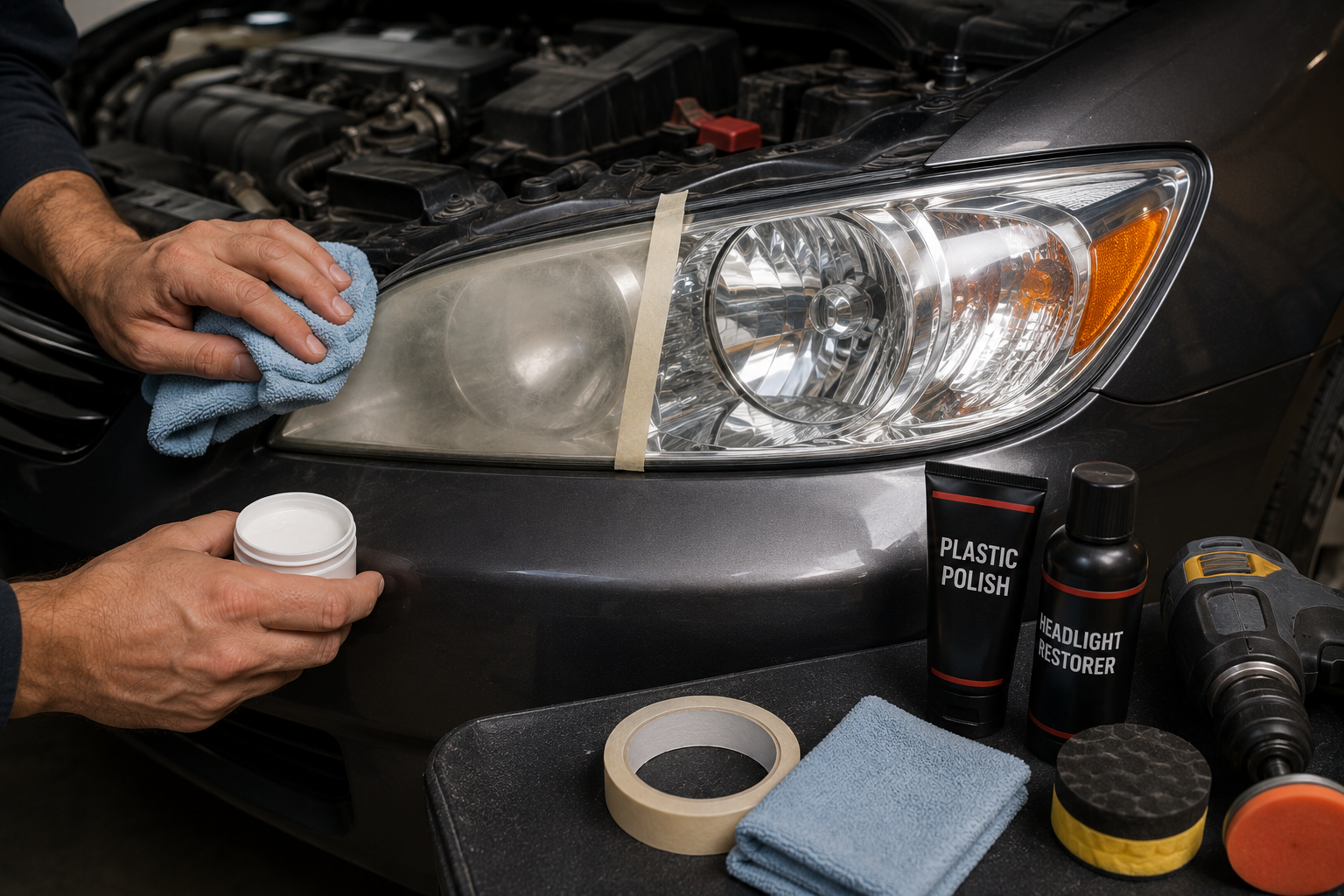
If you’ve ever noticed your car headlights looking cloudy, yellowish, or dull at night, you already know how frustrating it can be. Not only does it make your vehicle look older, but it also affects how well you see the road. For a long time, I thought the only solution was replacing the entire headlight unit—which is expensive and unnecessary in most cases.
But over time, I learned something better: you can restore clear headlights at home using simple, affordable methods. There is no need for replacement, no special workshop, and no heavy spending. In this article, I’m sharing exactly how I maintain clear headlights without replacing them, using easy, practical steps that anyone can follow—even if you’ve never worked on a car before.
Why Headlights Become Cloudy Over Time
Before resolving the problem, it helps to understand what’s actually going on.
Most modern headlights are made from polycarbonate plastic instead of glass. While this material is strong and lightweight, it has one weakness—it reacts to the environment.
Here are the main reasons headlights become foggy:
- UV exposure from sunlight breaks down the outer layer
- Dust, pollution, and road grime stick to the surface
- Oxidation builds up over time, creating a yellow haze
- Car wash chemicals sometimes strip protective coatings
This combination slowly creates a rough, cloudy layer that reduces brightness and clarity. The good news? This damage is usually on the surface—not inside the headlight.
That means you can fix it without replacing anything.
Why I Stopped Replacing Headlights (And Started Restoring Them)
I used to think replacement was the only solution. But after checking prices and labour costs, I quickly changed my mind.
A new headlight unit can be expensive, especially for modern cars. On top of that, installation fees add even more cost.
So I started experimenting with restoration instead—and the results surprised me.
Here’s why I prefer restoration:
- It costs a fraction of replacement
- It takes less than an hour in most cases
- It improves visibility immediately
- It can be repeated whenever needed
- It helps extend the life of your existing headlights
Once I realised how effective simple DIY methods were, I never looked back.
My Regular Headlight Cleaning Routine (Weekly Maintenance)
One of the biggest secrets to keeping headlights clear is not waiting until they become badly oxidised.
I follow a simple weekly or biweekly routine that prevents buildup.
Basic Cleaning Steps:
- Wash headlights with car shampoo and water
- Use a microfiber cloth to remove dirt gently
- Dry completely to avoid water spots
- Apply a light layer of car wax (optional but helpful)
This doesn’t remove deep oxidation, but it prevents new buildup from forming quickly.
Think of it like skincare for your car—small maintenance prevents big problems.
Deep Cleaning Method I Use for Foggy Headlights
When headlights start turning yellow or cloudy, basic washing isn’t enough. This is where deeper cleaning comes in.
I usually choose between toothpaste or polishing compound, depending on how bad the oxidation is.
Option 1: Toothpaste Method (Simple DIY Fix)
Toothpaste works because it contains mild abrasives that help remove surface oxidation.
Steps:
- Apply non-gel toothpaste on the headlight
- Use a soft cloth or sponge
- Rub in circular motions for 5–10 minutes
- Rinse with clean water
- Dry with a microfibre cloth
It’s surprisingly effective for light to moderate fogging.
Option 2: Car Polish (Better for Heavier Oxidation)
For stronger buildup, I use a proper plastic polish or rubbing compound.
- Apply a small amount to the headlight
- Buff using circular motion
- Repeat until clarity improves
- Wipe clean and inspect
This method restores more shine compared to toothpaste and lasts longer.
Wet Sanding Method for Stubborn Oxidation
When headlights are extremely cloudy, I use wet sanding. This sounds technical, but it’s actually straightforward if done carefully.
What You Need:
- Sandpaper (1000, 1500, and 2000 grit)
- Water spray bottle
- Masking tape
- Microfiber cloth
- Plastic polish
Step-by-Step Process:
- Tape around headlights to protect paint
- Spray water on the surface
- Start sanding with 1000 grit gently
- Keep surface wet while sanding
- Move to 1500 grit for smoother finish
- Finish with 2000 grit for clarity
- Rinse and dry
After sanding, the headlight will look dull—but don’t worry. That’s normal.
The final clarity comes in the next step: polishing.
Polishing: Bringing Back the Shine
After sanding or deep cleaning, polishing is where the magic happens.
This step restores transparency and gives headlights a like-new finish.
How I Polish Headlights:
- Apply a small amount of plastic polish
- Use a microfibre cloth or polishing pad
- Buff in circular motion for 5–10 minutes
- Repeat if needed
- Wipe clean for final shine
If available, a handheld polishing machine makes the process even faster, but manual polishing works just fine.
At this stage, headlights usually look dramatically clearer and brighter.
UV Protection: The Step Most People Skip (But I Don’t)
This is one of the most important steps if you want long-lasting results.
Without protection, headlights will start oxidising again within weeks or months.
So after polishing, I always apply a UV sealant or protective coating.
Options I Use:
- UV headlight sealant spray
- Clear protective coating
- Automotive wax (temporary protection)
Why This Matters:
- Prevents sunlight damage
- Slows down oxidation
- Keeps headlights clear longer
- Reduces need for frequent polishing
Skipping this step is the main reason many DIY restorations fail quickly.
Simple Habits That Keep Headlights Clear for Longer
Over time, I realised that maintenance is not just about cleaning—it’s also about daily habits.
Here are a few things I do regularly:
1. Park Smartly
Whenever possible:
- Park in the shade
- Avoid long direct sunlight exposure
- Use covered parking when available
2. Wash Car Regularly
Dirt buildup speeds up oxidation. I try to wash my car every 1–2 weeks.
3. Avoid Harsh Chemicals
Strong cleaners can remove protective coatings. I stick to mild car shampoo.
4. Apply Wax Occasionally
Wax adds a thin protective layer that helps reduce UV damage.
These small habits make a big difference in keeping headlights clear for longer periods.
Common Mistakes People Make (I Learned These the Hard Way)
When I first started restoring headlights, I made several mistakes that reduced my results.
Here are the most common ones:
1. Skipping Sanding When Needed
Sometimes polishing alone is not enough. Deep oxidation needs sanding.
2. Not Using Enough Water During Sanding
Dry sanding can scratch headlights permanently.
3. Skipping UV Protection
Without sealing, the headlights fog up again quickly.
4. Using Rough Cloths
Paper towels or rough fabric can create micro-scratches.
5. Over-polishing in One Area
This can create uneven clarity.
Avoiding these mistakes makes restoration more effective and longer-lasting.
Cost Comparison: Replacement vs DIY Restoration
One of the biggest motivations for me was cost.
Here’s a simple comparison:
Headlight Replacement:
- Expensive parts
- Labor charges
- Time-consuming
- Often unnecessary
DIY Restoration:
- Toothpaste or polish: very low cost
- Sandpaper kit: affordable
- UV sealant: one-time investment
- Total cost: significantly cheaper
In most cases, DIY restoration costs less than 10–15% of replacement.
And the results? Surprisingly close to new headlights when done properly.
Final Thoughts:
Maintaining clear headlights without replacement is not just possible—it’s practical, affordable, and surprisingly simple. Once I understood how oxidation works and learned a few basic techniques like cleaning, polishing, sanding, and UV protection, I stopped worrying about expensive replacements altogether. Now I treat headlight care as part of regular car maintenance. A little effort every few weeks keeps them bright, safe, and visually clean. If you follow even half of these steps, you’ll notice a huge improvement in both appearance and nighttime visibility.
FAQs:
1. How often should I restore my headlights?
It depends on your driving conditions. In general, light cleaning every 2–3 weeks and deep restoration every 6–12 months works well for most cars.
2. Is toothpaste really effective for headlight cleaning?
Yes, toothpaste can remove light surface oxidation because of its mild abrasive nature. However, it’s best for minor fogging—not severe damage.
3. Do I always need to sand headlights before polishing?
No. Sanding is only needed when headlights are heavily oxidised or yellowed. For mild cloudiness, polishing alone is usually enough.
4. How long does headlight restoration last?
Without UV protection, results may last a few months. With proper sealing, restoration can last 6–12 months or longer.
5. Can cloudy headlights affect driving safety?
Yes. Cloudy headlights reduce light output, which can affect nighttime visibility. Keeping them clear improves both safety and driving comfort.

Written by Michael Reyes, part of the FallasDeAutos editorial team. Michael focuses on helping car owners understand and fix common vehicle problems with simple, practical guidance. His content covers diagnostics, maintenance, and troubleshooting, making complex automotive issues easier to understand. He aims to provide clear, reliable information that helps readers make informed decisions while encouraging consultation with qualified mechanics when needed.