
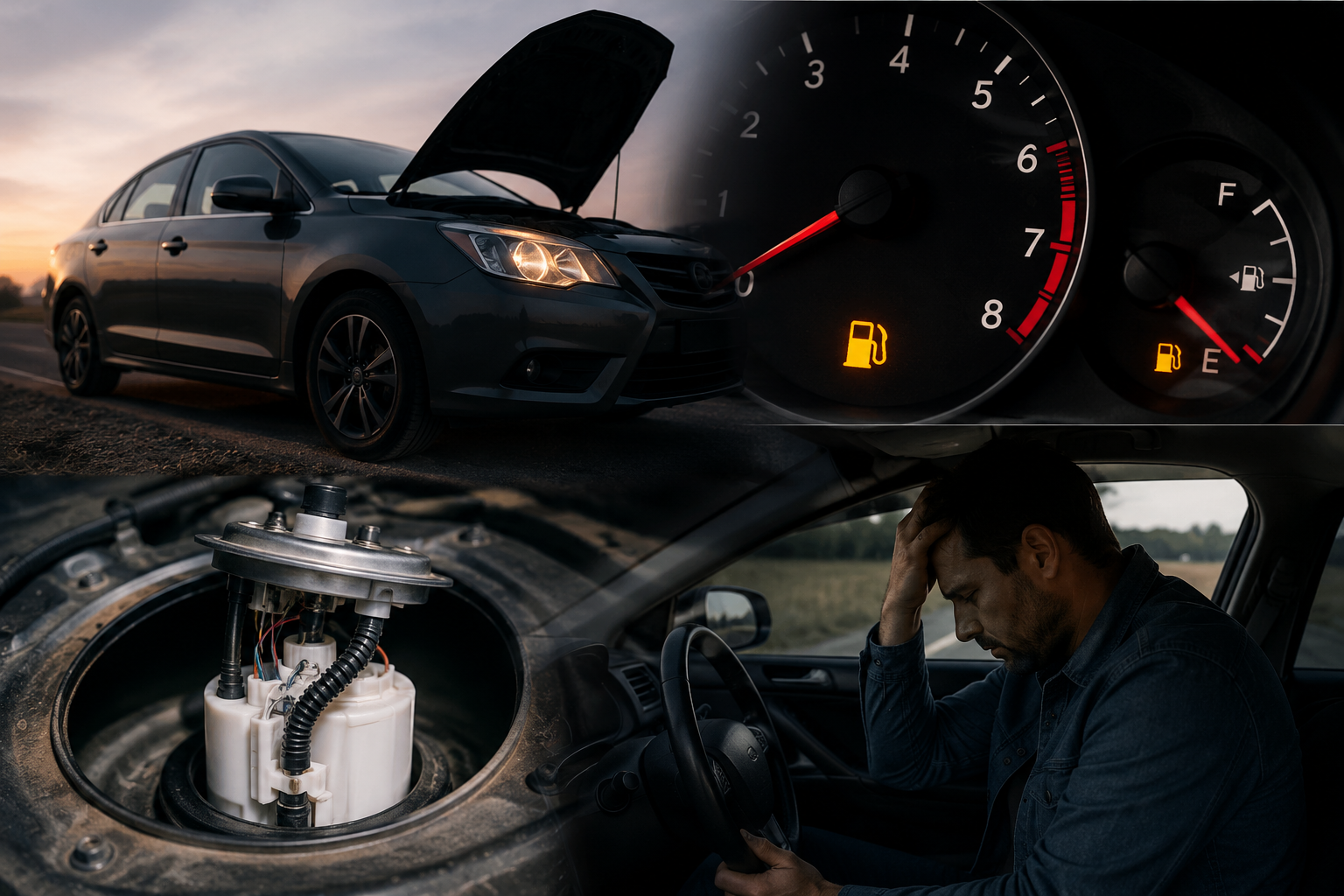
The Sputter That Turned Into Silence
It started on a Tuesday morning commute, about ten miles from home. I was merging onto the highway, foot halfway down on the accelerator, when the engine hesitated. Not a dramatic stumble. Just a momentary softness, like the car had taken a breath instead of accelerating. I lifted my foot, pressed again, and power returned. I told myself it was nothing. Maybe a bad tank of gas. Maybe I had imagined it.
Wednesday morning, the hesitation happened twice. Once under moderate acceleration and once while climbing a gentle hill at fifty miles per hour. Thursday, the engine stalled at a stoplight and restarted after a long crank. Friday, it died in my driveway and would not start again. The fuel pump had been failing all week, whispering warnings I did not know how to hear. By the time I understood the language, I was stranded.
What I learned in the days that followed changed how I listen to my car. Fuel pumps are not mysterious black boxes. They give specific, repeatable symptoms that tell you exactly what is happening inside the tank. This guide is what those symptoms mean, how to confirm the diagnosis without guesswork, and what your real options are when the pump finally quits. Some situations you can handle yourself. Others require a tow truck and a shop. Knowing the difference keeps you safe and saves you from expensive wrong turns.
What the Fuel Pump Actually Does
Your engine needs fuel at precise pressure to run correctly. Too little pressure, and the injectors cannot deliver enough fuel for the demanded power. Too much, and the mixture becomes dangerously rich. The fuel pump sits inside the gas tank, submerged in gasoline, and pushes fuel through lines to the engine at a constant pressure typically between forty and sixty pounds per square inch. A regulator on the fuel rail bleeds off excess pressure and returns it to the tank.
The pump is an electric motor connected to an impeller that moves fuel. It runs constantly whenever the engine is on and for a few seconds when you turn the key to the on position before starting. That brief prime pressurizes the lines so the engine starts immediately. If you listen carefully in a quiet garage, you can hear a soft hum from the rear of the car when the key turns on. That hum is the pump. Silence means trouble.
Modern pumps are designed to last the life of the vehicle, but life is a flexible term. Heat, vibration, contaminated fuel, and running the tank consistently near empty all accelerate wear. The pump relies on gasoline for cooling and lubrication. When the tank runs low, the pump is exposed to air instead of fuel, runs hotter, and wears faster. Habitually driving with the fuel light on is one of the fastest ways to kill a pump prematurely.
The Sound I Missed: For months before the failure, my pump had been louder than I remembered. The hum was more of a whine, especially on hot days. I noticed it once, thought it was normal, and forgot. That whine was the pump working harder to maintain pressure as its internal clearances wore. A healthy pump hums quietly. A dying pump complains. The noise is data. I just did not know how to interpret it.
Reading the Early Warning Signs
Fuel pump failure rarely happens without warning. The symptoms progress through predictable stages if you know what to watch for. Catching them early gives you time to plan the repair instead of reacting to a sudden breakdown.
The first sign is often hesitation under load. The engine stumbles during acceleration, climbing hills, or highway cruising where demand is highest. The pump can still deliver enough fuel for light loads like idling and gentle driving but struggles when flow requirements increase. This is the stage where most people rationalize the problem away. Bad gas, dirty injectors, or just a cold morning. The pump is asking for attention, and the driver is looking the other way.
The second sign is extended cranking before starting. A healthy pump primes the lines instantly. A weak pump takes longer to build enough pressure for the first ignition event. You turn the key, and the engine cranks for three or four seconds instead of the usual one, then catches and runs. This happens because fuel pressure bleeds down overnight, and the tired pump cannot restore it quickly. Each morning the crank takes a little longer.
The third sign is stalling, especially under load or at low fuel levels. The pump can no longer maintain consistent pressure, and the engine starves. Stalls may be intermittent at first, then increasingly frequent. They often happen when the fuel sloshes in the tank, uncovering the pump pickup temporarily. A nearly empty tank makes this worse because the pump has no fuel reserve to draw from when the level drops during cornering or braking.
The final stage is complete failure. The pump stops entirely. The engine cranks but never catches because no fuel reaches the injectors. This is the tow-truck moment. It is also the moment that could have been prevented if the earlier signs had been recognized and acted upon.
| Stage | What You Feel | What the Pump Is Doing | Time to Act |
|---|---|---|---|
| Early warning | Occasional hesitation under load, slight power loss | Struggling to maintain pressure at high flow demand | Weeks to months before failure, plan repair now |
| Progressive decline | Extended cranking, rough idle, intermittent stalling | Pressure dropping below specification, flow inconsistent | Days to weeks; diagnose and schedule replacement |
| Critical failure | Frequent stalls, severe power loss, engine dies and restarts hard | Pressure collapsing under load, intermittent internal contact | Immediately avoid highway driving; carry tools or tow number |
| Total failure | Engine cranks but never starts; there’s no fuel delivery sound | Pump motor dead or electrical circuit broken | Tow required; no roadside fix possible |
Confirming the Diagnosis Without a Shop
Before replacing a fuel pump, you want confidence that the pump is actually the problem. Fuel pumps are expensive and labor-intensive to replace. Guessing wrong costs hundreds of dollars and hours of frustration. Fortunately, there are simple tests you can do in your driveway.
The first test is the key-on listening test. Turn the key to the on position without starting the engine. In a quiet environment, listen near the rear of the car for a soft humming or whirring from the fuel tank area. This should last two to three seconds as the pump primes the system. If you hear nothing, the pump motor may be dead, the electrical circuit may be open, or the pump relay may have failed. Silence is not definitive proof of a dead pump, but it narrows the possibilities.
The second test is the fuel pressure test. This requires a fuel pressure gauge, which costs about thirty dollars and connects to the test port on the fuel rail. Most engines have a Schrader valve similar to a tire valve where the gauge attaches. With the key on and engine off, pressure should rise to specification within a few seconds. With the engine running, pressure should hold steady at the specified value. A pump that cannot reach specification or that drops pressure rapidly under load is failing.
I borrowed a gauge from a friend for my diagnosis. My specification was fifty-five pounds per square inch. The gauge showed thirty-eight at key-on and dropped to twenty-eight when the engine ran. That was definitive. The pump was weak, and the pressure collapse under load explained every hesitation and stall I had experienced.
The Relay Test First: Before condemning the pump, test the relay. A failed relay mimics a dead pump perfectly. The relay is a small electrical switch in the fuse box, usually labeled fuel pump or FP. Pull it and swap it with a similar relay from a non-critical circuit like the rear defroster or horn. If the pump works after the swap, you need a fifteen-dollar relay, not a three-hundred-dollar pump. I did this test and my relay was fine. The pump was genuinely failing. But the test saved me from a wrong diagnosis and an expensive mistake.
Electrical Problems That Mimic Pump Failure
Not every no-start or hesitation is a bad pump. The fuel delivery system includes wiring, connectors, a relay, a fuse, and sometimes a control module. Any of these can fail and create symptoms identical to a dead pump.
The fuel pump fuse is the first place to check. A blown fuse means either the pump is drawing excessive current due to internal failure, or there is a short in the wiring between the fuse and the pump. Replace the fuse once. If it blows again immediately, you have a wiring short or a seized pump motor. Do not keep replacing fuses. Find the cause.
Corroded connectors are common, especially in cars driven in wet climates or on salted roads. The electrical connector on top of the fuel tank passes through the tank seal and can corrode where moisture collects. Cleaning the connector with electrical contact cleaner and applying dielectric grease can restore function without replacing anything. I found minor corrosion on my connector during the pump replacement. Cleaning it cost nothing and may have prevented future problems.
The inertia switch is a safety device that cuts fuel pump power during a collision. Some cars have these in the trunk or behind a kick panel. They can trip accidentally from hard bumps, potholes, or even aggressive closing of the trunk. A tripped inertia switch kills the pump instantly. Resetting it is usually a button press. Check your owner’s manual for location and reset procedure before assuming the pump is dead.
When the Pump Is Bad but the Car Still Runs
This is the most dangerous stage. The pump is failing, and the symptoms are obvious, but the car still moves under its own power. The temptation is to keep driving until it dies completely. That is a gamble with high stakes.
A weak pump runs lean. The engine gets too much air relative to fuel, which raises combustion temperatures. High temperatures damage pistons, valves, and catalytic converters. The lean mixture also causes detonation, which sounds like knocking or pinging and can destroy engine internals. Driving on a failing pump risks turning a fuel system repair into an engine rebuild.
I drove mine for three days after the pressure test confirmed weakness. That was stupid. I was lucky the engine survived without damage. The correct move is to park the car, arrange the repair, and find alternative transportation. A rental car for two days is cheaper than a new catalytic converter or engine work.
The Cost of Waiting: My pump replacement cost four hundred dollars, including parts and labor. If I had kept driving and damaged the catalytic converter, the total would have exceeded two thousand. The catalytic converter sits downstream and processes the exhaust. Lean mixtures overheat it, melt the internal substrate, and destroy it. That is not a risk worth taking for the convenience of a few more days of driving.
Replacement Reality: What You Are Actually In For
Fuel pump replacement ranges from annoying to miserable depending on your car. The pump lives inside the tank, and accessing the tank is the hard part. Some cars have a service panel under the rear seat that lifts out to expose the pump assembly. Others require dropping the entire tank, which means jacking up the car, supporting it safely, disconnecting fuel lines, and lowering a tank full of gasoline or fumes. This is not a driveway job for most people unless you have a lift, proper tools, and experience with fuel systems.
I paid a shop to do mine. The tank had to be dropped, the old pump removed, the fuel level sensor transferred to the new pump assembly, and everything reinstalled. The shop also replaced the fuel filter, which was integrated into the pump housing on my car. Total labor was about three hours. The pump assembly itself was two hundred dollars for an OEM-quality aftermarket unit. I avoided the cheapest option because pump failure is not something I wanted to repeat in two years.
If you attempt this yourself, safety is everything. Gasoline vapors are explosive. Work outside, away from ignition sources, with a fire extinguisher nearby. Disconnect the battery before starting. Depressurize the fuel system by removing the fuel pump fuse and running the engine until it stalls. Never work on a hot engine or near open flames. The risk of fire is real and the consequences are catastrophic.
Preventing the Next Failure
New pumps fail too, especially cheap ones. But you can extend the life of any pump with habits that reduce stress and heat.
Keep the tank at least a quarter full. The fuel surrounds the pump and absorbs heat. A low tank exposes the pump to air, which insulates poorly and lets the pump run hot. This is the single most effective habit for pump longevity. I now fill up at half a tank instead of waiting for the light.
Replace the fuel filter on schedule. A clogged filter makes the pump work harder to push fuel through restriction. The extra effort generates heat and accelerates wear. Some filters are external and easy to replace. Others are part of the pump assembly and get replaced with the pump. Know your car’s design and maintain accordingly.
Use quality fuel from busy stations. Stale fuel degrades and forms varnish that coats pump internals. Stations with high turnover have fresh fuel. Avoid filling up at stations while the tanker truck is unloading, as sediment gets stirred up and can enter your tank.
Listen to your car. The pump sound changes as it wears. A new pump hums quietly. A worn pump whines. A failing pump screams. These changes happen gradually. Pay attention during quiet moments, like the first key turn in a closed garage. The sound is free diagnostic data.
What to Do When the Pump Dies on the Road
If your engine stalls and will not restart, and you suspect the fuel pump, your options are limited. There is no roadside fix for a dead pump inside the tank. But there are a few things to try before calling the tow truck.
First, try the inertia switch reset if your car has one. It is a long shot, but it costs nothing and takes ten seconds. Second, check the fuel pump fuse and relay. A failed relay or blown fuse can mimic a dead pump, and both are replaceable roadside if you carry spares. Third, try smacking the fuel tank with a rubber mallet or your shoe while someone cranks the engine. This is crude but sometimes effective. The vibration can jar a stuck pump motor into momentary contact, giving you enough fuel pressure to start and move to safety. It is not a fix. It is an emergency escape.
If none of these work, call for a tow. Do not keep cranking the starter. You will drain the battery and overheat the starter motor without delivering any fuel. Accept the situation, secure the car, and arrange professional help. The tow costs less than the damage from continued failed attempts.
What I Learned About Listening to Machines
My fuel pump failure taught me that cars communicate constantly. The hesitation, the extended cranking, and the whining sound, each was a message I failed to decode. I was not ignorant. I was just untrained in the language. Now I pay attention to subtle changes in performance, sound, and behavior. The first hesitation under load gets my full attention. The first extended crank triggers investigation. The first unusual noise from the tank area goes into my mental log.
I also learned that preventive maintenance is cheaper than reactive repair. Keeping the tank full, using good fuel, and replacing filters on schedule are small costs that prevent large ones. The fuel pump is not a part you think about until it fails. Making it part of your awareness changes the equation from surprise to preparation.
The breakdown that stranded me was preventable. The signs were there for weeks. I just did not know what they meant. Now you do. The next time your engine hesitates on a hill or cranks a second longer than usual, you will recognize the whisper. And you will act before the whisper becomes silence.
Sources and References
- Haynes Manuals. (2024). Automotive Fuel Systems: Pumps, Injection, and Diagnosis. Haynes Publishing.
- Automotive Service Excellence (ASE). (2023). Fuel System Diagnosis and Repair Procedures. Retrieved from https://www.ase.com/
- Car and Driver. (2024). How to Diagnose Fuel Pump Failure and Avoid Engine Damage. Retrieved from https://www.caranddriver.com/features/
- Popular Mechanics. (2023). Fuel Pump Replacement: What You Need to Know. Retrieved from https://www.popularmechanics.com/cars/
- Edmunds. (2024). Understanding Fuel System Pressure and Pump Health. Retrieved from https://www.edmunds.com/how-to/
- Bosch Automotive. (2023). Electric Fuel Pump Technology and Service Guidelines. Bosch Technical Documentation.

Written by Michael Reyes, part of the FallasDeAutos editorial team. Michael focuses on helping car owners understand and fix common vehicle problems with simple, practical guidance. His content covers diagnostics, maintenance, and troubleshooting, making complex automotive issues easier to understand. He aims to provide clear, reliable information that helps readers make informed decisions while encouraging consultation with qualified mechanics when needed.