
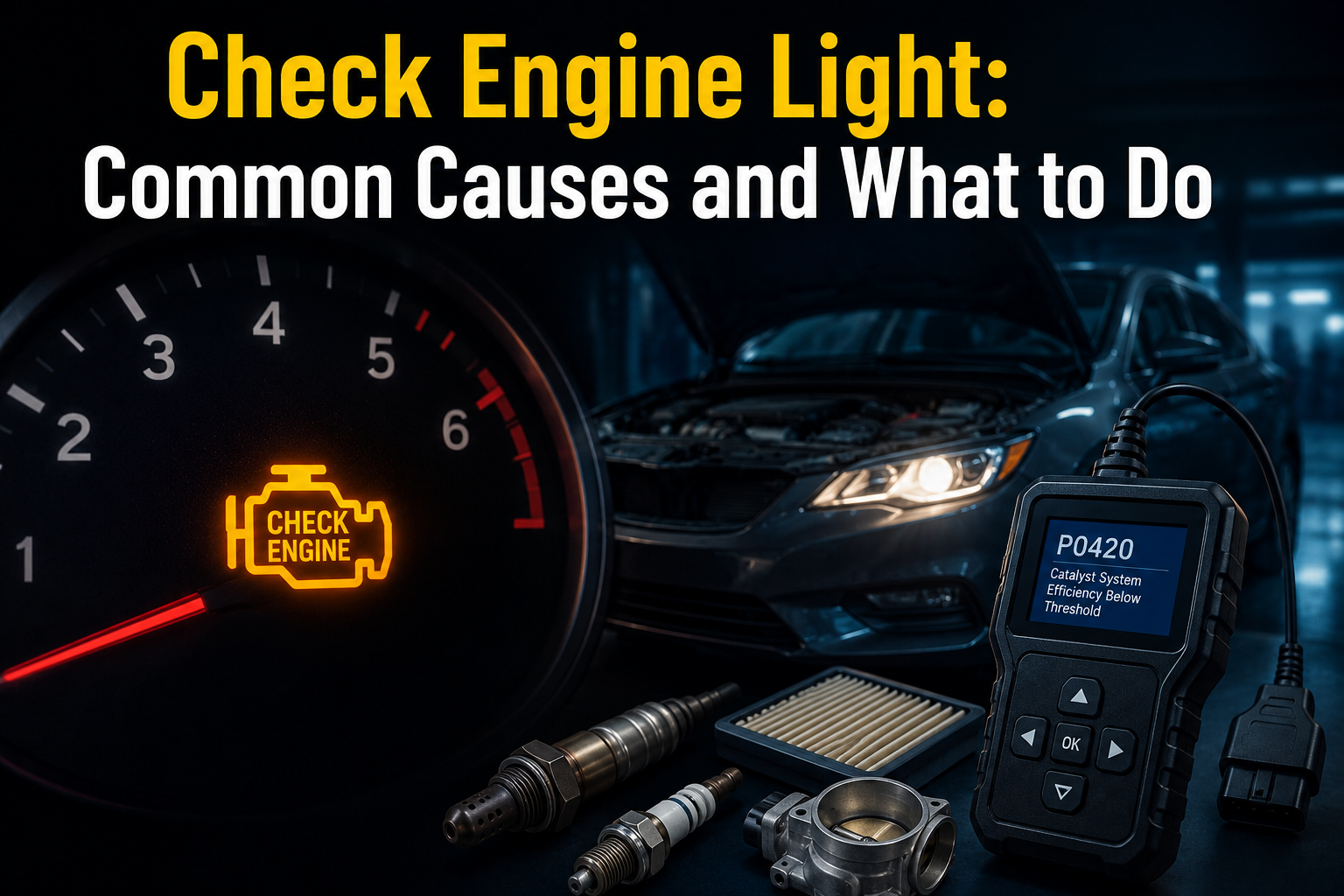
The check engine light is one of the most recognized indicators on a vehicle dashboard, yet many drivers often misunderstand it. Seeing this light can be alarming, especially for beginners who are not familiar with vehicle maintenance. The excellent news is that the check engine light is designed to alert you to problems early, helping you prevent costly repairs and avoid unsafe driving situations. Understanding its common causes and learning what to do when it appears is essential for every car owner.
What the Check Engine Light Means
The check engine light, sometimes called the malfunction indicator lamp (MIL), is part of your vehicle’s onboard diagnostics system. When this light comes on, it signals that the car’s computer has detected an issue that affects the engine, emission system, or other vital components. The light can appear as a small icon shaped like an engine, or in some vehicles, it may simply say “Check Engine.”
It’s important to understand that the light itself does not indicate how severe the problem is. Sometimes it could be a minor issue like a loose gas cap, and other times it could indicate a serious problem such as engine misfires or a failing catalytic converter. Therefore, the key is to investigate the cause rather than panic or ignore the warning.
Common Causes of the Check Engine Light
- One of the most common reasons for the check engine light to illuminate is a loose or faulty gas cap. If the cap is not sealed properly, it can trigger a small vacuum leak in the fuel system, causing the onboard computer to detect a problem. While the issue is an easy fix, it’s surprising how often a simple gas cap issue leads to unnecessary worry.
- Another frequent cause is a malfunctioning oxygen sensor. The oxygen sensor measures the level of oxygen in the exhaust gases and helps the engine run efficiently. A faulty sensor can lead to reduced fuel efficiency, higher emissions, and eventually damage to other engine components if left unchecked. Replacing a bad oxygen sensor is relatively simple and inexpensive compared to the potential consequences of ignoring it.
- Catalytic converter problems are also common triggers for the check engine light. The catalytic converter reduces harmful emissions from your vehicle, and any malfunction can significantly impact engine performance and fuel economy. Signs of a failing catalytic converter include poor acceleration, decreased fuel efficiency, and unusual exhaust smells. Addressing catalytic converter issues promptly is important for both vehicle health and environmental reasons.
- Failures of the mass airflow sensor can also activate the check engine light. This sensor measures the amount of air entering the engine to ensure proper fuel-to-air ratios. A malfunctioning sensor may cause the engine to run rich or lean, leading to rough idling, stalling, or decreased performance. Cleaning or replacing the mass airflow sensor usually resolves the problem.
- Another potential cause is spark plug or ignition coil issues. Spark plugs and ignition coils are essential for the combustion process, and any fault in these components can result in engine misfires. Misfires often cause rough idling, poor acceleration, and increased fuel consumption. Replacing worn spark plugs or faulty coils can quickly restore engine performance.
Understanding the Severity of the Light
Check engine lights are often categorized by severity. Some vehicles differentiate between a steady light and a blinking light. A steady light usually indicates a minor problem that needs attention but does not require immediate action. On the other hand, a blinking check engine light signals a serious problem, often related to engine misfires that can damage the catalytic converter. When the light is blinking, it’s important to reduce speed, avoid heavy acceleration, and schedule a diagnostic check as soon as possible.
It is also helpful to pay attention to other symptoms accompanying the light. Strange noises, smoke, unusual smells, or changes in vehicle performance can provide additional clues about the underlying problem. Even if the light is steady, observing these signs can help prioritize repairs and prevent minor issues from becoming major ones.
How to Respond When the Check Engine Light Comes On
When the check engine light illuminates, the first step is not to panic. Check for simple issues like a loose gas cap and tighten it if necessary. If the light does not turn off after a few driving cycles, the next step is to diagnose the problem using an OBD2 scanner. This tool plugs into your car’s OBD2 port and reads the diagnostic trouble codes (DTCs) stored in the vehicle’s computer. These codes provide information about which system or component is malfunctioning.
Using an OBD2 scanner is straightforward for beginners. Simply plug it in, turn on the ignition, and follow the instructions provided by the device or mobile app. Once you retrieve the codes, you can research their meanings online or consult your car’s manual. Many scanners also provide detailed descriptions of the codes and potential fixes, making it easier to understand what action is required.
Deciding Between DIY Repairs and Professional Help
Once you have identified the cause of the check engine light, you need to decide whether to handle the repair yourself or seek professional assistance. Simple issues, such as a loose gas cap or replacing spark plugs, can often be resolved by beginners using basic tools. Many online tutorials and vehicle manuals provide step-by-step guidance for these tasks.
However, for more complex issues like catalytic converter problems, oxygen sensor replacements, or transmission-related faults, it is advisable to visit a certified mechanic. Attempting advanced repairs without proper knowledge can lead to further damage and higher costs. The goal is to address the problem efficiently and safely while preventing long-term engine damage.
Preventing Check Engine Light Issues
Preventive maintenance is the best way to avoid unexpected check engine light warnings. Regularly checking and replacing engine oil, air filters, spark plugs, and other essential components ensures your car runs smoothly. Keeping up with scheduled maintenance also improves fuel efficiency and reduces emissions.
Monitoring your vehicle for early signs of trouble, such as decreased performance, rough idling, or unusual noises, can help catch problems before the check engine light comes on. Regular diagnostic scans, even when the light is off, are also a smart practice for proactive vehicle care. This approach helps identify minor issues early, saving time and money in the long run.
The Role of Fuel Quality
Fuel quality can also impact check engine light activation. Poor quality or contaminated fuel can cause engine knocking, misfires, or sensor malfunctions. Using the recommended fuel grade for your vehicle and avoiding low-quality gas stations can prevent many common problems. Additionally, periodic use of fuel system cleaners can help maintain injector and combustion system efficiency, reducing the likelihood of triggering warning lights.
Understanding Emissions-Related Issues
Many check engine light triggers are related to emissions control systems. Modern vehicles are equipped with sensors and components designed to reduce harmful emissions. Problems with the catalytic converter, oxygen sensors, or exhaust gas recirculation (EGR) system can activate the light. Addressing these issues promptly is not only important for vehicle performance but also helps your car meet environmental standards and pass emissions tests during inspections.
Being aware of emissions-related problems also allows you to take preventive measures. Avoiding short trips that don’t allow the engine to reach optimal operating temperature, keeping up with regular maintenance, and using high-quality fuel all contribute to a healthier emissions system and reduce the chances of check engine light activation.
Technology and OBD2 Scanners
The integration of technology has made responding to the check engine light easier than ever. OBD2 scanners are affordable, user-friendly, and accessible to beginners. They provide valuable insights into your vehicle’s health and allow you to take control of basic diagnostics. Many scanners connect to smartphones, offering live data, explanations of trouble codes, and maintenance tips. Using these tools empowers drivers to make informed decisions about repairs and maintenance.
Safety Considerations
While the check engine light is not always an immediate safety concern, ignoring it can lead to unsafe driving conditions. For example, a misfiring engine or failing catalytic converter can affect acceleration and handling. In rare cases, unresolved issues could lead to engine damage or stalling while driving. Paying attention to the light, understanding its cause, and taking prompt action ensures your safety on the road.
Cost Implications
The cost of addressing a check engine light varies widely depending on the problem. Minor issues like a loose gas cap are free to fix, while replacing an oxygen sensor or catalytic converter can be more expensive. Using an OBD2 scanner to identify the specific cause helps avoid unnecessary expenses by targeting the repair accurately. Additionally, preventive maintenance and timely diagnostics often save significant money compared to major repairs caused by neglect.
Conclusion
The check engine light is a critical tool designed to alert drivers to problems with their vehicles. Understanding its common causes, from loose gas caps to sensor failures and catalytic converter issues, allows car owners to respond effectively. Using an OBD2 scanner and following proper diagnostic procedures empowers drivers to make informed decisions, whether addressing the problem themselves or seeking professional help.
Regular vehicle maintenance, careful attention to fuel quality, and awareness of emissions-related systems are key to preventing unnecessary check engine light activations. By taking a proactive approach, you can ensure your car runs efficiently, safely, and reliably. For beginners and everyday drivers, knowledge about the check engine light is the first step toward confident, responsible vehicle ownership.
FAQs
1. Is it safe to drive with the check engine light on?
It depends on the severity. If the light is steady, you can usually drive cautiously until you diagnose the problem. A blinking light, however, indicates a serious issue, and you should reduce speed and have the vehicle inspected immediately.
2. Can a loose gas cap really trigger the check engine light?
Yes, a loose or damaged gas cap can create a vacuum leak in the fuel system, triggering the light. Tightening or replacing the cap often resolves the issue quickly.
3. How much does it cost to fix issues with the check engine light?
Costs vary widely. Minor issues like a gas cap are free, while sensor replacements may range from $50 to $300. Major repairs, such as catalytic converter replacement, can cost $500 or more.
4. Do I need a mechanic to read check engine codes?
No, an OBD2 scanner allows you to read codes yourself. Many scanners provide explanations and suggested fixes, making it beginner-friendly. For complex problems, consulting a mechanic is recommended.
5. Can ignoring the check engine light cause serious damage?
Yes. Ignoring the light can lead to worsening engine problems, reduced fuel efficiency, and potentially costly repairs. Prompt diagnosis and maintenance help prevent these issues.

Written by Michael Reyes, part of the FallasDeAutos editorial team. Michael focuses on helping car owners understand and fix common vehicle problems with simple, practical guidance. His content covers diagnostics, maintenance, and troubleshooting, making complex automotive issues easier to understand. He aims to provide clear, reliable information that helps readers make informed decisions while encouraging consultation with qualified mechanics when needed.