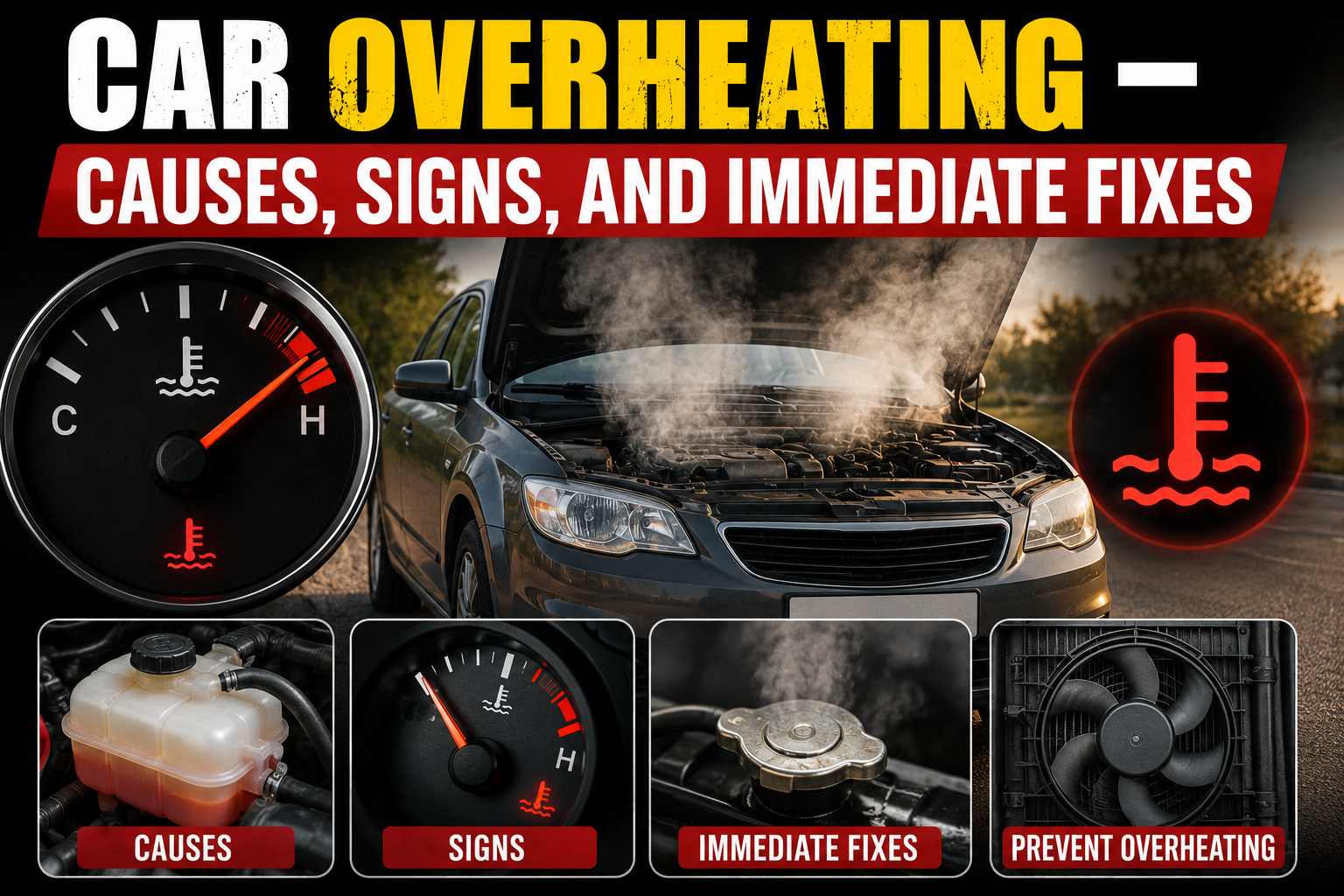
Engine overheating is one of the most annoying problems with cars. One moment you are driving perfectly normally; the next, the coolant temperature gauge shoots up to a very high value. If you ignore overheating, it can cause serious damage to the engine. Every driver must understand the causes of overheating and know how to recognize it and how to resolve it immediately. This book explains everything you need to know in an understandable way.
Understanding Why Cars Overheat
A car engine generates heat during the combustion of fuel to produce energy. The radiator, coolant, thermostat, and water pump are all parts of the cooling system that work together to keep the engine temperature within a safe range. If this system malfunctions or operates abnormally, the engine overheats. Damaged parts, coolant leaks, or even your driving behavior can cause overheating, which can occur slowly or quickly. Understanding how the cooling system works is essential to identifying the causes of overheating in a car and learning how to prevent it.
Common Causes of Car Overheating
There are many reasons why a car can overheat. One of the most common causes is a lack of coolant. Coolant is a mixture of water and antifreeze that absorbs heat from the engine and transports it to the radiator. A lack of coolant, leaks, or damaged hoses can impede the proper circulation of the coolant, leading to overheating. A defective thermostat is another common cause. The thermostat regulates the flow of coolant. If it is stuck in the closed position, the coolant cannot circulate, causing the engine to overheat.
The radiator itself can also be a culprit. A clogged or damaged radiator can impede heat dissipation, making it difficult for the engine to cool down. If the water pump fails, the flow of coolant stops completely, which also leads to engine overheating. Other possible causes of overheating include a defective cooling fan, a worn drive belt, and even external factors such as driving in traffic jams or hot weather. The first step toward an effective solution is understanding the problem.
Signs Your Car Is Overheating
Recognizing signs of overheating early can prevent many problems. The most obvious symptom is a temperature gauge that goes outside the normal range. Drivers may also see steam or smoke coming from under the hood. This condition is usually caused by coolant leaks resulting from engine overheating. If you smell an unusual odor, such as a sweet or burning smell, the odor may mean that the engine oil or coolant temperature is too high.
Other signs include a sluggish engine, sudden loss of power, or unusual noises while driving. Sometimes warning lights illuminate on your car’s dashboard, indicating that the temperature is too high or too low. If you notice these signs early, you can take action before the engine sustains permanent damage.
What to do Immediately if Your Car Overheats
When your car overheats, you must take immediate action. First, turn off the air conditioning and turn the heater to the highest setting. This actually helps because the heater draws heat away from the engine, causing the temperature to drop. Next, stop the car and park carefully at the side of the road. Continuing to drive with an overheated engine can cause serious damage, such as a damaged cylinder head or a blown head gasket.
After you have stopped, carefully open the hood, but never attempt to open the radiator cap while the engine is overheating. This can lead to steam or hot coolant spraying out and causing severe burns. Allow the engine to cool down for at least 15 to 30 minutes before checking the fluids. After cooling, check the oil and coolant levels and look for leaks. If you cannot find the problem or perform the repairs safely, it is best to call a tow truck or a professional mechanic.
Quick Fixes You Can Try
If your car overheats, you can try the following quick solutions. Topping up coolant is a common solution, but always do this after the engine has cooled down. In emergencies, you can top up with water, but for long-term use, you need a suitable coolant mix. You can also lower the temperature by checking the hoses for leaks or blockages and ensuring the radiator fan is working properly.
If your car overheats due to traffic or driving uphill, you can turn off the engine and let it cool down to prevent damage. Briefly using the heater can be very effective in cooling the engine. These quick solutions can allow you more time to reach a safe place or garage, but they are not a substitute for regular maintenance or professional repairs.
Preventive Maintenance to Prevent Overheating
In general, preventing engine overheating is much better than fixing problems afterward. It is crucial to keep the cooling system in excellent condition. This means regularly checking the coolant level, inspecting the hoses for wear, and cleaning the radiator. Replacing damaged or worn parts, such as the thermostat, water pump, or radiator fan, can prevent overheating problems before they occur.
Changing the oil regularly is also essential. Engine oil prevents moving parts in the engine from rubbing against each other and helps keep the engine cool. Regular use of high-quality engine oil can reduce friction and prevent overheating. Additionally, checking the drive belt and cleaning the radiator ensures smooth operation of the system. Regular checks and careful driving can significantly reduce the risk of engine overheating.
How Driving Style Affects Engine Temperature
Driving style has a direct influence on engine temperature. Aggressive driving, driving too fast, and accelerating quickly increase the load on the engine, increasing the risk of overheating. Frequent short trips can prevent the engine from reaching its optimal operating temperature, reducing cooling capacity. Overloading the vehicle or transporting heavy objects increases the load on the engine and, consequently, on the cooling system. Drivers must pay attention to these factors and adjust their daily driving behavior to ensure that the engine temperature remains within a safe range. To prevent the car from overheating and to improve overall performance, it is important to accelerate smoothly, avoid unnecessary idling, and allow the engine to warm up fully.
The Importance of External Factors
Factors such as the weather and traffic conditions influence engine temperature. In warm weather, on bumpy roads, or in heavy traffic, the cooling system has to work harder. If dust, dirt, or leaves clog the radiator, the blockage can impede airflow and lead to engine overheating.
It is crucial to understand environmental conditions and take appropriate measures to ensure your safety, such as avoiding long traffic jams or parking your car in the shade. Drivers driving in warm climates should check their coolant levels more frequently and use manufacturer-recommended coolant additives to prevent damage from engine overheating.
The Consequences of Ignoring Engine Overheating
Ignoring engine overheating can cause serious damage. Prolonged high temperatures can lead to cylinder head deformation, cracks in the engine block, or a defective cylinder head seal. This means that, in most cases, repair costs will exceed the cost of preventative maintenance. Overheating can also affect sensors and electrical components, reducing fuel consumption and overall engine performance.
In very severe cases, it may be necessary to replace the entire engine, which is not only expensive but also time-consuming. Understanding these dangers emphasizes the importance of acting quickly and ensuring your vehicle continues to run smoothly. Even small preventative measures can save you thousands of euros in repair costs and extend the lifespan of your vehicle.
Choosing the Right Coolant and Oil
Choosing the right coolant and engine oil is critical to maintaining the correct temperature. Every car manufacturer will inform you about the type of oil and coolant you should use. Using the correct amount of antifreeze and water prevents heat transfer, thereby preventing freezing and corrosion. High-quality engine oil helps regulate temperature, reduce friction, and improve lubrication.
Never mix different types of coolant, as incompatible chemicals can cause blockages or reduce the efficiency of the system. By regularly checking the engine oil level and topping up the correct amount, you ensure that the engine continues to run safely under various driving conditions. Choosing the right fluid contributes to a healthy engine that lasts a long time and prevents overheating.
Professional Repair and Diagnosis
Sometimes it is necessary to call in a professional for an inspection. Preventive maintenance and temporary solutions can help. A mechanic can perform a thorough diagnosis to determine the cause of problems, such as a faulty water pump, a clogged radiator, or a damaged thermostat. Advanced equipment, including an OBD2 scanner, infrared temperature sensor, and pressure testing, helps locate the problem.
Professional repair services ensure that problems are fully resolved and do not recur. Technicians can also help you choose the right replacement parts, the appropriate coolant combination, and the best way to keep your car running smoothly in the long run. Enlisting professional help can save you money, reduce stress, and ensure your car continues to drive safely and reliably for years to come.
Conclusion
overheating is a major problem that needs to be addressed. Car owners can protect their engine and prevent costly repairs by understanding the most common issues, recognizing warning signs, and knowing what to do immediately to resolve the problem quickly. Keeping your engine at a safe temperature depends largely on regular maintenance, safe driving, and checking fluid levels. Ignoring overheating can cause serious damage to your engine. But if you react quickly and enlist expert help, your car will always continue to drive safely, reliably, and efficiently.
FAQs
1. What are the signs that my car is overheating?
A rising temperature gauge, steam under the hood, an unusual smell, and illuminated warning lights on the dashboard are all signs of engine overheating. Unusual engine noises or reduced performance can also be signs of overheating.
2. Can I top up water in an overheated engine?
Topping up water is possible as a temporary emergency measure, but only after the engine has cooled down. To prevent prolonged engine overheating, you must use a suitable coolant mixture.
3. How often should I check the engine oil and coolant levels?
At least once a month and before long journeys. Regular checks prevent the level from dropping too low and thus prevent engine overheating.
4. Does engine overheating cause permanent damage to my vehicle?
Yes, persistent engine overheating can lead to cylinder head deformation, cracks in the cylinder block, damage to the head gasket, and damage to sensors or electronic components. Repairing this can be very costly.
5. How can I reduce the risk of engine overheating?
A properly functioning cooling system, timely oil changes, checking hoses and belts, driving carefully, and using the correct coolant all help to prevent engine overheating.
Written by Michael Reyes, part of the FallasDeAutos editorial team. Michael focuses on helping car owners understand and fix common vehicle problems with simple, practical guidance. His content covers diagnostics, maintenance, and troubleshooting, making complex automotive issues easier to understand. He aims to provide clear, reliable information that helps readers make informed decisions while encouraging consultation with qualified mechanics when needed.