Engine performance problems are some of the most noticeable issues a driver can experience. Unlike hidden electrical faults or slow sensor degradation, these problems usually show up clearly while driving—rough idling, jerking during acceleration, stalling at traffic lights, or difficulty starting the engine.
What makes them frustrating is that the symptoms often overlap. A single issue in the engine system can trigger multiple signs at the same time, which leads many people to guess the wrong cause and replace parts unnecessarily. This guide breaks down how engine performance problems actually develop, how to recognize patterns, and how to narrow down the root cause without guessing.
How Engine Performance Problems Actually Start
An engine depends on three core systems working together:
- Fuel system (delivers fuel)
- Air intake system (controls airflow)
- Ignition system (creates combustion spark)
If even one of these systems is slightly off, the engine will not run smoothly.
For example:
- Too much air or not enough fuel → lean condition → hesitation or jerking
- Weak spark → misfires → rough running
- Poor fuel delivery → stalling or hard starting
The key idea is simple:
Engine problems are usually balance problems between air, fuel, and spark.
Common Symptoms You Should Pay Attention To
Engine issues rarely appear as a complete failure at first. They usually start with subtle symptoms that get worse over time.
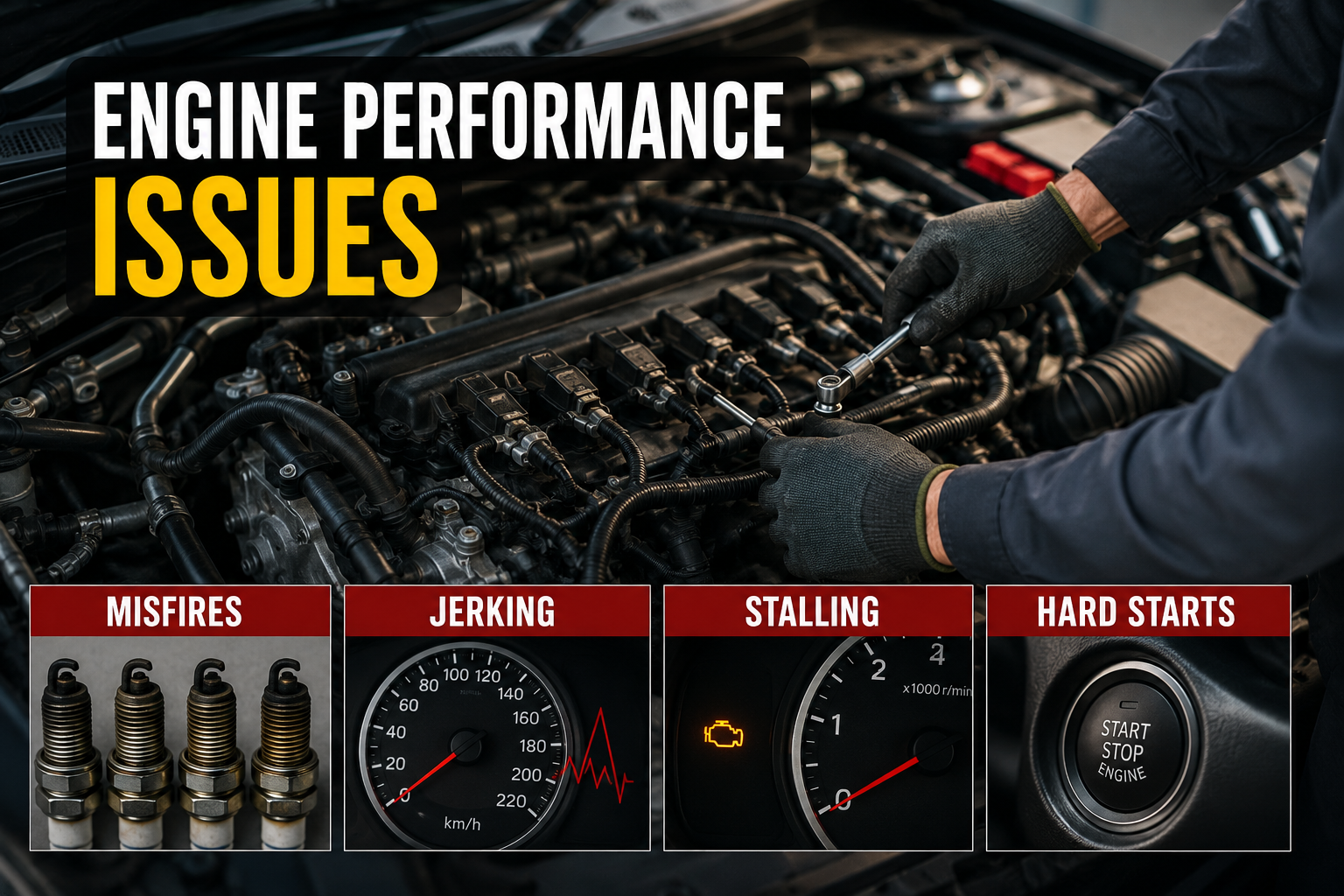
1. Engine misfire
You may feel shaking or uneven running, especially at idle or under load. The engine feels like it is “skipping” or not firing smoothly.
2. Jerking or hesitation during acceleration
The car may feel like it is struggling to respond when you press the gas pedal. This often happens during gear changes or sudden acceleration.
3. Engine stalling
The engine shuts off unexpectedly, often at low speed or idle. It may restart normally afterward.
4. Hard starting or long crank time
The engine takes longer than usual to start or requires multiple attempts.
5. Rough idle
The engine vibrates or feels unstable when the car is not moving.
These symptoms often overlap and point to deeper system imbalance.
Step-by-Step Diagnostic Logic (Practical Approach)
Instead of replacing parts randomly, it’s better to follow a structured method. This helps eliminate unnecessary repairs.
Step 1: Check for OBD2 codes (but don’t stop there)
Common engine-related codes include:
- P0300 (random misfire)
- P0301–P0304 (cylinder misfire)
- P0171 (lean mixture)
- P0172 (rich mixture)
However, a code only tells you that something is wrong — not what exactly caused it.
Step 2: Observe when the problem happens
Timing is extremely important in diagnosis.
Ask:
- Does it happen at idle?
- Does it happen during acceleration?
- Does it happen when the engine is cold or hot?
- Does it happen randomly?
Example:
- Misfire at idle → vacuum leak or injector issue
- Misfire under load → ignition coil or fuel delivery issue
Step 3: Check ignition system (spark-related issues)
The ignition system is one of the most common causes of engine performance problems.
Check:
- spark plugs condition
- ignition coils
- coil wiring connections
Weak spark can cause the following:
- misfires
- poor acceleration
- engine hesitation
Ignition problems usually worsen under load, when the engine needs stronger combustion.
Step 4: Check fuel delivery system
If the engine is not getting enough fuel, performance drops quickly.
Possible issues include:
- weak fuel pump
- clogged fuel filter
- dirty injectors
Symptoms often include:
- hesitation during acceleration
- stalling at higher speeds
- long crank before start
Step 5: Check air intake system
Air leaks or restricted airflow can completely disturb engine balance.
Look for:
- cracked intake hoses
- vacuum leaks
- dirty throttle body
- faulty MAF sensor
Air-related issues often cause the following:
- rough idle
- lean fuel mixture
- inconsistent acceleration
Understanding Misfires in Simple Terms
A misfire happens when combustion in a cylinder is incomplete or does not happen at all.
This can be caused by:
- weak spark
- incorrect fuel delivery
- incorrect air mixture
- compression problems
Misfires are not always constant. They may appear
- only at idle
- only at high speed
- only when engine is warm
That’s why identifying patterns is more important than replacing parts.
Why Jerking and Hesitation Happen
Jerking usually happens when engine power delivery is inconsistent.
Common causes:
- fuel pressure fluctuations
- sensor delays (MAF or throttle position)
- ignition timing issues
If jerking happens during acceleration, it usually means the engine is struggling to maintain proper fuel-air balance under load.
Engine Stalling: What It Really Means
Stalling is when the engine shuts off unexpectedly.
Common causes:
- unstable idle air control
- fuel delivery interruption
- sensor failure (like crankshaft sensor)
- electrical instability
If the engine restarts easily after stalling, it is usually an intermittent issue rather than a permanent failure.
Hard Starting Issues Explained
If your engine takes longer to start, the issue is often related to one of three systems:
- weak battery or starter motor
- fuel pressure delay
- ignition timing delay
A healthy engine should start quickly with minimal cranking.
Real-World Example (Simple Diagnostic Case)
A driver reports:
- rough idle
- hesitation during acceleration
- occasional misfire
Initial assumption: bad spark plugs
But after checking:
- fuel trims slightly high (lean condition)
- intake hose found cracked
- MAF readings slightly unstable
Final cause:
Small air leak causing incorrect air-fuel mixture.
Fix:
Replacing a simple hose restored normal engine performance.
This shows how small issues can create multiple symptoms.
Common Mistakes People Make
Many engine problems get misdiagnosed because of simple mistakes:
- replacing spark plugs without checking air leaks
- ignoring fuel trim data
- assuming one symptom means one faulty part
- clearing codes before diagnosing properly
- replacing sensors without confirming failure
These mistakes often lead to repeated issues and wasted money.
When You Should Not Continue DIY Diagnosis
You should stop and seek professional help if:
- misfires persist after basic checks
- engine stalls frequently while driving
- multiple systems show failure at once
- fuel smell or unusual noise is present
- engine warning light keeps returning immediately
At that point, deeper testing is required.
Final Thoughts
Engine performance problems always look complicated at first, but they usually follow a logical pattern. Once you understand how air, fuel, and ignition work together, diagnosis becomes much easier. Most issues are not random failures. They are small imbalances that slowly build up until the engine can no longer maintain smooth operation. A syieldtured approach will always give better results than guessing or replacing parts blindly.
FAQs
1. What is the most common cause of engine misfires?
The most common cause is ignition-related issues like worn spark plugs or faulty ignition coils, but air leaks and fuel problems can also cause misfires.
2. Can a dirty air filter cause engine performance issues?
Yes. A clogged air filter reduces airflow, which can affect fuel mixture and lead to hesitation or rough running.
3. Why does my car jerk only during acceleration?
This usually indicates a fuel delivery issue, ignition weakness under load, or sensor delay affecting engine timing.
4. Is it safe to drive with engine misfires?
Light misfires may still allow driving, but continued driving can damage the catalytic converter and worsen engine condition.
5. Can bad fuel cause engine stalling or rough idle?
Yes. Contaminated or low-quality fuel can disrupt combustion and lead to unstable engine performance.

Written by Michael Reyes, part of the FallasDeAutos editorial team. Michael focuses on helping car owners understand and fix common vehicle problems with simple, practical guidance. His content covers diagnostics, maintenance, and troubleshooting, making complex automotive issues easier to understand. He aims to provide clear, reliable information that helps readers make informed decisions while encouraging consultation with qualified mechanics when needed.