
Quick answer: Your alternator is likely failing if you notice dimming headlights, a battery warning light on the dash, strange grinding or whining noises, or frequent dead batteries. Catching these signs early—and testing with a multimeter—can save you from being stranded with a car that won’t start.
Most drivers blame a dead battery when their car won’t turn over. But the real culprit is often the alternator, quietly failing in the background. Your battery gets the car started, yet it’s the alternator that keeps everything running once the engine fires up. When it fails, your battery drains, your electronics flicker, and eventually, you’re stuck on the side of the road.
The good news? Alternators rarely die without warning. They drop hints—dimming lights, odd smells, electrical glitches—long before they quit completely. Learning to spot these clues can mean the difference between a quick repair and an expensive tow. This guide covers what an alternator does, early warning signs of failure, how to test it, and what to do next. By the end, you’ll know exactly how to act before a small problem leaves you stranded.
What Does an Alternator Do?
The alternator is your car’s onboard power plant. While the engine runs, the alternator generates electricity to power your headlights, radio, dashboard, climate control, and every other electrical component. At the same time, it recharges your battery so it’s ready for the next start.
Here’s the key thing to understand: your battery only provides the initial jolt to start the engine. Once the car is running, the alternator takes over. If the alternator stops working, your car will run on battery power alone—and that won’t last long. Within minutes or miles, the battery drains completely, and the engine shuts off.
That’s why a failing alternator is often mistaken for a bad battery. You replace the battery, and the car works for a day or two, then dies again. The alternator was the problem all along.
Early Warning Signs of Alternator Failure
Your alternator gives off plenty of clues before it gives out. Watch for these common signs.
Dimming Headlights or Interior Lights
One of the earliest and most noticeable symptoms is dimming or flickering lights. If your headlights brighten when you rev the engine and fade when you idle, the alternator may be struggling to produce steady power. Dashboard lights, dome lights, and even your instrument panel can flicker too.
Battery Warning Light on Dashboard
That little battery-shaped icon on your dash isn’t just about the battery. It often signals a problem with the charging system, which includes the alternator. The light may flicker on and off at first, then stay lit as the issue worsens. Don’t ignore it.
Strange Noises (Grinding or Whining)
A failing alternator can produce a grinding or whining sound. Grinding usually points to worn-out bearings inside the unit. A high-pitched whine often means the belt is slipping or the alternator is working too hard. Neither noise deserves attention.
Burning Rubber Smell
If you catch a whiff of burning rubber, the drive belt connected to your alternator may be slipping or overheating. A worn belt creates friction, which produces that distinct smell. Left unchecked, the belt can snap and leave you without a charging system.
Electrical System Malfunctions
When the alternator can’t supply enough power, your electronics act up. You might notice slow-moving power windows, a radio that cuts out, dim interior lighting, or a sluggish infotainment screen. Modern cars are packed with electronics, so these glitches often show up early.
Frequent Battery Draining
A healthy alternator keeps your battery charged. If you find yourself jump-starting your car repeatedly—or replacing batteries more often than seems normal—the alternator likely isn’t doing its job. A battery that keeps dying despite being new is a major red flag.
How to Test Your Alternator
If you suspect trouble, you can confirm it with a few simple checks before heading to a mechanic.
Visual Inspection
Pop the hood and take a look. Check the alternator belt for cracks, fraying, or looseness. Inspect the wiring and connections for corrosion or damage. A loose or glazed belt is a common, easy-to-spot cause of charging problems.
Multimeter Test (Voltage Check)
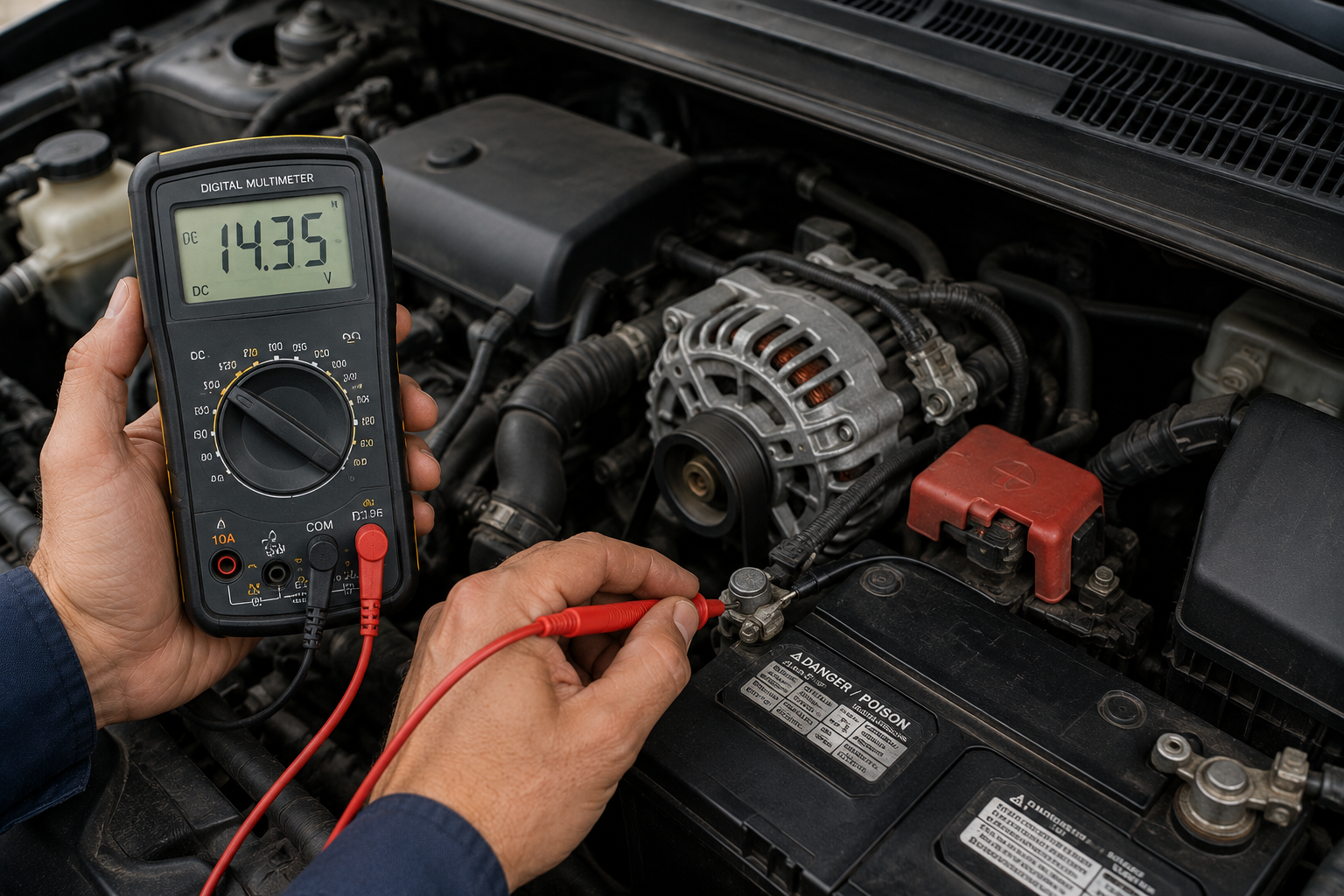
A multimeter gives you a clear reading of your charging system’s health. With the engine off, a fully charged battery should read around 12.6 volts. Start the engine and check again—a healthy alternator should produce between 13.7 and 14.7 volts. If the reading stays below 13 volts or climbs above 15, your alternator may be failing or overcharging.
Professional Diagnostic Test
If the DIY tests leave you uncertain, take your car to a mechanic or auto parts store. Many offer free charging-system tests. A professional diagnostic can pinpoint whether the alternator, battery, or another component is the real issue, saving you from guessing and replacing the wrong part.
What to Do If Your Alternator is Failing
Caught a problem? Here’s how to handle it.
Immediate Steps to Take
If you’re driving and suspect alternator failure, reduce your electrical load right away. Turn off the radio, air conditioning, and any non-essential lights to preserve battery power. Drive straight to a repair shop or safe location. Avoid turning the engine off if you’re far from help, since it may not restart.
Options for Repair or Replacement
Sometimes the fix is simple—a new belt or a tightened connection. Other times, the alternator itself needs replacing. You can choose a brand-new unit or a remanufactured one, which costs less but still performs reliably. Discuss the options with your mechanic, factoring in your car’s age and how long you plan to keep it.
Preventative Maintenance Tips
A little upkeep goes a long way toward avoiding alternator headaches.
Regular Battery Checks
Test your battery and charging system at least twice a year, especially before extreme weather. Catching weak voltage early prevents strain on the alternator.
Inspecting Belts and Connections
Check your drive belt and electrical connections during routine oil changes. Replace worn belts and clean corroded terminals to keep power flowing smoothly.
Avoiding Electrical Overload
Be mindful of aftermarket accessories like high-powered sound systems or extra lighting. Overloading your electrical system forces the alternator to work harder, shortening its lifespan.
Don’t Get Stranded—Act Early!
Your alternator works hard every time you drive, and it usually warns you before it quits. Dimming lights, a glowing battery icon, strange noises, and frequent dead batteries are all signs worth taking seriously. A quick multimeter test or a free diagnostic can confirm the problem in minutes.
The smartest move is to act at the first sign of trouble. Address a worn belt or weak charging system early, and you’ll avoid the cost—and stress—of a roadside breakdown. Pop the hood, run a quick check, and keep your car running reliably for the long haul.
FAQs
1. How long can I drive with a failing alternator?
Not long. Once an alternator stops charging, your car runs entirely on battery power, which typically lasts anywhere from a few minutes to about 30 minutes. The exact time depends on your battery’s charge and how many electronics you’re using. Drive directly to a repair shop and turn off non-essential systems.
2. How much does it cost to replace an alternator?
Alternator replacement typically ranges from $300 to $1,000, including parts and labor. The cost varies based on your vehicle’s make and model and whether you choose a new or remanufactured unit. Remanufactured alternators are a budget-friendly option that still offers reliable performance.
3. Can a bad alternator damage my battery?
Yes. A failing alternator can undercharge or overcharge your battery. Undercharging leaves it constantly drained, while overcharging can cause the battery to overheat and wear out prematurely. This is why a new battery that keeps dying often points to an alternator problem.
4. Is it the battery or the alternator?
A simple multimeter test settles it. If your battery reads 12.6 volts when off but the voltage doesn’t rise to 13.7–14.7 volts with the engine running, the alternator is likely the culprit. If the car won’t start at all and the battery is dead, test the battery first.
5. How often do alternators need to be replaced?
Most alternators last between 80,000 and 150,000 miles, or roughly 7 to 10 years. Their lifespan depends on driving conditions, electrical load, and maintenance. Regular belt and connection checks can help your alternator reach the higher end of that range.

Written by Michael Reyes, part of the FallasDeAutos editorial team. Michael focuses on helping car owners understand and fix common vehicle problems with simple, practical guidance. His content covers diagnostics, maintenance, and troubleshooting, making complex automotive issues easier to understand. He aims to provide clear, reliable information that helps readers make informed decisions while encouraging consultation with qualified mechanics when needed.