
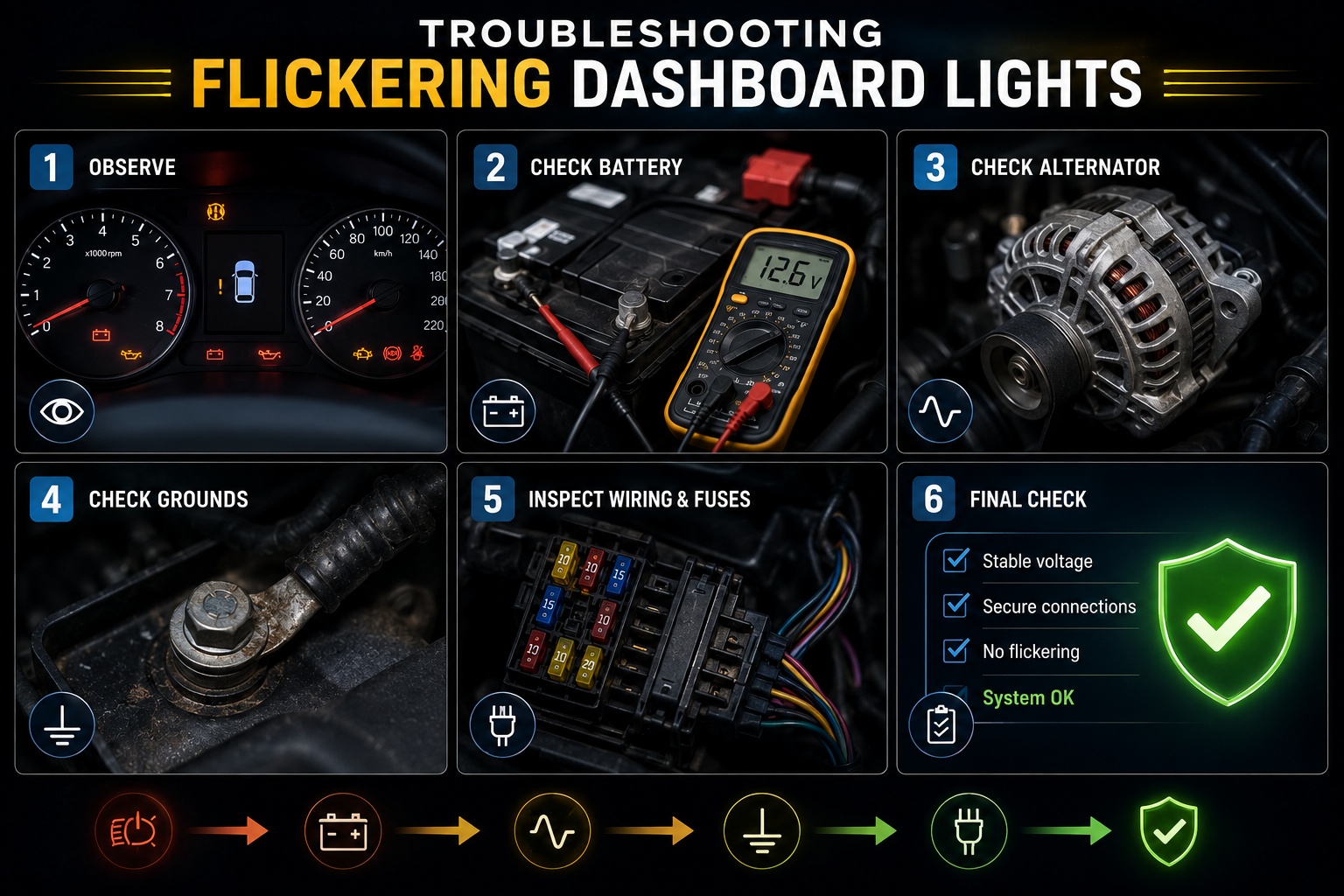
Dashboard lights serve as your vehicle’s primary communication system. They alert you to everything from low fuel levels to severe engine emergencies. When these lights begin to flash or dim unexpectedly, the vehicle is signaling an underlying electrical problem that requires immediate attention.
Ignoring an unstable dashboard display can lead to severe consequences. A blinking instrument cluster often precedes a dead battery, sudden loss of power steering, or a complete engine stall while driving. By understanding the root causes of electrical instability, vehicle owners can address minor faults before they escalate into expensive repairs. This comprehensive guide outlines the exact steps required to identify and fix the source of your vehicle’s electrical issues.
Common Causes of Flickering Lights
Understanding the specific components that power your dashboard is the first step in diagnosing the problem. Several distinct issues can disrupt the electrical flow to your instrument cluster.
Loose or Corroded Battery Terminals
The car battery acts as the primary power source for all electrical components when the engine is off, and it stabilizes the current when the engine runs. If the battery terminals accumulate acidic corrosion or become loose due to vehicle vibration, the electrical connection breaks intermittently. This weak connection directly causes power fluctuations that make dashboard lights flash or dim.
Faulty Alternator
Once the vehicle starts, the alternator takes over to generate electricity for the car and recharge the battery. A failing alternator produces an inconsistent voltage supply. When the voltage drops below the required threshold, the dashboard lights lose power. Conversely, a faulty voltage regulator inside the alternator can send power surges through the system, causing the lights to brighten and dim rapidly.
Wiring Issues
Modern vehicles contain miles of intricate wiring harnesses. Over time, engine heat, friction, and environmental wear can strip the protective insulation from these wires. Exposed wires can touch the metal chassis, causing short circuits. These shorts disrupt the steady flow of electricity to the dashboard, resulting in a flickering display.
Bulb Malfunctions
Older vehicles utilize traditional incandescent or halogen bulbs behind the instrument cluster. As these bulbs approach the end of their lifespan, the internal filaments become brittle and prone to breaking. A damaged filament might make intermittent contact as the car hits bumps in the road, creating a localized flicker on specific sections of the dashboard.
Blown Fuses
Fuses act as safety checkpoints for your vehicle’s electrical circuits. They are designed to blow and cut off power during an electrical surge, protecting sensitive components from damage. A partially melted or loosely seated fuse can create an unstable circuit, causing the dashboard lights to cut in and out unpredictably.
Step-by-Step Troubleshooting Guide
Diagnosing electrical issues requires a systematic approach. Follow this progression to safely identify the fault in your vehicle’s system.
Initial Checks
Begin by observing the specific conditions under which the flickering occurs. Note whether the lights flash only when starting the engine, when driving over rough terrain, or when operating other electrical accessories like the headlights or radio. Dimming the dashboard brightness dial up and down can also reveal if the issue stems from a faulty dimmer switch rather than a systemwide electrical drop.
Battery and Alternator Inspection
Open the hood and visually inspect the battery terminals. Look for a buildup of white or blue-green powder, which indicates corrosion. Clean the terminals using a wire brush and a mixture of baking soda and water. Next, verify that the terminal clamps are tightly secured to the battery posts.
To test the alternator, use a digital multimeter. Set the multimeter to DC volts and connect the probes to the battery terminals while the engine is running. A healthy alternator should produce a steady reading between 13.5 and 14.5 volts. Readings outside this range strongly indicate a failing alternator.
Wiring and Fuse Box Examination
Locate your vehicle’s interior fuse box, usually found under the dashboard or side panel. Consult the owner’s manual to find the specific fuse designated for the instrument cluster. Pull the fuse and inspect the internal metal strip. If the strip appears broken or blackened, replace the fuse with a new one of the exact same amperage. Additionally, visually inspect any accessible wiring harnesses under the steering column for signs of melting, fraying, or pest damage.
Professional Diagnosis and Repair
Modern vehicles have highly complex electrical systems that are heavily integrated with the car’s computer modules. If the battery, alternator, and fuses all pass inspection, the problem is probably a wiring short or a failing body control module (BCM). At this stage, taking the vehicle to a certified automotive technician is the safest course of action. Professionals use advanced diagnostic scan tools to pinpoint shorts and module failures without causing further damage to the system.
Preventive Maintenance Tips
Proactive care dramatically extends the lifespan of your vehicle’s electrical components and prevents unexpected power failures.
Regular Battery Checks
Perform a visual inspection of your battery every three months. Clean away any minor corrosion before it hardens, and ensure the battery tie-down bracket holds the unit firmly in place. Most standard lead-acid car batteries last between three and five years. Plan to replace the battery proactively as it nears the end of this lifespan to prevent unnecessary strain on the alternator.
Alternator Servicing
While alternators generally last up to 100,000 miles, environmental factors can accelerate wear. Keep the engine bay clean from excessive oil and dirt, which can infiltrate the alternator housing and damage internal brushes. Listen for whining or grinding noises from the engine bay, as these sounds often precede complete alternator failure.
Electrical System Maintenance
Avoid overloading your vehicle’s electrical system with aftermarket accessories. High-draw amplifiers, light bars, and unauthorized remote starter kits can push the stock alternator beyond its capacity. When installing any new electronic device, ensure the wiring includes appropriate inline fuses and is routed away from high-heat areas of the engine.
Securing Your Vehicle’s Electrical Stability
Flickering dashboard lights are a clear warning that your vehicle’s electrical system requires maintenance. By methodically checking the battery, alternator, fuses, and wiring, vehicle owners can often isolate the problem before it leaves them stranded. Implementing a routine maintenance schedule ensures these vital components deliver consistent power, keeping your dashboard bright and your vehicle reliable.
FAQs
1. Why does my dashboard flicker when I turn on the headlights?
When you activate high-draw accessories like headlights or the air conditioning system, the electrical load on the vehicle increases significantly. If the alternator is weak or the battery is degrading, the system cannot meet the sudden demand for power, causing the dashboard lights to dim or flicker momentarily.
2. Can a bad battery cause the dashboard lights to blink while driving?
Yes. Even though the alternator generates power while driving, the battery acts as an electrical cushion that absorbs voltage spikes and smooths out the current. A battery with dead internal cells cannot stabilize this current, resulting in power fluctuations that cause dashboard lights to blink.
3. Is it safe to drive with flickering dashboard lights?
Driving with flickering dashboard lights poses a safety risk. The flickering indicates an electrical fault that could cause the vehicle to stall unexpectedly in traffic. Additionally, power steering and anti-lock braking systems rely on consistent electrical power to function properly.
4. How much does it cost to repair flickering dashboard lights?
Repair costs vary widely based on the root cause. Cleaning corroded battery terminals or replacing a fuse costs under $20. Replacing a dead battery averages $150 to $250. If the vehicle requires a new alternator, the cost typically ranges from $400 to $800, including parts and labor.
5. Can a loose ground wire cause electrical issues?
A loose or corroded ground wire is a very common cause of erratic electrical behavior. Ground wires complete the electrical circuit by connecting components to the metal frame of the vehicle. If a ground connection is compromised, the circuit breaks intermittently, causing the instrument cluster and other accessories to lose power randomly.

Written by Michael Reyes, part of the FallasDeAutos editorial team. Michael focuses on helping car owners understand and fix common vehicle problems with simple, practical guidance. His content covers diagnostics, maintenance, and troubleshooting, making complex automotive issues easier to understand. He aims to provide clear, reliable information that helps readers make informed decisions while encouraging consultation with qualified mechanics when needed.