
Modern cars are full of electronic controls that make driving easier and more comfortable. From power windows and steering controls to infotainment systems and climate settings, almost everything now connects to sensors, switches, and small onboard computers. But occasionally, these controls stop responding without warning.
One moment everything works fine, and the next moment a button, dial, or touchscreen becomes unresponsive. This can feel confusing, especially when there is no obvious damage or warning sign. In this article, I’ll explain how I approach diagnosing unresponsive car controls without guesswork. The goal is to break down the problem in a simple, real-world way so you can understand what’s happening and how to think through it logically.
Understanding What “Unresponsive Car Controls” Really Means
When we say a car control is unresponsive, it usually means that a command is not being executed. This could be something simple, like a window not moving, or something more complex, like a touchscreen freezing.
In practical terms, unresponsive controls can happen in different ways:
- A button does nothing when pressed
- A system responds slowly or intermittently
- A feature works sometimes, but not always
- Multiple controls stop working at the same time
Modern cars rely on a mix of electrical signals, software instructions, and mechanical components. So when a control stops working, the issue may not be in the button itself—it could be in the system behind it.
This is why guesswork often leads to confusion or unnecessary repairs.
Why Car Controls Stop Responding in Real Life
In most real-world situations, unresponsive controls are caused by interruptions in communication or power flow. Unlike older mechanical systems, modern vehicles depend heavily on electronics.
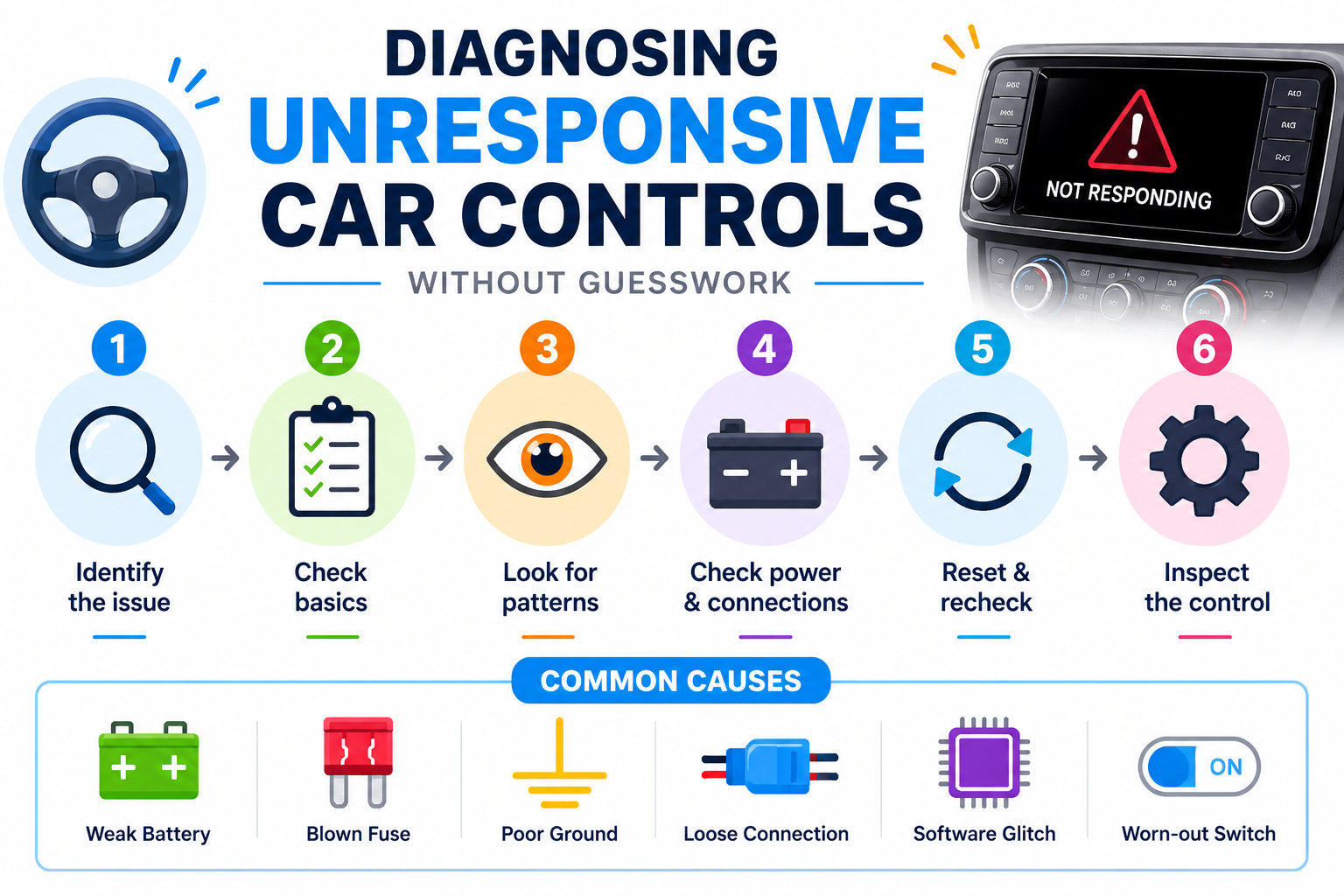
Some common underlying reasons include:
- Weak or unstable electrical supply
- Faulty switches or worn-out buttons
- Software glitches in control modules
- Loose wiring or connectors
- Temporary system overload or reset conditions
What this means in daily life is simple: even a small disruption inside the system can make a control appear completely dead.
For example, a power window switch may look broken, but the actual issue might be a loose connection inside the door panel.
My Step-by-Step Approach to Diagnosing Without Guesswork
Instead of randomly testing parts, I follow a structured method. This helps narrow down the problem logically and avoids unnecessary confusion.
Step 1: Identify Exactly What Is Not Working
The first step is always clarity.
I ask:
- Which controls are unresponsive?
- Is it one feature or multiple features?
- Did it happen suddenly or gradually?
For example:
- Only one window not working → likely local issue
- Multiple electrical features failing → possible system-wide issue
In real-world terms, this step helps separate isolated faults from shared electrical problems.
Step 2: Check If the Problem Is Partial or Complete
Next, I observe how the system is failing.
There are two main patterns:
- Completely unresponsive (no reaction at all)
- Partially responsive (slow or inconsistent behavior)
This difference matters because of the following:
- Complete failure often points to power or wiring issues
- Partial failure often points to switches, modules, or software
In everyday driving, this step helps understand whether the system is “dead” or just «unstable.»
Step 3: Look for Simple External Causes First
Before thinking about complex issues, I always check basic possibilities.
These include:
- Child lock settings activated
- Disabled system settings
- Blown fuse
- Loose battery terminal
- Door not fully closed (for certain features)
In practical terms, many “non-working” controls are actually restricted by safety settings or simple electrical interruptions.
Step 4: Observe Vehicle Behavior Around the Issue
Car controls rarely fail in isolation without any pattern. I pay attention to when the issue happens:
- Only during startup?
- After driving for some time?
- During hot or cold weather?
- When multiple systems are active?
For example, if controls stop working after long driving, it may suggest heat-related electrical stress.
This step helps connect the problem to real-world driving conditions.
Step 5: Check Electrical Power Flow Basics
Since most controls depend on electricity, I always consider power flow early in diagnosis.
I look at:
- Battery condition
- Fuse box integrity
- Ground connections
- Signs of corrosion or loose wiring
In real-life terms, even if the car starts normally, weak electrical flow can still affect sensitive control systems.
This is especially common in vehicles with many electronic features.
Step 6: Test for System Resets or Temporary Glitches
Modern vehicles use control modules that sometimes freeze or reset.
A simple real-world observation:
- Turning the car off and restarting may restore functionality
This suggests:
- Software glitch
- Temporary communication failure between modules
In practical terms, it’s similar to restarting a phone when apps stop responding.
Step 7: Check Physical Components of the Control
If the issue is limited to one control, I inspect the physical component itself.
For example:
- Sticky or worn-out buttons
- Broken switch mechanism
- Dirt or dust inside controls
- Damaged wiring behind panels
In everyday life, constant use can wear out small mechanical parts faster than expected.
Real-World Example: Power Window and Dashboard Controls Failing Together
Let’s take a practical situation.
A driver notices:
- Power windows stop working
- Dashboard buttons become unresponsive
- Interior lights flicker
At first, it looks like multiple failures. But after inspection, the issue is traced to a weak ground connection affecting multiple systems.
Once the connection is fixed, all symptoms disappear together.
This example shows how one underlying issue can affect many controls at once.
Why Diagnosing Without Guesswork Matters in Daily Life
When car controls stop working, guessing can lead to the following:
- Replacing the wrong parts
- Repeated repair attempts
- Increased frustration and downtime
But a structured approach helps:
- Identify real root causes
- Avoid unnecessary replacements
- Save time during inspection
- Reduce confusion for drivers
For families sharing a car, this is especially helpful because inconsistent problems can easily be misinterpreted.
For small businesses relying on vehicles, proper diagnosis helps maintain consistency and avoid operational delays.
Common Mistakes People Make When Controls Stop Working
When faced with unresponsive controls, people often make a few common mistakes:
Replacing Parts Too Quickly
Without proper diagnosis, replacing switches or modules may not solve the actual issue.
Ignoring Electrical Basics
Many assume the problem is mechanical, while the real cause is electrical.
Overlooking Simple Settings
Sometimes the issue is just a disabled feature or safety lock.
Not Observing Patterns
Failing to notice when and how the problem appears can delay diagnosis.
In practical terms, these mistakes often increase confusion instead of solving the problem.
Challenges in Diagnosing Unresponsive Controls
Even with a structured approach, there are challenges:
Intermittent Behavior
Some controls work fine during inspection but fail during real driving.
Complex Electrical Systems
Modern cars have interconnected modules, making isolation difficult.
Hidden Wiring Issues
Wiring problems inside panels are not always visible.
Software Dependency
Some controls rely heavily on software, which may not show clear error signs.
These challenges make patience and step-by-step reasoning important.
How Modern Cars Are Changing Diagnosis
Today’s vehicles are becoming more intelligent. Many now include:
- Onboard diagnostics with error codes
- System alerts on dashboards
- App-based vehicle monitoring
- Self-check systems during startup
In practical terms, cars are becoming better at signaling problems—but understanding those signals still requires human interpretation.
Even with advanced systems, basic troubleshooting steps remain important.
Practical Tips for Handling Unresponsive Controls
Here are some simple habits that help in real situations:
- Check basic settings before assuming failure
- Observe whether one or multiple systems are affected
- Restart the vehicle before deeper inspection
- Pay attention to weather or timing patterns
- Avoid rushing into part replacements
In everyday life, these habits help reduce unnecessary stress and make diagnoses more efficient.
Conclusion
Diagnosing unresponsive car controls without guesswork is about following a structured, logical process instead of reacting randomly. Most issues are not caused by complete system failure but by small disruptions in power, wiring, or electronic communication.
By observing symptoms carefully, checking simple causes first, understanding patterns, and narrowing down systems step by step, it becomes much easier to identify the real issue behind the problem. In daily driving, this approach helps reduce confusion, avoid unnecessary repairs, and bring clarity to situations that may initially seem complicated.

Written by Michael Reyes, part of the FallasDeAutos editorial team. Michael focuses on helping car owners understand and fix common vehicle problems with simple, practical guidance. His content covers diagnostics, maintenance, and troubleshooting, making complex automotive issues easier to understand. He aims to provide clear, reliable information that helps readers make informed decisions while encouraging consultation with qualified mechanics when needed.