
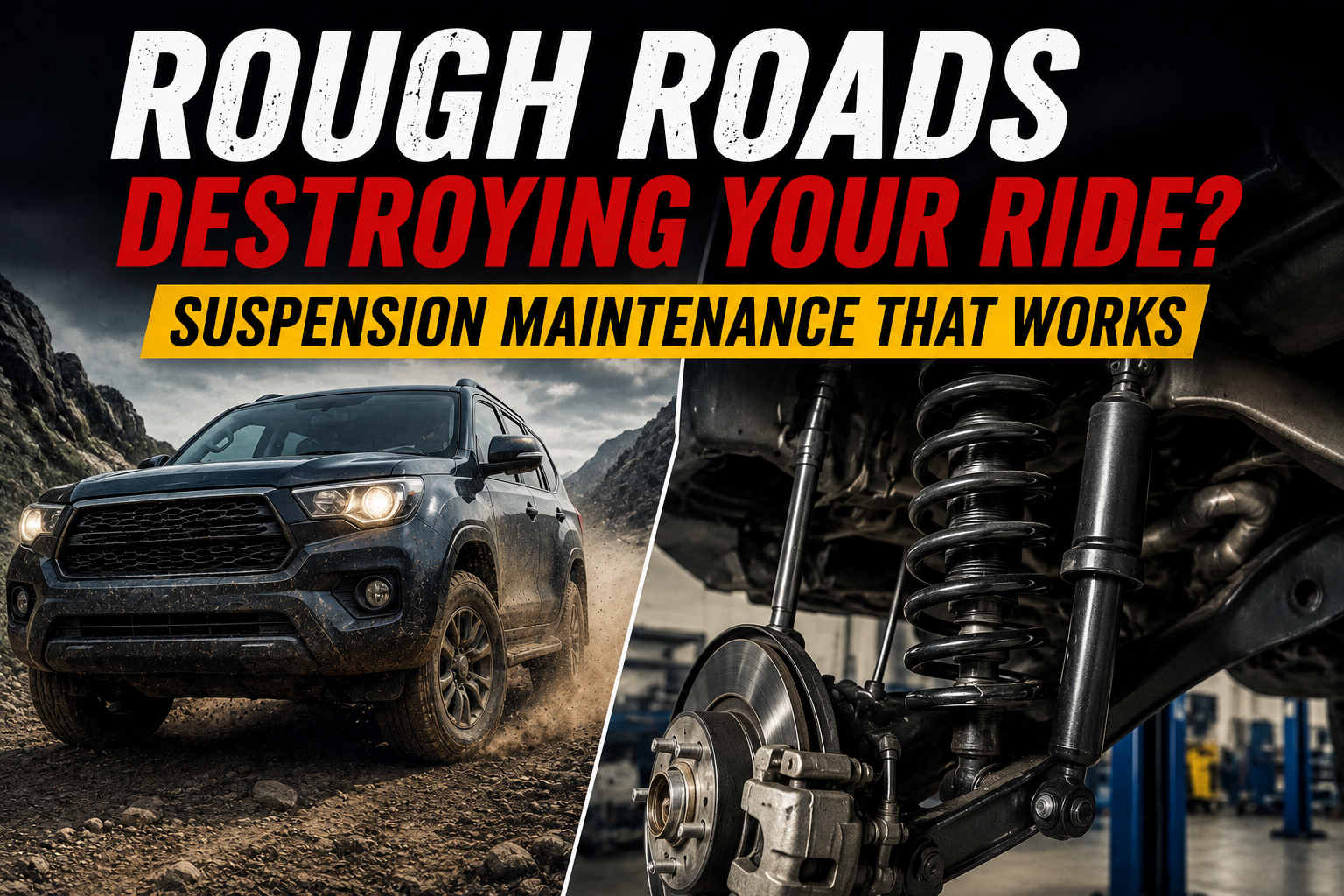
If you’ve ever driven on rough roads full of potholes, broken asphalt, or gravel, you already know how uncomfortable and stressful it can feel. I used to think rough roads were just part of driving, especially in areas where road conditions change constantly. My car felt stiff, noisy, and tiring to drive, and long trips became exhausting instead of enjoyable.
Everything changed when I started paying attention to my car’s suspension. I learned that suspension comfort isn’t only about expensive upgrades—it’s mostly about smart maintenance and simple habits. After developing a routine, my car now handles rough roads smoothly and comfortably, even on long journeys.
In this guide, I’ll share the exact beginner-friendly routine I use to maintain suspension comfort on rough roads year-round.
Why Suspension Comfort Matters More Than You Think
The suspension system connects your car to the road. It absorbs bumps, keeps tires in contact with the ground, and makes driving comfortable and safe.
When suspension components wear out, you may notice:
- Excessive bouncing
- Rough ride quality
- Strange noises over bumps
- Uneven tire wear
- Reduced steering control
Many drivers ignore early warning signs until the ride becomes uncomfortable or repairs become expensive. That’s exactly what I used to do—until I created a simple preventive routine.
How Rough Roads Affect Your Car Daily
Rough roads constantly stress your suspension system. Every pothole, speed bump, and uneven surface sends shock through the following:
- Shock absorbers
- Struts
- Springs
- Bushings
- Tires
Over time, these impacts slowly reduce comfort and performance. Preventive care helps these parts last longer and perform better.
My Suspension Maintenance Philosophy
I follow three simple rules:
- Inspect regularly
- Drive gently on rough roads
- Replace worn parts early
This approach keeps my car comfortable without costly repairs.
The Monthly Suspension Check I Never Skip
Once a month, I do a quick suspension check. It takes less than 10 minutes.
What I Look For
- Car leaning to one side
- Oil leaks near shocks
- Unusual bouncing after bumps
- Clunking sounds while driving
Early detection prevents bigger problems later.
How Tire Care Improves Suspension Comfort
Before learning about suspension, I didn’t realize tires play a huge role in ride comfort.
Tires act as the first shock absorber between the road and suspension.
My Tire Care Routine
- Check tire pressure every two weeks
- Maintain recommended PSI
- Rotate tires regularly
Proper tire pressure alone made a noticeable difference in ride comfort.
Why Correct Tire Pressure Is Critical
Overinflated tires:
- Feel stiff and bumpy
Underinflated tires:
- Reduce control and wear quickly
Balanced tire pressure creates smoother rides on rough roads.
My Habit of Slowing Down on Bad Roads
One of the simplest changes I made was adjusting my driving style.
Instead of hitting bumps at normal speed, I:
- Slow down before potholes
- Avoid sudden braking on rough roads
- Drive smoothly over speed bumps
This reduced stress on suspension dramatically.
Avoiding Pothole Damage Whenever Possible
Potholes are the biggest enemy of suspension comfort.
My habits:
- Maintain safe distance from other vehicles
- Scan the road ahead
- Drive slowly in unfamiliar areas
Avoiding potholes saves both comfort and repair costs.
Why Shock Absorbers Matter Most
Shock absorbers control how your car reacts to bumps.
Worn shocks cause:
- Excessive bouncing
- Longer stopping distances
- Poor ride comfort
Keeping shocks in good condition is essential.
Signs Your Shocks Need Replacement
I watch for early warning signs:
- Car keeps bouncing after bumps
- Nose dips when braking
- Rough ride even on small bumps
Replacing shocks early restores comfort quickly.
How Often Suspension Parts Wear Out
Suspension parts wear gradually, not suddenly.
Typical lifespan:
- Shocks/struts: several years depending on driving conditions
- Bushings and mounts: vary by usage
Regular inspection helps catch wear early.
The Role of Suspension Bushings
Bushings are small rubber parts that absorb vibration.
When worn, they cause:
- Vibrations in the cabin
- Knocking sounds
- Harsh ride feel
Replacing worn bushings improves comfort dramatically.
Why Wheel Alignment Matters
Wheel alignment plays a big role in ride comfort.
Misalignment causes:
- Uneven tire wear
- Steering pulling to one side
- Rough ride feel
I check alignment regularly, especially after hitting potholes.
My Annual Alignment Routine
I check alignment:
- Once a year
- After major pothole impacts
Proper alignment keeps suspension balanced and comfortable.
How Suspension Affects Long-Distance Driving
Before maintenance, long drives were tiring.
After improving suspension care:
- Less driver fatigue
- Smoother highway driving
- More comfortable road trips
Small improvements create big comfort gains.
Keeping the Car Lightweight Improves Ride Comfort
Excess weight stresses suspension components.
I avoid:
- Carrying unnecessary items in trunk
- Leaving heavy tools or cargo inside
Reducing weight helps suspension work efficiently.
Seasonal Suspension Care Tips
Different seasons affect suspension differently.
Summer
- Heat can affect tire pressure
- Rough roads soften in heat
Winter
- Cold stiffens suspension components
- Roads become rougher
Adjusting maintenance by season helps maintain comfort.
Listening to Your Car’s Warning Signs
Your car often tells you when suspension needs attention.
I listen for:
- Clunks
- Rattles
- Excessive vibration
Early attention prevents expensive repairs.
Common Suspension Mistakes I Avoid
I used to make these mistakes:
- Ignoring small noises
- Driving fast over bumps
- Skipping tire maintenance
- Delaying suspension checks
Avoiding these mistakes made a huge difference.
My Simple Suspension Comfort Routine
Here’s my easy schedule:
Monthly
- Inspect suspension visually
- Check tire pressure
Every 6 Months
- Rotate tires
- Check alignment
Annually
- Professional suspension inspection
Consistency keeps rides smooth.
Beginner-Friendly Suspension Checklist
- Drive gently on rough roads
- Maintain tire pressure
- Inspect suspension regularly
- Replace worn parts early
These simple habits keep suspension comfortable.
Conclusion
Maintaining suspension comfort on rough roads doesn’t require expensive upgrades or technical expertise. With regular inspections, proper tire care, smoother driving habits, and early replacement of worn parts, you can dramatically improve ride quality and driving comfort. Small preventive steps make every drive smoother, safer, and more enjoyable. Your car—and your back—will thank you for it.
FAQs
1. How do I know if my suspension is worn out?
Excessive bouncing, strange noises, and rough ride quality are common signs.
2. Do tires affect suspension comfort?
Yes. Proper tire pressure greatly improves ride smoothness.
3. How often should suspension be checked?
A quick check monthly and a professional inspection yearly are ideal.
4. Can driving style affect suspension lifespan?
Yes. Gentle driving significantly reduces wear.
5. Are suspension repairs expensive?
Preventive maintenance helps avoid costly repairs later.

Written by Michael Reyes, part of the FallasDeAutos editorial team. Michael focuses on helping car owners understand and fix common vehicle problems with simple, practical guidance. His content covers diagnostics, maintenance, and troubleshooting, making complex automotive issues easier to understand. He aims to provide clear, reliable information that helps readers make informed decisions while encouraging consultation with qualified mechanics when needed.